Some of AI’s most consequential work is happening not in chatbots but in laboratories, where it is compressing years of scientific discovery into months. From new materials to protein design, 2026 has been the year AI shifted from theoretical promise to a practical engine of research.
A flood of new materials
The headline number is staggering: Google DeepMind’s GNoME has discovered 2.2 million new crystal structures, including 52,000 novel lithium-ion conductors — exactly the kind of materials that could improve batteries. Crucially, external researchers have already synthesized 736 of these AI predictions in the lab, proving the models are not just generating plausible-sounding chemistry but real, makeable materials.
Cracking proteins faster
Protein science is advancing just as fast. A new tool, D-I-TASSER, combines AI with physics-based simulation to predict complex protein structures about 13% more accurately than before, and fresh models can predict how proteins interact with one another — a key to understanding disease and designing drugs. A ‘Sequence Display’ technique can generate over 10 million data points in a single experiment, supercharging the data that trains these models.
The autonomous lab
Perhaps the biggest shift is automation of the scientific method itself. Autonomous laboratories — robotic systems that design, run and learn from experiments with minimal human intervention — are now running on the order of 2.2 million experiments per week. That throughput lets AI test hypotheses at a scale no human team could match, accelerating the loop from idea to validated result.
From lab to clinic
The payoff is reaching patients. AI-discovered drugs are entering Phase II clinical trials, the stage where efficacy in humans is tested. If those candidates succeed, it would validate the entire premise that AI can not only speed discovery but produce treatments that actually work — the ultimate test still ahead.
The caveats
Speed is not the same as truth. AI predictions still require physical validation — a model can propose a material or protein that fails in reality — and researchers warn about explainability and safety, especially in protein design with dual-use risks. The autonomous lab accelerates discovery, but human scientists remain essential to judge, verify and steer it responsibly.
The bottom line
AI is becoming a force multiplier for science itself — millions of new materials, sharper protein predictions and autonomous labs running experiments around the clock. The discoveries still need real-world proof, but the pace of progress suggests AI may accelerate the breakthroughs — in energy, medicine and beyond — that shape the coming decades.
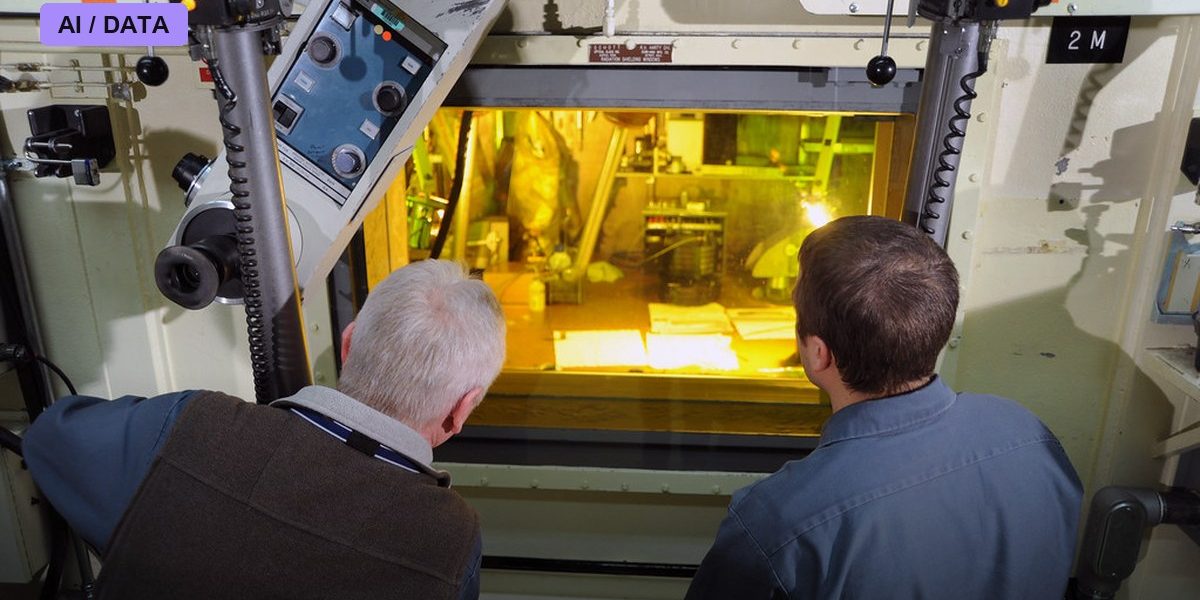
Photo: Idaho National Laboratory / BY via flickr