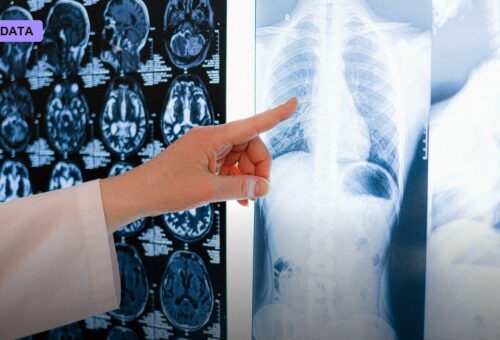
On August 14, 2026, the U.S. Food and Drug Administration granted UK medtech company Brainomix a new clearance for its Brainomix 360 Stroke software, allowing the AI platform to analyze non-contrast CT (NCCT) scans for the first time. The expansion matters because non-contrast scans make up an estimated 60% of all CT scans performed on stroke patients in American emergency rooms, far more than the contrast-enhanced imaging the tool was originally cleared to read.
From e-Stroke to a Broader Mandate
Brainomix’s software, formerly branded e-Stroke, first won FDA clearance in 2023 for use on contrast-enhanced CT images, where the AI measures ischaemic core volume, the amount of brain tissue already damaged by a stroke, to help physicians decide quickly whether a patient is a candidate for clot-removal procedures or clot-busting drugs. The August 2026 clearance extends that same core-volume measurement capability to scans taken without contrast agents, which are faster to perform, cheaper, and more widely available, particularly in emergency departments that lack round-the-clock access to contrast injection protocols.
Why Speed Still Decides Outcomes
Stroke treatment guidelines have long emphasized the phrase “time is brain,” reflecting research showing that roughly 1.9 million neurons die every minute a large-vessel occlusion stroke goes untreated. Radiologists and neurologists have used core-volume estimates for over a decade to triage patients, but manual interpretation of CT scans takes time and experience that not every hospital, particularly rural or under-resourced ones, has on staff overnight. Automated software that flags core volume within minutes is designed to close that gap by giving on-call physicians and even non-specialist staff an immediate second read.
What Clinicians and Skeptics Say
Supporters of the expansion argue it will meaningfully widen access to fast stroke triage. Because non-contrast CT is the default first scan at the overwhelming majority of U.S. hospitals, extending AI analysis to that image type theoretically lets far more patients benefit without requiring additional equipment or staff training in contrast administration. Neurologists who have used the contrast-enhanced version of the software in randomized workflow studies have generally reported faster door-to-treatment times.
Not everyone is convinced the benefit will be uniform. Some radiologists caution that non-contrast images inherently contain less information about blood flow than contrast-enhanced scans, meaning any AI reading of them is working with a noisier signal, and that clearance based on accuracy studies does not guarantee the same real-world performance across different scanner models and patient populations. Health policy researchers have also flagged a broader concern echoed across stroke AI more generally: hospitals still must independently verify that faster core-volume estimates translate into more patients receiving thrombectomy or tPA in time, rather than simply generating a number that sits unused in a busy workflow.
The Business and Regulatory Backdrop
The clearance lands amid a broader wave of FDA activity in stroke imaging AI. Rival companies including Methinks and Ceribell have also won FDA clearances or breakthrough designations in 2026 for related stroke detection tools, Methinks for expanding into contrast imaging triage and Ceribell for an in-hospital monitor aimed at detecting large-vessel occlusion strokes that occur after a patient is already admitted. The crowded field reflects investor and hospital appetite for tools that promise to cut minutes off treatment decisions, even as reimbursement pathways for AI-assisted imaging remain inconsistent across U.S. payers.
What’s Next
Brainomix has signaled it will pursue additional imaging modality clearances and expects U.S. adoption to accelerate as more health systems standardize non-contrast CT as the first scan in stroke protocols. Hospital systems evaluating the tool say the next test will be operational: whether emergency departments actually change treatment decisions based on the AI’s core-volume estimate, and whether outcomes data collected over the next year shows fewer patients missing the treatment window. Regulators and stroke specialty societies are also expected to weigh in on standardizing how these tools are validated across different CT scanner manufacturers, an issue that has trailed the rapid clearance pace of stroke AI software industry-wide.