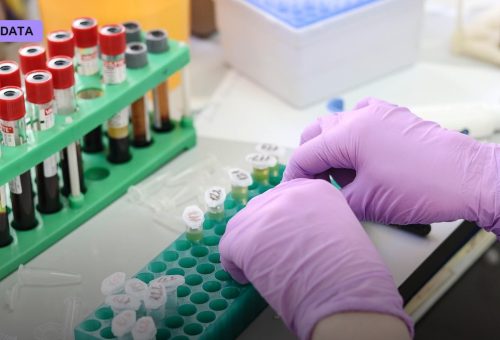
Novo Nordisk, the Danish drugmaker behind Ozempic and Wegovy, announced on September 17, 2026 that it is bringing Anthropic’s Claude into its drug discovery labs, deploying a version of the AI company’s models called Claude Science to help its scientists tackle research problems that have historically taken years to work through by hand. The deal makes Novo one of the most aggressively AI-integrated pharmaceutical companies in the world, having now struck major partnerships with two of the leading AI labs within the same calendar year.
What the partnership actually covers
Under the agreement, Novo Nordisk will begin testing Claude Science in selected research and development workflows, focusing on scientific problems where the company believes the combination of its biological expertise and Anthropic’s AI can have the greatest impact. The companies say they will jointly work on drug discovery challenges identified by Novo’s scientists and computational biology teams, developing targeted tools to support what the firms describe as biological reasoning — the kind of hypothesis generation and evidence-weighing that has traditionally required teams of PhD researchers combing through experimental data, scientific literature and molecular structures. Claude will also be used for AI-driven software development inside Novo’s research organization, a nod to how much of modern drug discovery now runs on custom computational pipelines rather than wet-lab work alone.
The second major AI deal of the year for Novo
This is not Novo’s first swing at embedding a frontier AI lab into its research pipeline. In April 2026, the company struck a separate partnership with OpenAI to use its models across drug discovery, manufacturing, commercial operations and supply-chain management — a far broader mandate spanning the entire business rather than research alone. Taken together, the two deals reflect a strategy Novo’s chief executive has described as making the company the world’s most AI-driven healthcare business. Stacking multiple frontier-model partnerships side by side is itself notable: rather than betting on a single AI vendor, Novo appears to be treating different labs’ models as complementary tools suited to different parts of its pipeline, testing which platforms perform best on which categories of scientific problems.
Why pharma is racing into AI-driven discovery
The move fits a broader industry pattern. The market for AI in drug discovery is projected to reach roughly $3 billion in 2026 and grow at more than 23% annually through 2032, according to industry market research, as AI tools move from experimental side projects into core capabilities spanning target identification, hit discovery, lead optimization, toxicity prediction, biomarker discovery and clinical trial design. Traditional drug discovery is notoriously slow and expensive — bringing a single new medicine to market can take a decade or more and cost well over a billion dollars, with the vast majority of candidate compounds failing somewhere along the way. Pharmaceutical executives have increasingly argued that AI models capable of reasoning over biological and chemical data can compress the earliest, most exploratory stages of that pipeline, even if they cannot yet replace clinical trials.
Skepticism about how much AI can really deliver
Not everyone in the industry is convinced the current wave of AI partnerships will translate into faster drugs reaching patients. Critics note that pharmaceutical R&D has seen previous waves of hype around computational tools — from early bioinformatics to first-generation machine learning — that produced incremental gains rather than the step-change improvements companies promised investors. Large language models like Claude are fundamentally pattern-recognition and reasoning systems trained on text and data; whether that translates into genuinely novel biological insight, as opposed to faster literature synthesis and coding assistance, remains an open empirical question that will only be answered once compounds discovered with heavy AI assistance clear clinical trials. Because Novo has not disclosed specific financial terms or concrete discovery targets tied to the Anthropic deal, outside observers currently have little way to measure its success beyond the company’s own future disclosures.
What to watch next
Novo says it will start by testing Claude Science on a narrow set of research workflows before deciding how far to expand its use, a cautious rollout that suggests the company itself is still gathering evidence on where the AI adds the most value. Industry analysts will be watching whether Novo publishes any data on how AI-assisted programs perform against traditional discovery timelines, and whether rival drugmakers — many of which have already struck their own AI partnerships, including Isomorphic Labs’ work with major pharma companies and Schrödinger’s licensing deals — begin disclosing comparable efficiency metrics. With roughly 80% of life-sciences organizations telling surveyors they plan to increase AI budgets over the next year, and nearly a quarter expecting to double spending, the coming year is likely to produce the first real test of whether these high-profile AI partnerships shorten the path from lab bench to pharmacy shelf.
Photo: Pexels / PIXABAY via Pixabay