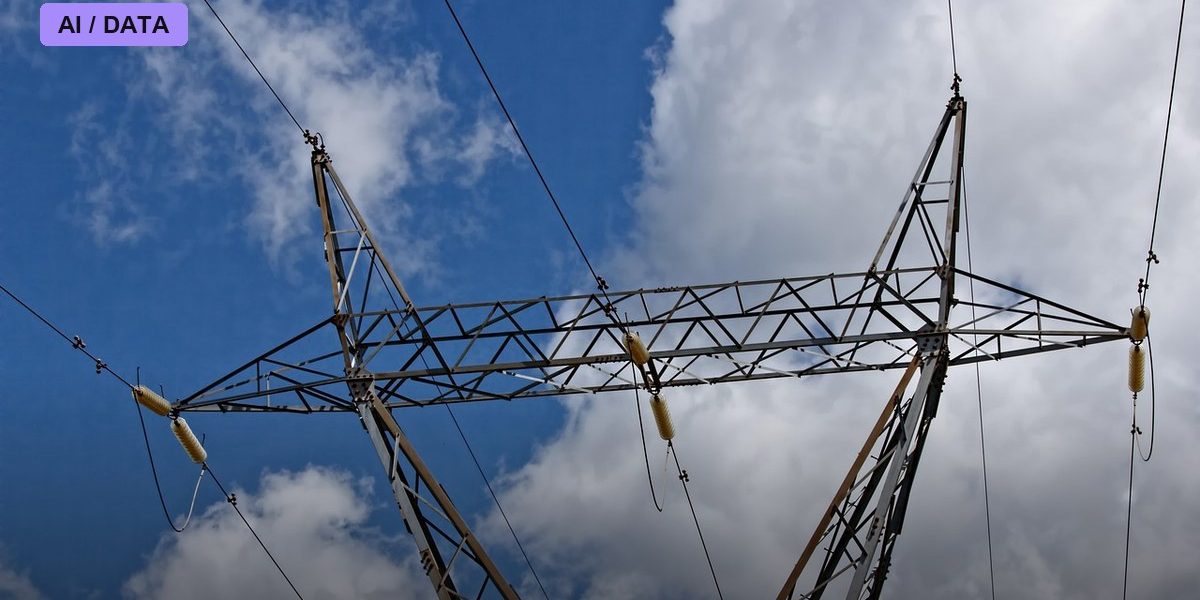
Nvidia, Google and the grid-software startup Emerald AI announced on September 16, 2026 that they are launching the AI Energy Management Alliance (AEMA), a coalition aimed at solving what has become the single biggest bottleneck in AI expansion: electricity. Rather than asking utilities to build ever more power plants and transmission lines to serve data centers, the alliance is pushing a different fix — data centers that can dynamically throttle their own electricity draw when the grid is under stress, in exchange for getting connected to that grid far faster than today’s multi-year waiting lists allow.
Power, not chips, is now the constraint
For the past two years, the AI industry’s bottleneck narrative has centered on GPU supply. That story is shifting. Data center operators across the country are now waiting years, not months, for utilities to approve new grid connections, because interconnection queues were designed for conventional, steady-load industrial customers, not facilities that can suddenly demand hundreds of megawatts to train or run a frontier model. The AEMA’s founding members argue that traditional planning processes simply were not built for computing loads that can be made flexible, and that this mismatch, not chip scarcity, is now the more binding constraint on how fast new AI capacity can come online.
How a "flexible" data center actually works
The alliance’s technical premise is that AI data centers do not have to behave like an all-or-nothing load on the grid. A facility can be engineered to shift some computing workloads to off-peak hours, draw down battery storage during demand spikes, lean on on-site or paired power generation, or briefly reduce its draw during a grid contingency — all without meaningfully disrupting AI training or inference operations, according to the companies. Emerald AI has built software specifically to orchestrate this kind of dynamic load-shedding, treating a data center less like a fixed appliance and more like a controllable resource utilities can call on, similar to how demand-response programs already work with large industrial customers and, increasingly, home batteries and EVs.
Who has signed on
Beyond founding members Nvidia, Google and Emerald AI, the coalition’s launch partners span the full AI-to-power value chain: Anthropic, The AES Corporation, Constellation, Generate, National Grid, NRG Energy, Analog Devices, Calibrant Energy, Camus, ClearPath, encoord, Fluence, GridUnity, PassKey Inc., RWE, Splight, Verrus and Voltus. The mix is telling — it includes AI labs that need the compute, chipmakers that build it, utilities and independent power producers that must supply it, and a cluster of grid-software and energy-storage firms that specialize in exactly the kind of real-time balancing the alliance is trying to standardize. The group says its near-term work will focus on developing technology-neutral, performance-based requirements and standardized technical specifications so that grid operators can qualify a "flexible" data center once, rather than negotiating bespoke terms with every applicant.
The backdrop: a summer of gigawatt-scale power deals
The alliance lands on top of a string of enormous AI-power agreements struck earlier in 2026. Nvidia said in August it would provide $105 billion in financing tied to an OpenAI data center project in Ohio being built by SB Energy, the Softbank-, Nvidia- and OpenAI-backed developer that filed for its own IPO in early September. Microsoft separately signed a deal with Brookfield Renewable Partners for 10.5 gigawatts of power, while Google struck a roughly 3 gigawatt agreement with the same firm. Those deals show hyperscalers racing to lock up generation capacity directly; the AEMA is a complementary bet that even with new power plants coming online, the interconnection process itself — the paperwork and engineering studies that determine when a facility can actually plug in — needs to change just as urgently.
Supporters say this avoids a costly grid buildout
Proponents frame flexible data centers as a way to sidestep the alternative: taxpayer- and ratepayer-funded transmission and generation upgrades sized for the AI industry’s peak, worst-case demand. If facilities can reliably shed load during system stress, grid operators can connect more AI capacity using existing infrastructure, reducing the risk that residential electricity bills rise to subsidize hyperscale data centers. Utilities like National Grid and RWE, both AEMA launch partners, have publicly worried about the reliability implications of dozens of gigawatt-scale, inflexible loads landing on grids in a short window; a resource that can flex down on command is, in their framing, fundamentally less risky to connect quickly.
Skeptics question whether flexibility can scale to frontier workloads
Critics are less sure the concept holds up at the scale AI companies actually need. Training runs for frontier models are increasingly synchronized, GPU-cluster-wide jobs that are difficult to pause or shift without wasting expensive compute time and electricity already spent on partial training runs; inference workloads serving live products have their own latency demands that make throttling risky from a user-experience standpoint. Energy analysts have also noted that voluntary alliances carry no enforcement mechanism — there is nothing compelling a member utility or data center operator to actually implement flexible operations rather than simply signing on for the publicity of being an early member. And because the AEMA’s own announcement does not commit to specific megawatt or gigawatt targets, or a timeline for when standardized interconnection rules might actually be adopted by regional grid operators like PJM or ERCOT, some observers see the launch as an important signal of intent rather than a binding operational change.
What to watch next
The real test for the AI Energy Management Alliance will be whether any of its 20-plus members can point to an actual data center that gets interconnected faster because it qualified as flexible under the group’s forthcoming technical standards. That will require regional grid operators and state utility regulators — none of which are founding members — to actually adopt the alliance’s proposed frameworks into their interconnection rules, a process that historically moves far slower than corporate press releases. If it works, the model could become a template other AI-heavy regions and countries copy as they face the same power crunch; if it stalls in the standards-writing phase, the industry’s electricity bottleneck will keep falling back on the blunter, far more expensive tool hyperscalers have already been reaching for all year: buying gigawatts of power outright.
Photo: stevepb / PIXABAY via Pixabay