AbbVie has struck a multi-year collaboration with AI drug discovery startup Iambic Therapeutics, announced September 21, 2026, aiming to accelerate the search for small molecule therapies across immunology, neuroscience and oncology, three of the disease areas that make up the bulk of AbbVie’s pipeline since its blockbuster arthritis drug Humira lost patent protection.
Why AbbVie Needs New Chemistry, Fast
AbbVie has spent several years racing to replace the revenue Humira once generated before biosimilar competitors entered the market, leaning on drugs like Skyrizi and Rinvoq to fill the gap while also hunting for entirely new molecules that could become the next generation of blockbusters. Traditional small molecule drug discovery, which involves synthesizing and testing thousands of chemical compounds against a biological target, can take three to six years and cost hundreds of millions of dollars before a single candidate reaches human trials. AbbVie’s leadership has said publicly that shortening this cycle is now a strategic priority as competition intensifies across immunology and oncology.
What Iambic Brings to the Table
Iambic Therapeutics, a Bay Area computational chemistry company, uses generative AI models to design and predict the properties of drug-like molecules before they are ever synthesized in a lab, a process the company says can compress the hit-to-lead phase of drug discovery from years to months. The partnership gives AbbVie access to Iambic’s modeling platform for identifying molecules with first-in-class or best-in-class potential, meaning compounds that either work through an entirely new mechanism or outperform existing treatments in the same class.
The Broader Industry Race
AbbVie’s deal lands amid a wave of similar partnerships across big pharma, as companies from Eli Lilly to Novartis strike agreements with AI-native biotechs rather than building every capability in-house. Market researchers tracking the sector estimate the AI drug discovery market was worth roughly $2.55 billion in 2025 and could grow past $31 billion by 2035, reflecting how quickly pharmaceutical companies have shifted from treating AI as an experimental side project to a core part of research and development budgets.
Skeptics Point to a Thin Track Record
Despite the enthusiasm, AI-designed drugs have a mixed record so far. Several AI-discovered molecules that reached clinical trials in recent years failed in mid-stage testing, prompting some veteran drug hunters to argue that AI is better at speeding up the early, cheaper stages of discovery than at solving the deeper biological uncertainty about whether a molecule will actually work safely in humans. Iambic and AbbVie have not disclosed specific compounds or financial terms of the deal, making it difficult for outsiders to judge how ambitious the collaboration’s early targets are.
What Success Would Actually Look Like
Industry analysts say the real test of AI drug discovery partnerships is not how many molecules a platform can generate, but how many survive the brutal attrition of clinical trials, where the vast majority of drug candidates historically fail. AbbVie has structured the Iambic deal, like many of its peers, around milestone payments tied to specific research and development achievements rather than upfront cash, a structure that limits AbbVie’s financial risk while giving Iambic incentive to deliver validated leads rather than just computational promises.
What’s Next
Neither company has set a public timeline for when a molecule from the collaboration might enter clinical testing, but AbbVie has signaled it expects the partnership to feed multiple therapeutic areas simultaneously rather than focus on a single target. Analysts covering the deal say the next meaningful update will likely come when AbbVie discloses whether any Iambic-originated compound advances into its formal pipeline disclosures, typically shared during quarterly earnings calls.
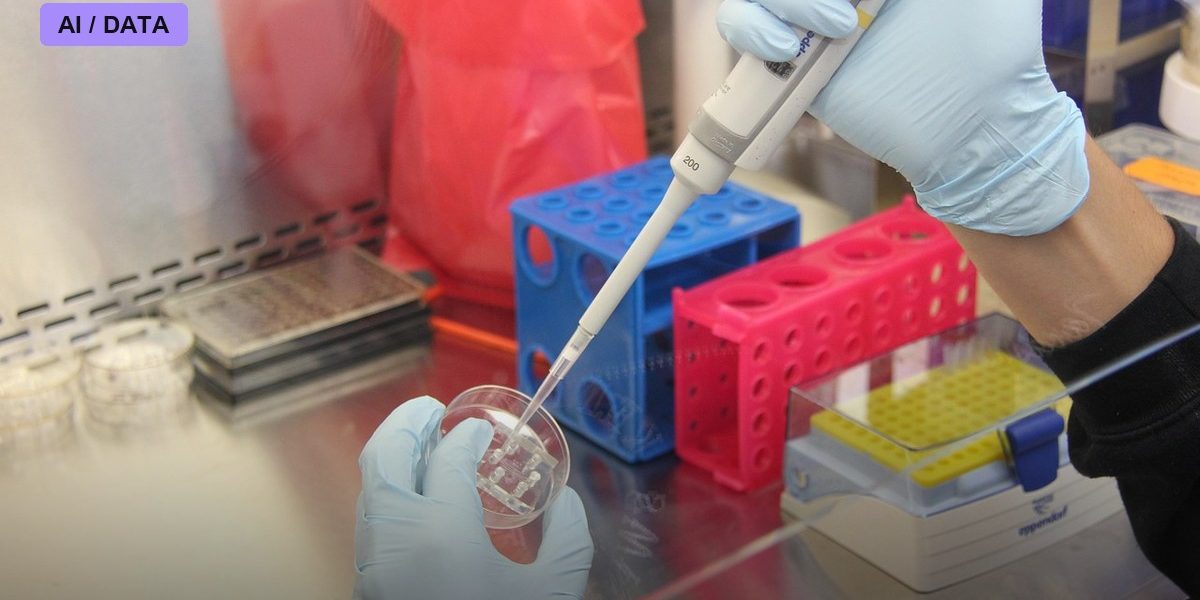
Photo: mwooten / PIXABAY via Pixabay