A standard 12-lead electrocardiogram takes about ten seconds to record and costs a fraction of an echocardiogram, but it has never been considered a reliable way to diagnose structural problems inside the heart’s chambers and valves. A new AI model called EchoNext is aiming to change that. On June 22, 2026, the FDA cleared EchoNext as the first artificial intelligence tool authorized to flag six distinct forms of structural heart disease using nothing but data from a routine ECG.
Built Inside a Cardiology Lab, Not a Tech Startup
EchoNext was developed by physicians and scientists at the Center for Cardiovascular and Radiologic Deep Learning, known as CRADLE, a research group affiliated with NewYork-Presbyterian and Columbia University. The model is now being commercialized through Pathway Labs, a company founded by one of the cardiologists involved in the research, which recently raised $8.5 million alongside the FDA clearance, according to trade coverage of the deal. The academic-to-startup pipeline is notable in a field where many AI diagnostic tools originate inside large medical device companies rather than hospital research labs.
The model was trained on more than 700,000 paired ECG and echocardiogram records drawn from across the NewYork-Presbyterian health system, giving it a dataset large enough to learn subtle electrical signatures that correlate with structural abnormalities a human reader would never associate with a flat ECG tracing. The six conditions EchoNext is cleared to flag include right- and left-sided heart failure, valve disease, and severe hypertrophy consistent with infiltrative cardiomyopathy, along with pulmonary hypertension.
Outperforming Cardiologists in Head-to-Head Testing
The clearance rests partly on a 2025 study published in Nature, in which EchoNext correctly identified structural heart problems from ECGs alone 77% of the time. Cardiologists reading the identical ECG tracings, without access to echocardiogram results, were accurate only 64% of the time. That gap is the crux of the clinical argument for EchoNext: it isn’t claiming to replace echocardiography, which remains the diagnostic gold standard, but to catch cases that would otherwise go undetected because a patient was never referred for the more expensive, less accessible echo study in the first place.
That distinction matters because echocardiograms require specialized equipment and a trained sonographer, resources that are scarce in rural hospitals, urgent care settings, and primary care offices. An ECG, by contrast, can be performed almost anywhere. If an algorithm can reliably use that ubiquitous test to identify which patients actually need an echo, proponents argue it could meaningfully shorten the path to diagnosis for structural heart conditions that often go unnoticed until a patient reaches advanced heart failure.
Free Access Through a Clinical Decision Platform
Rather than selling EchoNext as a standalone hospital license, Pathway Labs is making it available to clinicians at no cost through OpenEvidence, an AI-based clinical decision support platform that has gained traction among physicians searching for point-of-care answers. That distribution choice could accelerate adoption far beyond what a traditional enterprise sales process to individual hospital systems would achieve, though it also means the tool’s reach will depend heavily on how embedded OpenEvidence becomes in everyday clinical workflows.
The Skeptic’s Case
Not every cardiologist is ready to treat a 77% accuracy rate as a green light for routine use. Structural heart disease encompasses a wide range of severity, and a tool that performs well in aggregate across a validation study can still miss specific subtypes or perform differently in patient populations that look different from the training cohort, which was drawn from a single health system’s patient base. There is also the standing concern, raised around nearly every FDA-cleared AI diagnostic tool to date, that clearance based on retrospective validation data doesn’t guarantee the same performance once a tool is deployed across diverse hospitals, demographics, and ECG machine manufacturers.
Clinicians have also flagged a more practical worry: alert fatigue. If EchoNext flags a meaningful share of ECGs as suspicious for structural disease, primary care physicians and emergency departments could face a wave of follow-up echocardiogram referrals, straining the very specialist capacity the tool is meant to help allocate more efficiently.
What’s Next for ECG-Based Screening
EchoNext’s clearance lands amid a broader wave of FDA authorizations for AI models that extract disease signals from standard ECGs, a trend that reflects how much untapped information cardiologists believe is buried in the ten-second tracing. Other companies have won separate clearances for ECG-based detection of conditions like cardiac amyloidosis and pulmonary hypertension, suggesting the next frontier in cardiology AI may not be new imaging hardware at all, but smarter interpretation of a test that has existed, largely unchanged, for more than a century. Whether health systems adopt these tools broadly will likely hinge on reimbursement decisions and on real-world performance data that only widespread clinical use can generate.
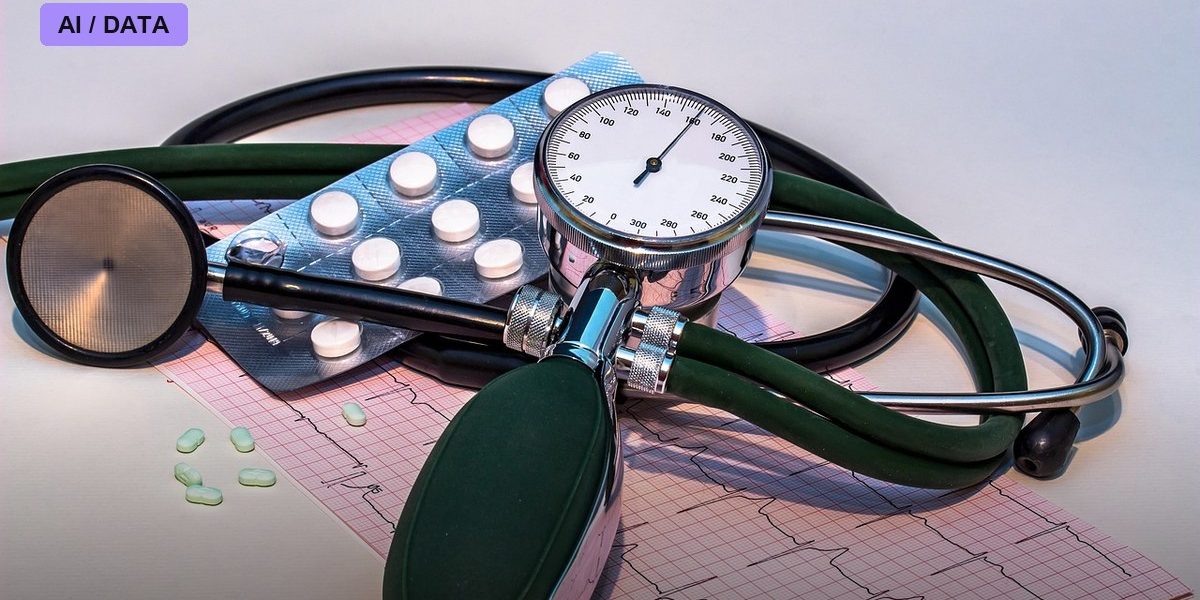
Photo: Myriams-Fotos / PIXABAY via Pixabay