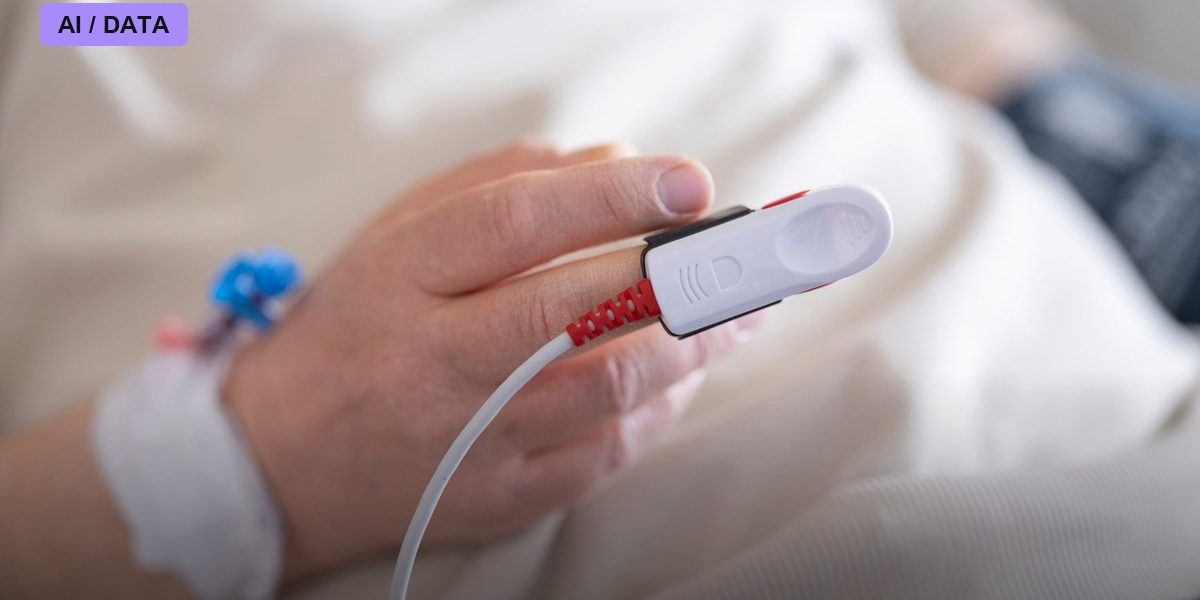
Medtronic has won FDA 510(k) clearance for a new version of its workhorse Nellcor pulse oximetry system built around a processor called Nell-EQ, designed specifically to close a long-documented gap in how the devices read blood oxygen levels in patients with darker skin. The clearance, announced June 8, 2026, targets a problem that has dogged pulse oximetry for decades and drew renewed scrutiny during the COVID-19 pandemic, when studies found the fingertip clips could overestimate oxygen saturation in Black patients, sometimes masking dangerously low oxygen levels that would have triggered treatment in a white patient with identical blood chemistry.
A Known Blind Spot in a Basic Hospital Tool
Pulse oximeters work by shining light through a fingertip and measuring how much is absorbed by oxygenated versus deoxygenated blood, a method that researchers have shown can be thrown off by melanin in the skin. The issue is not new to 2026; it has been studied since at least the 1990s, but it gained urgency during the pandemic when clinicians relied heavily on oxygen readings to decide who needed hospitalization or supplemental oxygen. Multiple peer-reviewed studies found that hidden hypoxemia, oxygen levels low enough to warrant treatment but not flagged by the device, occurred roughly three times more often in Black patients than in white patients. The FDA has since pushed device makers toward more rigorous testing across skin tones, and the International Organization for Standardization followed with ISO 80601-2-61:2026, a new standard that explicitly calls for evaluating pulse oximeter accuracy across defined skin tone groups.
How Nell-EQ Reads Light Differently
The Nell-EQ intelligent processor is Medtronic’s answer to that pressure. Rather than applying a single calibration curve to every patient, the system uses signal processing that accounts for patient-specific and sensor-specific signal characteristics, in effect adjusting how it interprets the raw optical signal based on the individual reading it is taking. Beyond standard SpO2 and pulse rate, the cleared system also reports perfusion index and heart rate variability, giving clinicians additional context about signal quality and the reliability of a given reading in real time.
Testing Across the Full Range of Skin Tones
Medtronic says its clinical program for Nell-EQ was built specifically to validate performance across the full range of skin pigmentation rather than treating diversity as an afterthought. Public details include one study of 146 healthy subjects across a saturation range of 92 to 96 percent, and a separate study of 319 children with varying skin tones undergoing cardiac catheterization, a setting where precise, continuously verified oxygen readings are especially important. Kate Benedict, president of Medtronic’s Acute Care & Monitoring business, said the clearance “builds on our longstanding commitment to delivering reliable monitoring performance for diverse patient populations across care environments,” while Dr. Jeb Denny, the company’s chief medical officer, framed it as part of “a deep commitment to inclusive innovation and equipping clinicians with trusted technology that supports high-quality care for all patients.”
A New Global Standard Pushes the Whole Industry
Medtronic is not alone in racing to fix this problem. Philips has also recently won FDA clearance for a new pulse oximeter aimed at similar accuracy gaps, and the FDA itself has signaled it wants manufacturers to meet tougher evidentiary bars before a device reaches the bedside. The timing of Nell-EQ’s clearance, arriving as ISO 80601-2-61:2026 raises the bar on how skin tone performance must be documented, suggests device makers are treating this less as a one-off fix than as a baseline requirement going forward. Medtronic says the Nellcor system with Nell-EQ will be available for sale globally in the coming months, which would put updated devices into hospitals sometime in late 2026 and into 2027.
Believers and Skeptics
Patient-safety advocates and equity researchers have largely welcomed the clearance as evidence that years of published criticism finally moved device makers to act, rather than merely acknowledging the problem in footnotes. But some clinicians and biomedical engineers caution that a single manufacturer’s updated processor does not resolve the broader issue: the vast majority of pulse oximeters already installed in hospitals, clinics, and home-use devices were cleared under older standards and will keep producing the same skewed readings until they are physically replaced, a process that typically takes years given how embedded the devices are in hospital capital budgets. There is also an open question of how Nell-EQ performs outside the controlled conditions of a clinical trial, where lighting, motion, and nail polish or cold extremities can all degrade sensor accuracy regardless of the underlying algorithm.
What Comes Next
The real test for Nell-EQ will be adoption speed. Hospitals replace monitoring equipment on long cycles, and Medtronic’s global rollout timeline means it could be well into 2027 before the updated processor is common in intensive care units and operating rooms rather than a premium option. Still, the clearance adds momentum to a broader shift already underway across the industry, one where skin-tone-inclusive testing is becoming table stakes for new monitoring devices rather than a differentiator, and where regulators on both sides of the Atlantic appear increasingly willing to hold manufacturers to that standard before granting approval.
Photo: Engin Akyurt / PEXELS via Pexels