Ask two dermatopathologists to look at the same ambiguous mole biopsy and they will frequently disagree — not at the margins, but close to a coin flip. A large study of pathologists examining diagnostically challenging melanocytic lesions found that inter-observer concordance and accuracy compared with a consensus reference diagnosis both fell below 50 percent for the hardest cases. In March 2026, the FDA granted Breakthrough Device Designation to PathAssist Derm, an AI tool built by Boston-based PathAI designed to help pathologists navigate exactly that gray zone.
What Breakthrough Device Designation actually means
The FDA’s Breakthrough Device program doesn’t approve a product for sale — it fast-tracks the regulatory review process and grants the company more frequent interaction with FDA staff for devices that could offer more effective treatment or diagnosis of life-threatening or irreversibly debilitating conditions. PathAI CEO Andy Beck called the designation “a powerful acknowledgement of our AI capabilities and our commitment to bringing rigorously validated, clinically relevant tools to the field of digital pathology.” For a company competing in an increasingly crowded digital pathology market, the designation functions both as a regulatory shortcut and as a credibility signal to hospital systems deciding which AI vendor to trust with a cancer diagnosis workflow.
The caseload problem driving the need
PathAssist Derm is designed to analyze digital whole-slide images of skin lesion biopsies and assist pathologists during their review, supporting case triage and workflow prioritization so that the most urgent or ambiguous cases get attention faster. The tool is entering a specialty under real strain: dermatopathologists face rising biopsy volumes driven by both a genuine increase in skin cancer incidence and more aggressive screening, while the discrepancy problem in melanocytic lesions specifically — the category that includes melanoma, the deadliest common skin cancer — has been documented in pathology literature for years without a clean technological fix. The appeal of an AI second read is that it could flag discordant or high-risk cases for additional scrutiny before a possibly wrong diagnosis reaches a patient.
Why many dermatologists remain unconvinced
Enthusiasm from the company is not universally shared on the clinical side. Surveys of dermatologists have found that less than half currently believe AI tools will improve clinical care, and broader patient-trust research has found a similarly wide gap: in one survey, only about 37 percent of patients said they trusted an AI’s diagnostic accuracy, compared with roughly 93 percent who trusted a human dermatologist’s judgment. Medical ethicists writing about AI-assisted interpretation in dermatopathology have also flagged an unresolved accountability question: if an AI-assisted read misses or misclassifies a melanoma, it remains unclear under current law whether liability falls on the pathologist who reviewed the AI’s output, the hospital that deployed the tool, or the company that built it — a gap regulators have not yet closed even as adoption accelerates. There is also a more subtle worry raised in the ethics literature: that pathologists who lean on an AI triage tool for years could see their own pattern-recognition skills atrophy, becoming more dependent on the software precisely in the ambiguous cases where independent human judgment matters most.
The counterargument from inside pathology
Proponents of tools like PathAssist Derm point out that the comparison shouldn’t be AI versus a hypothetical perfect pathologist — it should be AI-assisted pathologists versus the documented sub-50-percent concordance rate that already exists in difficult cases today. Research reviews comparing AI systems against clinicians on skin cancer diagnosis broadly have found that AI can match or exceed average clinician accuracy in certain narrow, well-defined image classification tasks, though performance drops when cases fall outside the specific lesion types and imaging conditions a model was trained on — which is exactly the brittleness critics worry about if PathAssist Derm is deployed broadly without careful validation at each new hospital site.
What’s next
Breakthrough Device Designation accelerates PathAI’s path toward a full FDA marketing authorization, but it is not that authorization itself, and the company has not disclosed a timeline for when PathAssist Derm might reach routine clinical use or how large the validation studies supporting a future clearance will be. The unresolved questions are precisely the ones critics have raised: how the tool performs on lesion types and patient populations outside its original training data, who bears responsibility when an AI-assisted read goes wrong, and whether pathologists end up using it as a genuine second opinion or as a workflow shortcut that quietly becomes the default. With skin cancer rates climbing and pathology caseloads growing faster than the specialist workforce, the pressure to find out quickly is real — but so is the fact that the hardest melanocytic cases are hard precisely because they resist easy answers, whether given by a human or a machine.
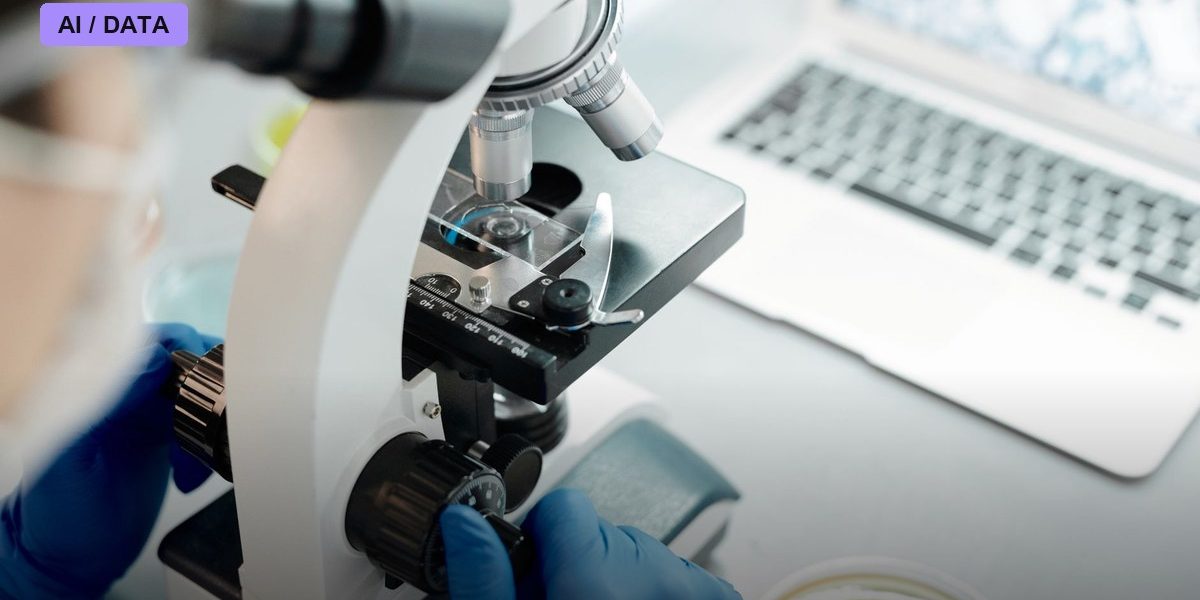
Photo: Edward Jenner / PEXELS via Pexels