On September 30, 2026, the University of Vermont announced the largest research award in its history: up to $38 million from the Advanced Research Projects Agency for Health, the Department of Health and Human Services’ moonshot-funding arm, to build AI-powered digital twins of critically ill patients. The project, called ReSCUED, is led by Dr. Gary An, a UVM trauma surgeon at the Larner College of Medicine, and it aims to do something intensive care has never managed at scale: model a single patient’s immune response in close to real time and let doctors test treatment strategies on the simulation before trying them on the person.
How intensive care got stuck guessing
Roughly 4.6 million Americans pass through an ICU every year, at a collective cost estimated as high as $70 billion. Critical illness — sepsis, trauma, major surgery gone sideways — triggers an immune and inflammatory cascade that behaves differently in almost every patient, which is exactly why ICU treatment protocols have historically been built around population averages rather than the person in the bed. An’s team has spent years arguing that this one-size-fits-most approach is the reason ICU outcomes have plateaued even as monitoring technology has improved. “The complexity of critical illness exceeds what any individual can interpret in real time,” An said of the problem ReSCUED is meant to solve.
What the digital twin actually does
The system draws blood every six hours to track immune and inflammatory markers, feeds those readings into a mathematical model of the patient’s physiology, and uses AI to run virtual experiments — testing how a given drug, dose, or intervention might play out before a clinician commits to it. It is less a prediction engine than a flight simulator for treatment decisions, built specifically because human intuition and static lab values can’t keep pace with how fast a critically ill patient’s condition shifts.
Who else is in the room
The project is funded through ARPA-H’s CIRCLE program — Critical Illness Immunological Reprogramming and Control Point Learning Engine — and runs as a five-year, milestone-based award, meaning funding continues only if early benchmarks are hit. Clinical testing sites include Wake Forest University School of Medicine, the University of Alabama at Birmingham’s Heersink School of Medicine, and Washington University School of Medicine, with private partners DNA Medicine Institute in Cambridge, Massachusetts, and California-based InflammaSense contributing diagnostic and sensing technology.
The case for skepticism
Digital twins have been a buzzword in health tech for years, often applied loosely to anything involving patient data and a dashboard. ARPA-H’s milestone structure is itself an acknowledgment that the idea is unproven at this scale — the agency is explicitly underwriting a high-risk, high-reward bet rather than funding an incremental improvement. Critics of real-time physiological modeling point out that immune response is still only partially understood, and a model built on imperfect biology can generate false confidence as easily as false alarms. There’s also the practical question of whether ICU staff, already stretched thin, can fold six-hourly blood draws and a new decision-support layer into bedside workflow without adding friction at the worst possible moment. Nurses and intensivists already juggle ventilators, dialysis machines, and a dozen other monitors in a single bed space, and any new system that demands attention without visibly improving outcomes in the first weeks of use risks becoming the kind of alarm clinicians learn to tune out rather than heed.
Why ARPA-H is willing to pay for it anyway
The target the project has set for itself is concrete: at least a 25 percent reduction in ICU length of stay if the digital twin approach works as designed. Even a fraction of that gain, applied across 4.6 million ICU admissions a year, would represent a meaningful dent in both mortality risk and the tens of billions of dollars spent on critical care annually — which is the kind of return that justifies a nine-figure federal wager on an unproven technology. ARPA-H was created specifically to fund exactly this category of bet: ideas too early-stage and too risky for the National Institutes of Health’s more incremental grant process, but with a payoff large enough that even a modest chance of success is worth underwriting at scale.
What’s next
The first phase of ReSCUED will focus on building and validating the modeling pipeline using data from the four clinical sites before any bedside deployment begins. Because the award is milestone-based, expect ARPA-H to publish interim benchmarks rather than wait five years for a single verdict — and expect other academic medical centers to watch closely, since a validated digital-twin framework for sepsis and critical illness could become a template other ICUs license or replicate rather than build from scratch.
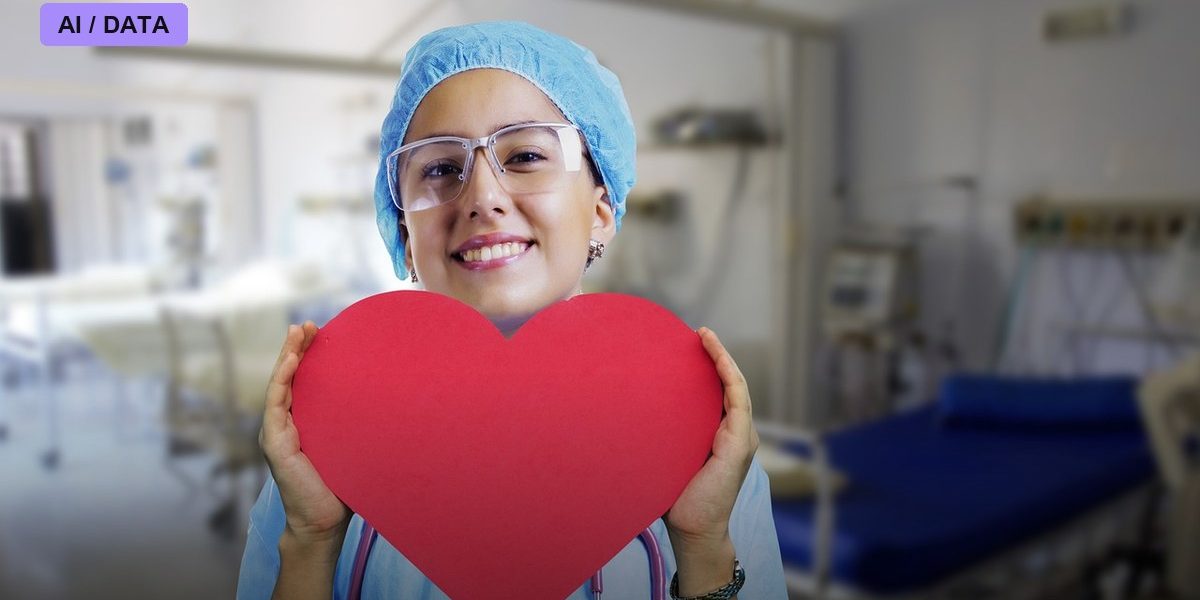
Photo: geralt / PIXABAY via Pixabay