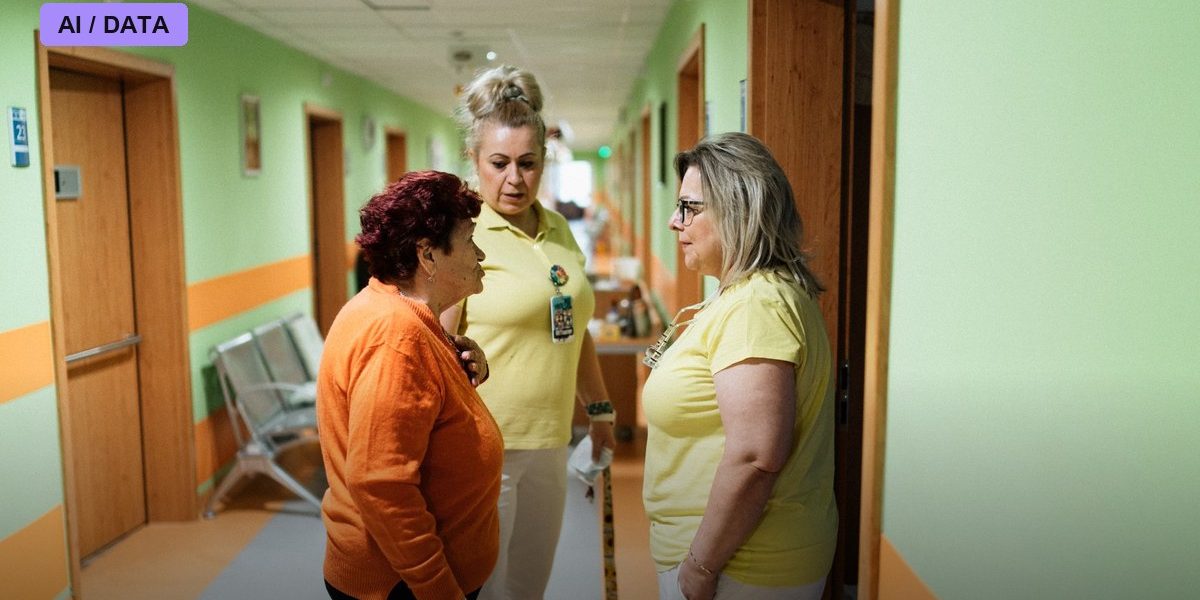
At Judson Senior Living in Ohio, a new kind of resident has joined the community: an AI-powered companion robot named Navi. Developed in partnership with Case Western Reserve University and funded by the National Institutes of Health, the year-long pilot study is testing whether a robot can help residents, particularly those experiencing early cognitive changes, stay on top of daily routines and reminders while giving stretched caregiving staff some relief.
The Caregiver Shortage Behind the Pilot
Senior living providers across the country are grappling with a persistent shortage of direct-care workers, a problem that predates AI but has pushed operators to look for technology that can extend, rather than replace, the staff they already have. Judson’s leadership frames Navi’s role explicitly in those terms: the robot is meant to complement human caregivers, handling routine prompts and check-ins, not substitute for the relationships and hands-on care that residents depend on.
What Navi Actually Does
Navi is designed to support daily routines, offer reminders, and provide safety cues for residents, particularly those with early cognitive changes who may struggle with medication schedules, appointments, or basic daily structure. Researchers are using the pilot to gather feedback directly from residents, their families, caregiving staff, and administrators to determine whether an AI companion like Navi has a practical role to play in future senior living models, rather than assuming the answer in advance.
Why Case Western and NIH Are Watching Closely
The involvement of Case Western Reserve University researchers and National Institutes of Health funding signals that this is meant to be a genuine research study, not a marketing pilot. The one-year timeline allows the team to track outcomes across the seasons and routines of a full year in senior living, including how residents’ responses to the robot might change as they become more familiar with it, or as their own health and cognitive status evolves over that period.
The Open Questions Researchers Haven’t Answered Yet
Companion and assistance robots in eldercare have a mixed track record. Some residents take quickly to a robotic presence that offers patient, repeatable reminders without the time pressure a busy human aide might feel; others find the novelty wears off or feel uncomfortable with a machine in an intimate care setting. Judson and Case Western’s pilot is explicitly structured to capture that range of reactions rather than report a single success metric, which means the most useful result may be a nuanced picture of which residents benefit, which don’t, and why, instead of a blanket verdict on robot companions.
How This Fits a Broader Pattern in Eldercare AI
Judson’s pilot arrives alongside a wave of similar experiments worldwide, from robot deployments in South Korean nursing homes to commercial companion devices marketed directly to isolated seniors. What distinguishes the Navi pilot is its academic rigor: an NIH-funded, university-partnered study gathering structured feedback over a full year, rather than a vendor-reported satisfaction survey. That distinction matters because the eldercare robotics field has previously relied heavily on self-reported outcomes from companies with a commercial stake in positive results.
What Comes Next for Navi and Judson’s Residents
At the end of the pilot, Judson and the Case Western research team plan to use what they learn to help determine whether AI companion tools belong in future senior living models, and if so, in what form. For an industry facing both a workforce shortage and a growing population of residents who may benefit from extra support with daily routines, a rigorously studied answer, rather than another round of marketing claims, would be a meaningful contribution. For now, Navi remains a pilot confined to one Ohio community, with its broader usefulness still an open and actively studied question.
Why the Funding Source Shapes the Study’s Credibility
Much of the existing evidence on companion robots in eldercare comes from vendor-sponsored pilots that report high satisfaction scores without independent verification, a pattern that has made some researchers wary of taking commercial claims at face value. An NIH-funded study run through a university research arm, rather than a company’s own marketing department, is structured specifically to avoid that conflict of interest, with publication plans and data collection protocols set by academic researchers rather than by whichever company built the robot. That distinction is likely to matter considerably if the findings are eventually submitted to a peer-reviewed journal, where reviewers will scrutinize the study design far more closely than a press release would ever be scrutinized by the public.
Photo: Jsme MILA / PEXELS via Pexels