Few corners of medicine have absorbed generative AI faster than the exam room itself. Ambient AI scribes — software that listens to a doctor-patient conversation and drafts the clinical note automatically — have gone from novelty to near-standard offering at many U.S. health systems in under two years. A study published in JAMA this spring, run across five academic medical centers, now offers some of the clearest evidence yet of what these tools actually do to a clinician’s day, and the answer is more nuanced than the marketing suggests.
The headline numbers
Researchers found that ambient scribe use was associated with a 16-minute reduction in documentation time per visit and a 13.4-minute reduction in total electronic health record time. For clinicians who used the scribe in at least half of their visits — researchers called them heavy users — the savings grew to roughly 27 minutes of documentation time over an eight-hour clinical day. That’s a meaningful chunk of a workday handed back, in theory, to either seeing another patient or going home on time.
A second trial complicates the picture
A separate randomized crossover trial, also published this year, assigned 160 outpatient clinicians at a tertiary academic center to compare two different scribe products head-to-head, measuring burnout, workflow satisfaction and documentation efficiency rather than time alone. Early analysis suggests the choice of product matters almost as much as the decision to adopt a scribe at all — some tools integrate cleanly into existing EHR workflows, while others create new friction points, like awkward edit cycles or notes that need heavy rewriting to match a clinician’s style.
Where burnout numbers get murkier
A separate, less rigorous study led by a Yale-affiliated team tracked 263 clinicians across six health systems and found self-reported burnout fell from 51.9 percent to 38.8 percent after 30 days of scribe use — a striking drop. But that study used a before-and-after design with no control group, which means other factors (seasonal patient load, staffing changes, even the novelty of a new tool) could be inflating the apparent effect. The JAMA researchers behind the larger, more rigorous study have explicitly cautioned that time savings alone don’t fully explain changes in burnout, suggesting the psychological relief of simply feeling less rushed may matter as much as the minutes saved.
Why adoption is so uneven
Not every clinician who gets access to a scribe actually uses it regularly. Early rollouts at systems including Mass General Brigham and Emory found adoption curves that varied widely by specialty and even by individual physician comfort with having a conversation recorded, however briefly. Primary care doctors with high patient volumes and lots of narrative documentation tend to report the biggest gains; specialists doing highly structured visits — a quick post-op check, for example — report less benefit because their notes were never the time sink to begin with.
The skeptics’ case
Critics note that most of the strongest results come from heavy users, a group that self-selects for people who were already motivated to change their workflow — meaning the average effect across all clinicians who are handed a scribe license is smaller and less dramatic than the top-line numbers suggest. There are also unresolved questions about accuracy: AI-generated notes still require physician review and correction, and health systems have had to build separate tools just to check AI-drafted text against the patient’s actual record for factual errors.
What’s next
Expect more randomized, controlled studies to follow the JAMA model rather than the looser before-and-after design, since health system CFOs want harder evidence before signing multi-year contracts. Also expect vendors to compete harder on integration quality, not just transcription accuracy, since the data increasingly shows that how a tool fits into a clinician’s existing habits matters more than raw speech-recognition performance. The story of 2026 isn’t that AI scribes failed or succeeded — it’s that their benefit is a function of adoption discipline, not just the technology itself.
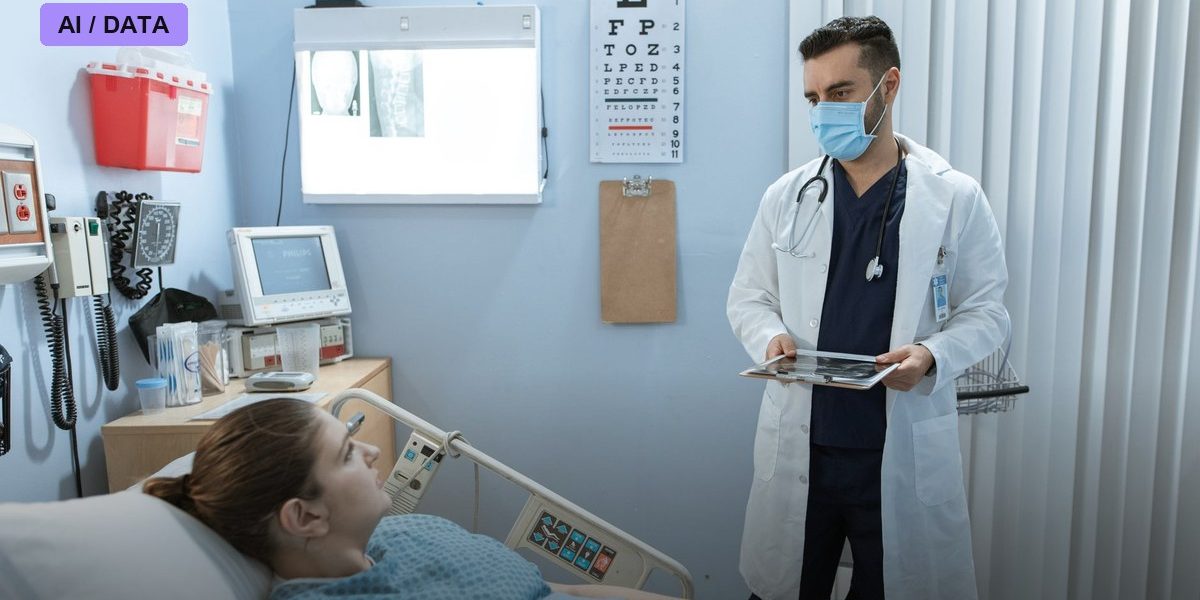
Photo: RDNE Stock project / PEXELS via Pexels