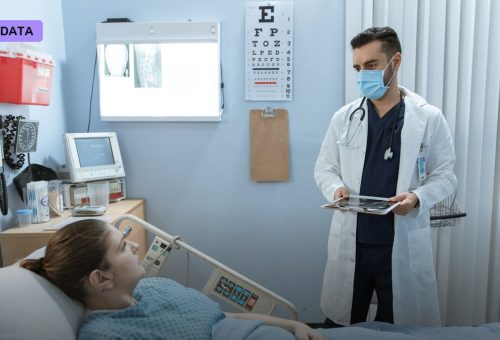
SimBioSys received FDA 510(k) clearance on October 16 for TumorSight Risk, software that combines breast MRI imaging, pathology data, and clinical history to estimate a patient’s risk of breast cancer recurrence at five and ten years. The tool generates a score from 0 to 100 and assigns patients to high, intermediate, or low risk categories, giving oncologists a new quantitative input for treatment planning decisions that have traditionally relied heavily on pathologist judgment and standardized staging criteria.
How TumorSight Risk Works
Unlike tools that rely on a single data type, TumorSight Risk integrates multiple modalities — imaging, pathology, and clinical history — into a single risk score, reflecting a broader trend in medical AI toward multimodal models that combine data sources the way an experienced clinician would when weighing a complex case. The company says this integrated approach can surface recurrence risk patterns that might not be obvious when a radiologist reviews imaging alone or a pathologist reviews tissue samples in isolation.
Why Recurrence Risk Scoring Matters
Breast cancer treatment decisions, including whether to recommend more aggressive therapy or additional monitoring, often hinge on recurrence risk estimates that have historically carried significant uncertainty, particularly for patients whose cases don’t clearly fit standard risk categories. A validated AI tool that provides a more granular, data-driven risk score could help oncologists better calibrate treatment intensity, potentially reducing both overtreatment of low-risk patients and undertreatment of patients whose risk is higher than conventional assessment would suggest.
Part of a Broader Wave of AI Oncology Clearances
SimBioSys’s clearance adds to a growing list of FDA-authorized AI tools for cancer diagnosis and risk assessment, part of more than 1,600 total AI-enabled medical device authorizations the FDA has granted as of this year, the vast majority through the agency’s 510(k) pathway for devices similar to already-approved products. The pace of clearances reflects both growing confidence among regulators in AI diagnostic tools and sustained investment from medical AI companies racing to establish themselves in specific diagnostic niches before competitors do.
Clinical Adoption Still Takes Time
FDA clearance is only the first step toward widespread clinical use; hospitals and oncology practices typically need to validate new AI tools against their own patient populations and integrate them into existing clinical workflows before adoption becomes routine. Some oncologists have cautioned that recurrence risk tools, however well validated in initial studies, require careful real-world monitoring to confirm they perform consistently across diverse patient populations, including those underrepresented in the data used to train the underlying models.
What’s Next
SimBioSys has not disclosed specific plans for commercial rollout timing or which health systems will be early adopters of TumorSight Risk. As with other recently cleared AI oncology tools, the company’s next challenge will be demonstrating real-world performance data that convinces oncology practices the tool improves outcomes meaningfully enough to justify integrating it into already complex treatment decision workflows.
Photo: Thirdman / PEXELS via Pexels