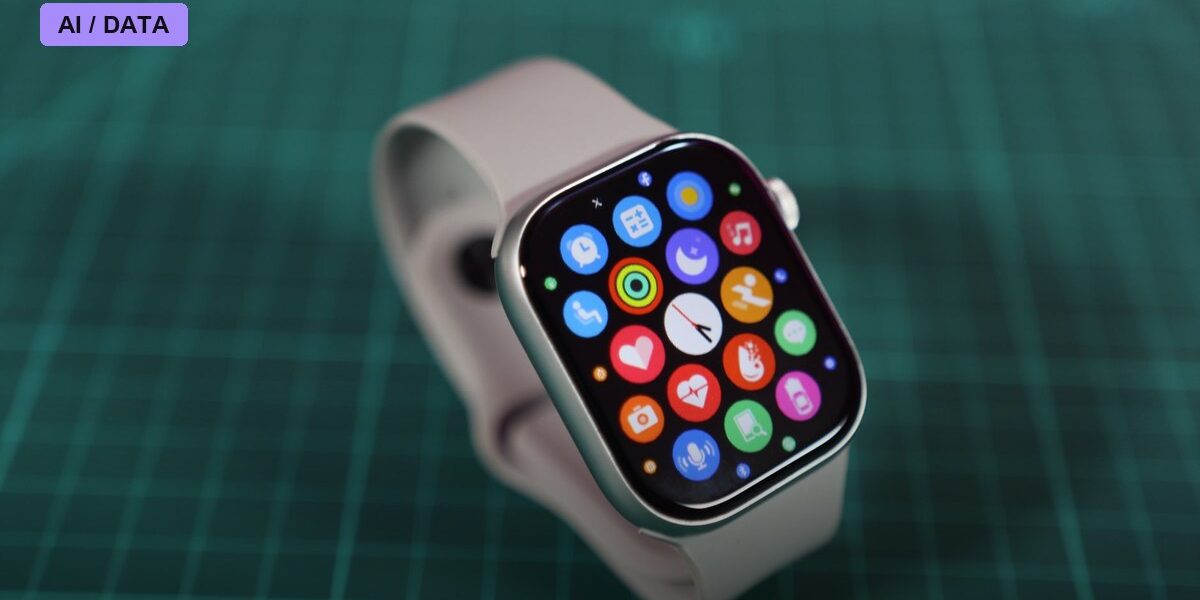
Google has retired the Fitbit app name entirely, relaunching it as Google Health with a redesigned interface and a Gemini-powered AI coach that can suggest workouts, answer health questions, and summarize uploaded medical records. The rollout, which began May 19 and reached full availability by May 26, folds in data from Health Connect and Apple HealthKit alongside Fitbit’s own wearable sensor data, creating a single dashboard the company says is meant to unify a user’s health picture across devices and platforms.
What’s New in the Redesign
Version 5.0 of the app streamlines navigation into four tabs — Today, Fitness, Sleep, and Health — replacing the daily step and activity goals Fitbit users were accustomed to with a weekly cardio target. The app’s long-standing Cardio Fitness Score metric has been renamed VO2 max, aligning Google’s terminology with the clinical measure used by exercise physiologists. Google is shutting down its separate, older Google Fit app later this year, consolidating its health and fitness tracking efforts into the single rebranded product.
The AI Coach’s Capabilities
The centerpiece of the relaunch is Google Health Coach, a Gemini-based assistant available through Google Health Premium — the renamed version of Fitbit Premium — priced at $9.99 a month or $99 a year. Subscribers to Google’s AI Pro and AI Ultra plans receive the coaching feature as part of their existing subscriptions. The coach can summarize uploaded medical records and answer health-related questions in natural language, a capability Google has positioned as a step toward making personal health data more actionable rather than simply logged.
Context: A Crowded AI-Health Field
The rebrand places Google in direct competition with a wave of AI-driven health platforms. OpenEvidence has built partnerships with health systems including Johns Hopkins Medicine and Northwestern Medicine to put AI clinical guidance directly into physician workflows, while ChatGPT Health now draws from One Medical, Kaiser, and Apple Health records to answer roughly 230 million weekly health-related questions, according to OpenAI’s own disclosures. Wearable makers Whoop and Oura have each raised large funding rounds this year — $575 million and $900 million respectively — explicitly to build out AI-driven health coaching features, suggesting the entire wearable category is converging on the same bet that conversational AI interpretation of biometric data is the next competitive battleground.
Acknowledged Limitations
Google has been candid that the coaching feature is a work in progress. Chandra, Google’s AI lead for the product, told reporters at the May launch, “It’s not perfect by any means, but we’ve made huge improvements along the way.” That caveat matters because health-adjacent AI tools face a different bar than general-purpose chatbots: an incorrect summary of a medical record or a misleading interpretation of sleep data carries higher stakes than a wrong answer to a trivia question.
The Regulatory Backdrop
Google’s rebrand arrives as U.S. regulators continue refining how AI health tools should be governed. The FDA has been updating its guidance on AI-enabled medical devices throughout 2026, and several states have introduced rules requiring patient consent for recorded clinical interactions and barring AI systems from acting in place of a licensed clinician — a distinction Google Health’s positioning as a “coach” rather than a diagnostic tool appears designed to respect.
What’s Next
Google has not disclosed subscriber numbers for Google Health Premium since the May launch, making it difficult to gauge how many former Fitbit Premium users converted to the new tier. The coming months should reveal whether the AI coach meaningfully increases engagement or retention, and whether Google extends the Gemini-based health assistant to its Pixel Watch and Android ecosystem more broadly as it competes with Apple’s and Samsung’s own health-AI ambitions.
Photo: Ebayzar / PEXELS via Pexels