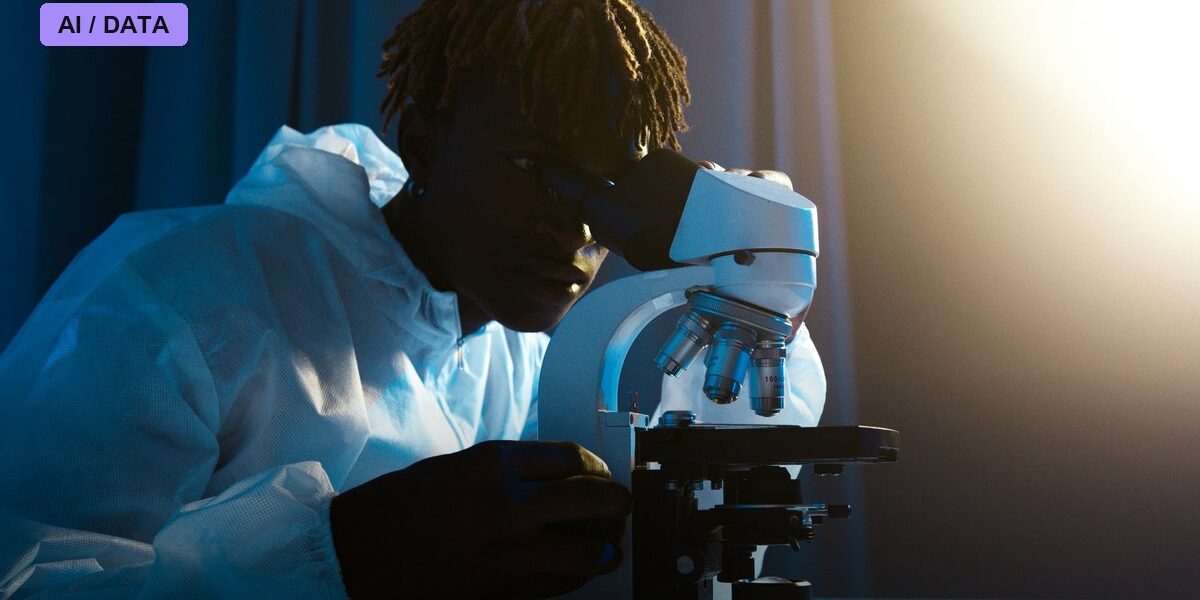
AstraZeneca announced on October 15, 2026 a new AI-driven drug discovery collaboration with insitro, the machine-learning biotech led by former Coursera co-founder and Google computer scientist Daphne Koller, in a deal structured around a $40 million upfront payment and as much as $1.46 billion tied to future development, regulatory, and commercial milestones. The agreement targets two disease areas with significant unmet medical need and notoriously difficult underlying biology: metabolic dysfunction-associated steatohepatitis, commonly known as MASH, and a group of heart muscle diseases called cardiomyopathies.
How the insitro Platform Works
insitro’s core technology, which the company calls its Virtual Human platform, combines large-scale lab-generated biological data with machine learning models trained to predict how genetic and molecular variation drives disease across cell types and patient populations. Rather than screening chemical compounds directly, the platform is built to first identify and validate which biological targets are worth pursuing at all, a step that has historically consumed years of trial-and-error research before a single drug candidate ever reaches a lab bench. Under the new agreement, insitro will use that platform to work through AstraZeneca-nominated targets in MASH and cardiomyopathy, advancing each one as far as a development candidate before handing the molecule to AstraZeneca.
A Deal Structure Built Around Risk-Sharing
Only $40 million of the deal’s headline value is guaranteed, with the remaining $1.46 billion contingent on insitro and AstraZeneca clearing a series of development, regulatory, and sales-based milestones, plus tiered single-digit royalties if any resulting medicine reaches the market. That lopsided structure is typical of AI-biotech partnerships in 2026, reflecting how large pharmaceutical companies continue to treat computational target discovery as an unproven input worth funding incrementally rather than a finished capability worth paying for upfront. AstraZeneca retains exclusive worldwide development and commercialization rights to anything that emerges from the collaboration once a candidate clears insitro’s portion of the work.
Why MASH and Cardiomyopathies Specifically
MASH, formerly known as NASH, has become one of the most heavily contested areas in pharmaceutical research as rates of obesity-linked liver disease climb globally, yet the disease’s underlying biology varies enormously between patients, making it a difficult target for conventional drug discovery approaches that rely on a single dominant pathway. Cardiomyopathies present a similar challenge, encompassing a range of inherited and acquired heart muscle disorders whose root genetic and molecular drivers are often poorly understood. Both conditions are widely seen across the industry as better suited to a biology-first, data-heavy discovery approach than to traditional high-throughput chemical screening, which is likely why AstraZeneca chose them as the testing ground for this particular collaboration.
How This Fits Into AstraZeneca’s Broader AI Strategy
The insitro deal adds to a string of AI-related partnerships AstraZeneca has pursued in 2026 across different parts of the drug development pipeline, from operational and diagnostic collaborations to, now, biology-first target discovery, suggesting the company is deliberately spreading its AI bets across multiple distinct approaches rather than consolidating around a single platform or methodology. That diversification mirrors a broader industry pattern in which large pharmaceutical companies are treating AI drug discovery less as a single technology to adopt and more as a portfolio of competing approaches worth testing in parallel.
What Remains Unproven
As of October 2026, no drug originally discovered or designed by an AI platform has received full approval from the U.S. Food and Drug Administration, meaning insitro’s Virtual Human approach, like every other AI-driven discovery platform currently under contract with major pharmaceutical companies, has yet to demonstrate it can carry a candidate successfully through clinical trials and regulatory review. Industry analysts have noted that the real test of these partnerships will not come until specific development candidates from the collaboration enter human trials, a milestone that typically takes several years to reach even under an accelerated discovery timeline. Until then, the deal’s near-term significance lies mainly in validating insitro’s biology-first approach to a major pharmaceutical partner, with its longer-term value hinging entirely on clinical results that are still years away.
Photo: Artem Podrez / PEXELS via Pexels