Novo Nordisk announced a partnership with OpenAI in April 2026 to apply the AI company’s models toward accelerating aspects of its drug development process, extending the Danish pharmaceutical giant’s push to integrate advanced AI capabilities as it defends its market-leading position in the highly competitive GLP-1 weight-loss and diabetes drug category.
Why Novo Nordisk Is Turning to a Foundational AI Company
Unlike partnerships with specialized drug discovery AI startups such as Insilico or Isomorphic Labs, Novo Nordisk’s collaboration with OpenAI leverages a general-purpose AI company’s large language model capabilities, potentially applied to tasks such as accelerating scientific literature review, generating research hypotheses, or streamlining regulatory and clinical trial documentation processes rather than directly designing drug molecules. This distinction reflects a different strategic bet than pharma companies partnering with protein-structure-focused AI startups.
Novo Nordisk’s Competitive Pressure in GLP-1 Drugs
Novo Nordisk faces intensifying competition in the GLP-1 category from Eli Lilly, whose own drugs have gained significant market share, as well as a growing field of biosimilar and next-generation obesity treatment developers, giving the company strong incentive to accelerate its broader R&D pipeline beyond its current flagship products. The company has also separately pursued oral formulations of its GLP-1 therapies, with reports of expanding to additional countries, making faster overall drug development capability strategically valuable.
How This Fits OpenAI’s Broader Enterprise Push
The Novo Nordisk deal extends OpenAI’s push into enterprise and scientific applications beyond its consumer-facing ChatGPT product, following the company’s development of specialized tools for coding, research and now pharmaceutical applications. OpenAI has pursued similar life sciences-adjacent partnerships as part of a broader strategy to diversify its revenue base beyond consumer subscriptions and general API access amid its enormous compute spending commitments.
What’s Not Yet Disclosed
Novo Nordisk and OpenAI have not detailed specific financial terms of the partnership or disclosed concrete examples of how OpenAI’s models have been applied within Novo Nordisk’s R&D process since the April 2026 announcement, making it difficult to independently assess the collaboration’s early impact. Industry analysts note that large language model applications in drug development, while promising for tasks like literature synthesis, remain less proven than specialized molecular design AI for directly accelerating the discovery of new drug candidates.
Skepticism About General AI’s Role in Specialized Drug Discovery
Some pharmaceutical R&D experts caution that general-purpose large language models, while useful for administrative and research support tasks, are less suited to the core scientific challenge of predicting molecular behavior compared to AI systems purpose-built for protein structure prediction or molecular design, such as those used by Isomorphic Labs or Chai Discovery. Novo Nordisk has framed its OpenAI partnership as complementary to, rather than a replacement for, its other more specialized AI drug discovery investments.
What’s Next
Watch for Novo Nordisk to disclose concrete examples of how the OpenAI partnership has accelerated specific R&D processes as the collaboration matures beyond its first year. The deal will also be an interesting test case for whether general-purpose AI companies like OpenAI can carve out a meaningful role in pharmaceutical R&D alongside the growing field of specialized AI drug discovery startups.
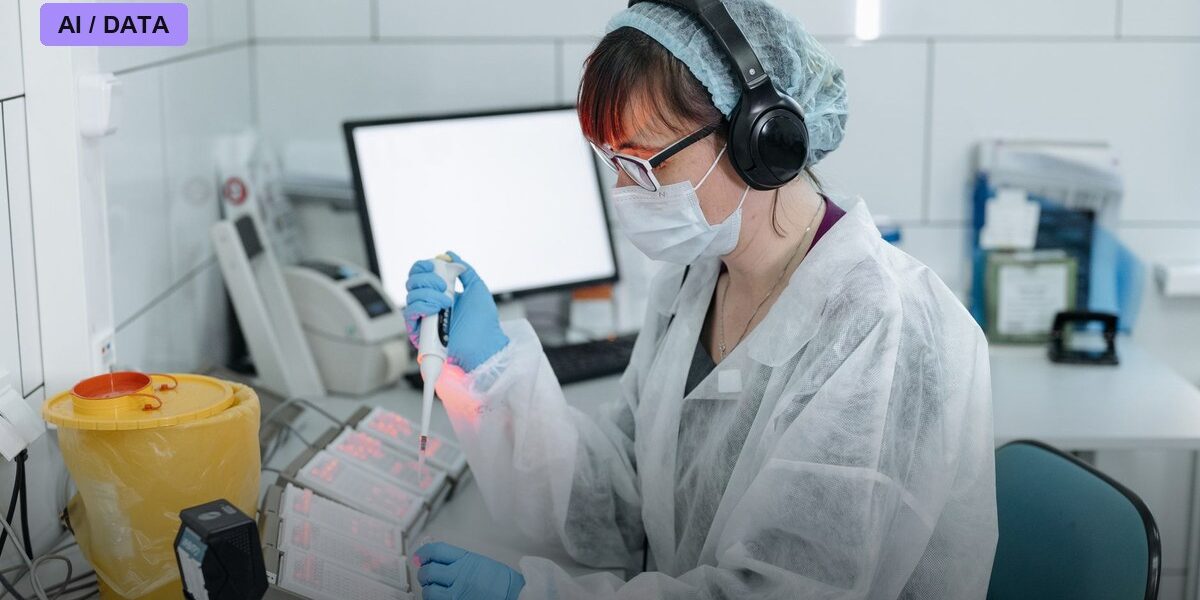
Photo: Pavel Danilyuk / PEXELS via Pexels