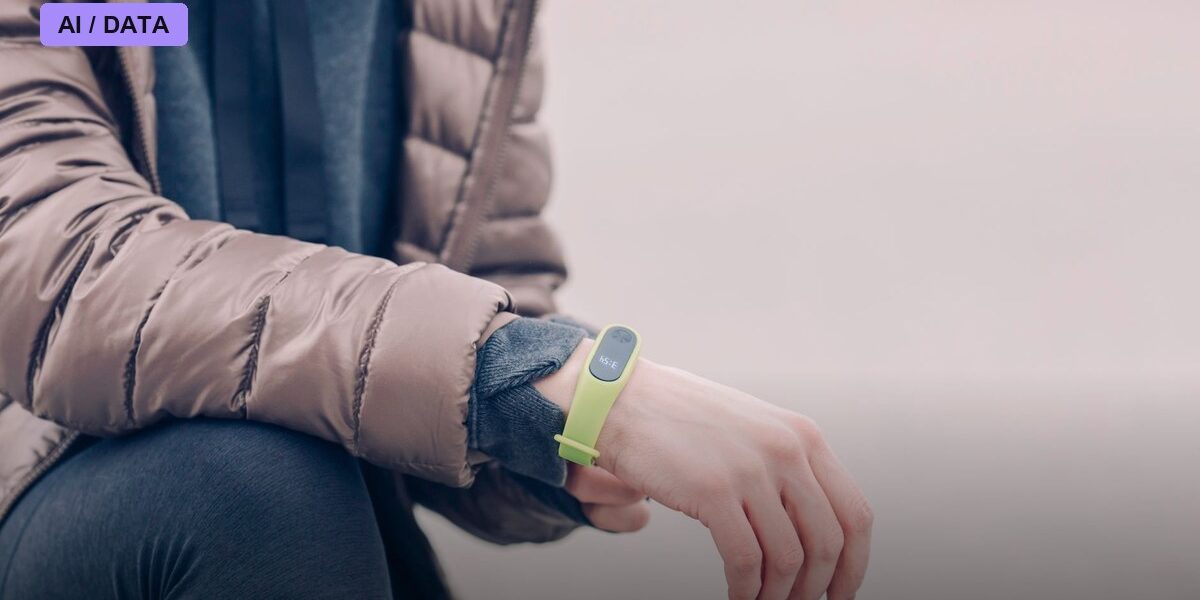
Google unveiled Fitbit Edge on October 12, a new wearable it describes as a personal AI-powered health coach, packing ECG sensing and continuous health monitoring into what the company calls its slimmest Fitbit design to date. The launch lands squarely in a wearables category that has become one of the most active fronts for applied AI, as device makers race to turn raw biometric data into advice people will actually act on rather than just numbers they glance at.
What’s Inside the Device
Fitbit Edge combines electrocardiogram readings with round-the-clock tracking of metrics like heart rate variability, sleep stages, and activity load, feeding that data into an AI layer that generates personalized coaching rather than simply displaying charts. Google has framed the device’s slim case as a deliberate design choice, aimed at closing the comfort gap that has historically made continuous-wear health trackers feel bulkier than ordinary watches or bands, a complaint that has dogged earlier generations of health wearables.
The AI Coaching Pitch
The central bet behind Fitbit Edge is that AI-generated coaching, able to synthesize sleep, heart, and activity data into specific daily recommendations, will prove more useful to everyday users than the dashboards of raw metrics that defined the previous decade of fitness trackers. That shift mirrors a broader pattern across the wearable health market, where companies including Oura, Whoop, and Samsung have each layered generative AI features onto devices that were originally built primarily as sensor platforms, betting that interpretation and personalized guidance, not additional sensors alone, are what will drive the next wave of upgrades and subscriptions.
A Crowded and Fast-Moving Field
Fitbit Edge arrives into a wearables market that has seen a wave of competing launches in recent months. Oura shipped its Ring 5 in May with AI-powered predictive health features and integrated care access, while Samsung has been expanding AI-driven capabilities across its Galaxy Watch and Galaxy Ring line, including a sleep apnea risk-detection feature. Smaller entrants like the Luna Band and Luffu Link have also pushed into adjacent niches, from voice-first wellness coaching to family caregiving monitoring, illustrating how fragmented and competitive the AI-wearables category has become even as the core underlying sensor technology converges across manufacturers.
The Clinical Caution Attached to Consumer AI Health Tools
Despite the marketing emphasis on AI coaching, companies in this space have generally been careful to describe these features as wellness tools rather than medical diagnostics, a distinction that matters both legally and practically. Regulatory clearance processes for genuine diagnostic claims are far more rigorous than what’s required for general wellness features, and device makers including Google have tended to stay on the wellness side of that line for broad consumer products while pursuing formal clearances only for specific, narrower features like arrhythmia detection. That caution reflects lessons from earlier controversies in the health-tech industry over devices making health claims that outpaced their clinical validation.
What Users and Clinicians Are Watching For
Early reactions from health-technology reviewers have focused on two open questions: whether the AI coaching genuinely adapts its recommendations to individual patterns over time rather than offering generic advice dressed up as personalization, and whether the ECG and continuous monitoring features hold up against more established players like Apple Watch and Whoop in accuracy testing. Some clinicians who study consumer wearables have also cautioned that even well-designed AI coaching features risk overwhelming users with notifications if not carefully tuned, a failure mode that has undermined engagement with earlier generations of health apps.
What’s Next
With Fitbit Edge now announced, the real test will come as independent reviewers and early adopters put its ECG accuracy and coaching features through sustained daily use rather than demo conditions. Google’s performance here will also be read by investors and health-tech watchers as a signal of whether its Fitbit division, after years of mixed momentum since Google’s 2021 acquisition of the brand, can hold its own against Apple, Samsung, and the fast-growing field of specialized wellness-wearable startups heading into 2027.
Photo: Burst / PEXELS via Pexels