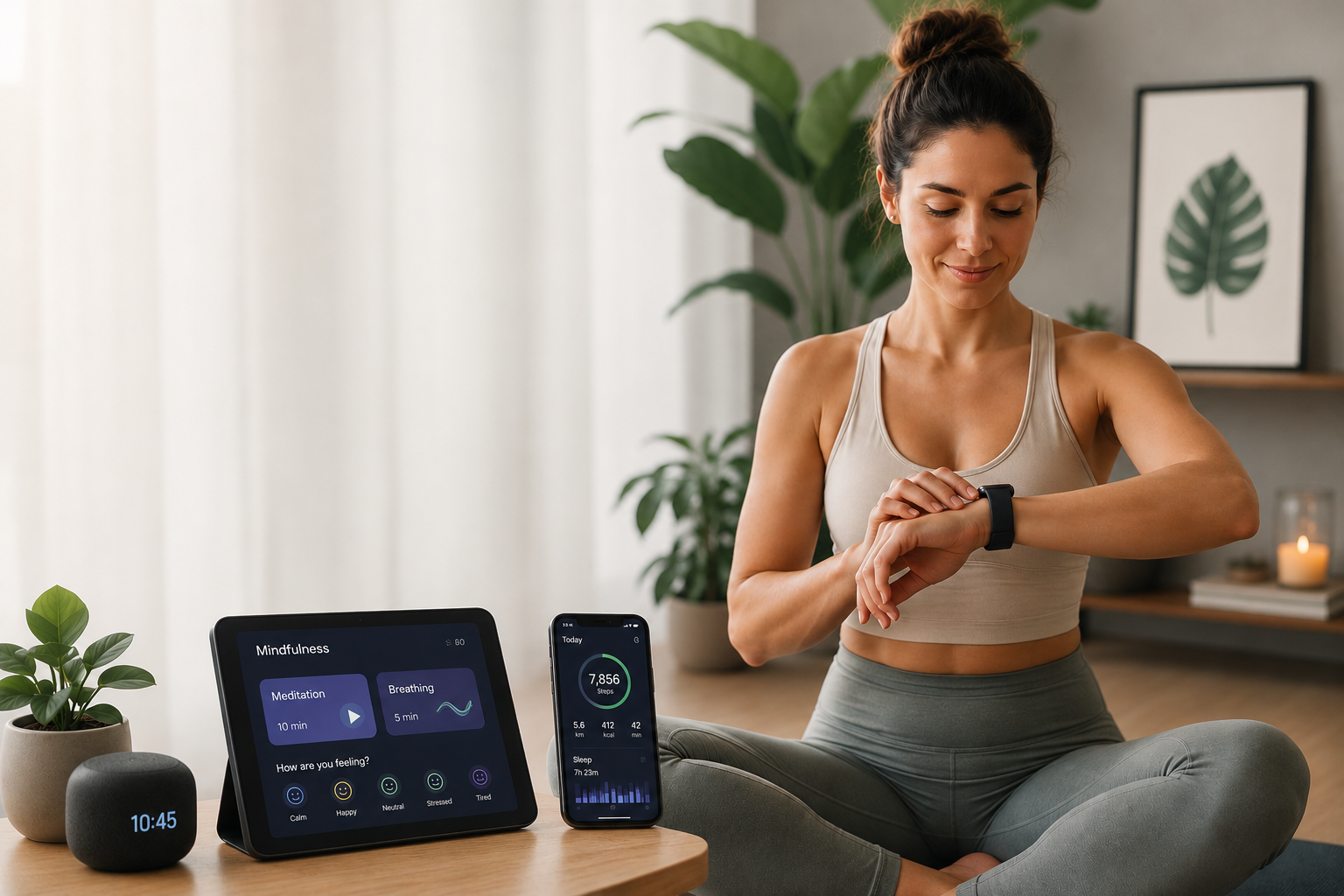
The wellness industry has experienced an unprecedented surge in recent years, with the global market projected to reach $5.53 trillion by 2027. At the heart of this revolution lies technology, which has transformed the way we approach self-care and prioritize our well-being. From wearable devices that track our vital signs to AI-powered meditation apps, tech innovations are redefining the boundaries of wellness.
The Rise of Wearable Wellness
One of the most significant developments in the wellness space is the proliferation of wearable devices designed to monitor and manage our health. Devices like the Apple Watch Series 7 and Fitbit Charge 5 offer a range of features, including electrocardiogram (ECG) readings, sleep tracking, and GPS monitoring.
The data generated by these wearables has been instrumental in fostering a culture of self-awareness and accountability. For instance, studies have shown that individuals who use wearable devices to track their physical activity are more likely to engage in regular exercise and make healthier lifestyle choices.
However, critics argue that the reliance on wearable technology can be counterproductive, encouraging an obsession with quantifiable metrics at the expense of holistic well-being. As one industry expert noted, “The wellness industry has become overly focused on the numbers, neglecting the importance of mental and emotional health.”
The AI-Driven Wellness Revolution
AI-powered wellness platforms are another key driver of the industry’s growth. Companies like Headspace and Calm have leveraged machine learning algorithms to create personalized meditation and mindfulness programs tailored to individual needs.
These apps use natural language processing (NLP) to analyze user feedback, adjust the tone and pace of meditations, and even detect early signs of stress or anxiety. While AI-driven wellness solutions offer unprecedented personalization and convenience, concerns remain about their potential impact on mental health. As one researcher warned, “We must be cautious not to create a culture that relies too heavily on technology for emotional support.”
The Intersection of Wellness and Technology
The blurring of lines between wellness and technology has given rise to new business models and revenue streams. Companies like Amazon’s Halo and Google Fit are now integrating wellness services into their existing product portfolios, while startups like Whoop and Oura offer premium subscription-based wellness experiences.
However, as the industry continues to expand, questions about data ownership, security, and transparency remain. As one consumer advocate pointed out, “We need to be aware of the trade-offs we’re making when it comes to our personal data – are we sacrificing our well-being for a ‘free’ wellness experience?”
What’s Next in Wellness Technology?
As the industry continues to evolve, expect to see further integration of AI and machine learning, as well as increased focus on mental health and emotional intelligence. Companies like Microsoft and IBM are already exploring the use of cognitive computing and NLP for personalized wellness recommendations.
The future of wellness technology will also be shaped by emerging trends such as virtual and augmented reality (VR/AR), which offer new possibilities for immersive and interactive self-care experiences.
Availability, Pricing, and Rollout Timeline
Many of the products and services mentioned in this article are already available on the market. For instance, wearable devices like the Apple Watch Series 7 can be purchased online or in-store from authorized retailers, while AI-powered wellness apps like Headspace and Calm offer subscription-based models starting at $12.99/month.
As for rollout timelines, companies like Amazon and Google are continually updating their product portfolios with new features and services. Keep an eye out for upcoming releases and updates that promise to revolutionize the way we approach self-care and prioritize our well-being.