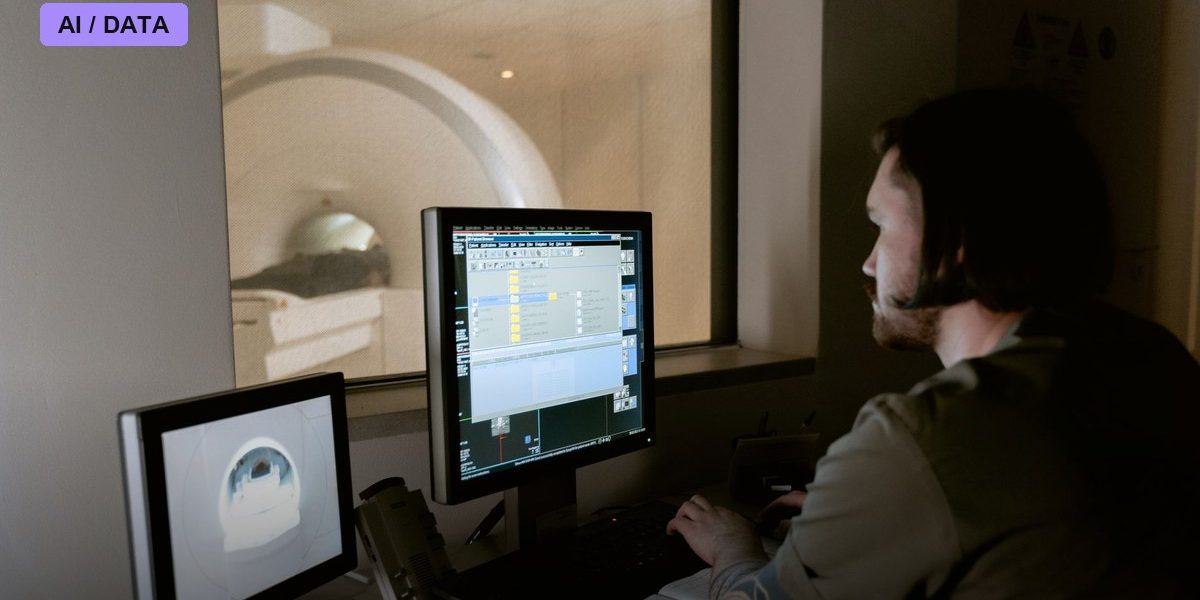
The Food and Drug Administration cleared Aidoc’s CARE Body CT Multi-Triage in January 2026, the first AI system built on a comprehensive diagnostic foundation model to win clearance for broad clinical use. The tool scans a single chest, abdomen, and pelvis CT study and flags suspected findings across 14 distinct urgent conditions at once, bundling 11 newly cleared indications with three Aidoc already had clearance for into one workflow. In the FDA-reviewed pivotal study, the system achieved a mean sensitivity of 97%, reaching as high as 98.5% for some conditions, and a mean specificity of 98%, topping out near 99.7%.
From Single-Finding Tools To A Foundation Model
Aidoc’s earlier products, like most radiology AI on the market, were narrow: one algorithm for a pulmonary embolism, another for a brain bleed, another for a fracture. CARE Body CT Multi-Triage represents a shift toward foundation models trained to recognize many conditions simultaneously from the same imaging data. The newly cleared indications include appendicitis, acute diverticulitis, abdominal-pelvic abscess, small and large bowel obstruction, obstructive kidney stones, intestinal ischemia, kidney injury, liver injury, spleen injury, and pelvic fracture. The product had already received Breakthrough Device Designation from the FDA in September 2025, a status reserved for technologies the agency believes could offer significant improvement in diagnosis or treatment of life-threatening conditions.
Why Hospitals Are Already Lining Up
Aidoc’s existing software is deployed across more than 150 U.S. health systems and over 1,600 hospitals worldwide, giving the company an unusually large installed base to roll the new foundation model into. The commercial case got a boost almost immediately: the Centers for Medicare and Medicaid Services set a maximum add-on payment of $137.53 per eligible inpatient case for hospitals using Aidoc’s CT body triage technology, a reimbursement mechanism that effectively subsidizes adoption at a time when emergency departments are straining under staffing shortages and rising imaging volumes.
The Pitch: Triage, Not Diagnosis
Aidoc executives are careful to frame the tool as workflow triage rather than a diagnostic replacement for radiologists. One medical director involved in rollout said the system represents a fundamental shift in how radiology departments operate, arguing that pulling together acute findings into a single pass addresses core bottlenecks: which scan a radiologist reads first, how quickly a surgeon gets paged about a bowel obstruction, how fast an ischemic bowel case moves from the scanner to the operating room. The goal is to compress the time between image acquisition and clinical action, not to replace the final read.
A More Skeptical Reading
Not everyone in radiology is convinced that triage AI delivers on its promise once it leaves the pivotal study and meets the chaos of a real emergency department. A separate multireader study published in October 2025, AI-REACT, examined an AI triage system for acute CT head interpretation and found it failed to improve radiologist performance or turnaround times in practice, a cautionary data point for the broader category of triage tools, including Aidoc’s. Radiology groups evaluating CARE Body CT Multi-Triage have also raised governance questions: what happens when the AI’s prioritization conflicts with a radiologist’s own judgment about which scan is most urgent, and who is accountable if a flagged case is deprioritized by a human reader who disagrees with the algorithm. Those are not hypothetical concerns in a specialty already grappling with alert fatigue from existing AI tools.
The Broader FDA Pipeline
Aidoc’s clearance is part of a much larger wave: the FDA has cleared more than 1,400 AI-enabled medical devices overall, with radiology accounting for roughly three-quarters of them, and competitors like Qure.ai and Viz.ai are racing down similar paths. Qure.ai’s qXR platform now holds 26 FDA-cleared indications across nine products after a batch of new clearances in February 2026, while Viz.ai, with more than 50 clearances across 1,700-plus hospitals, says its stroke-detection tool has cut treatment time by 31 minutes. The competitive pressure is pushing every major vendor toward broader, foundation-model-style tools rather than single-condition point solutions.
What’s Next
The real test for CARE Body CT Multi-Triage will be whether its 97%-plus sensitivity in a controlled pivotal study translates into measurably faster time-to-treatment across the mix of community hospitals and academic centers now installing it, and whether radiology departments build the governance structures needed to handle disagreements between algorithm and clinician. With Medicare reimbursement now in place and over a thousand hospitals already running Aidoc’s software, the technology’s trajectory is less about further regulatory hurdles than about whether real-world outcomes data, expected over the next one to two years, will back up the pivotal study’s numbers once the tool is used at scale on messier, more varied patients than those in the clearance trial.
Photo: MART PRODUCTION / PEXELS via Pexels