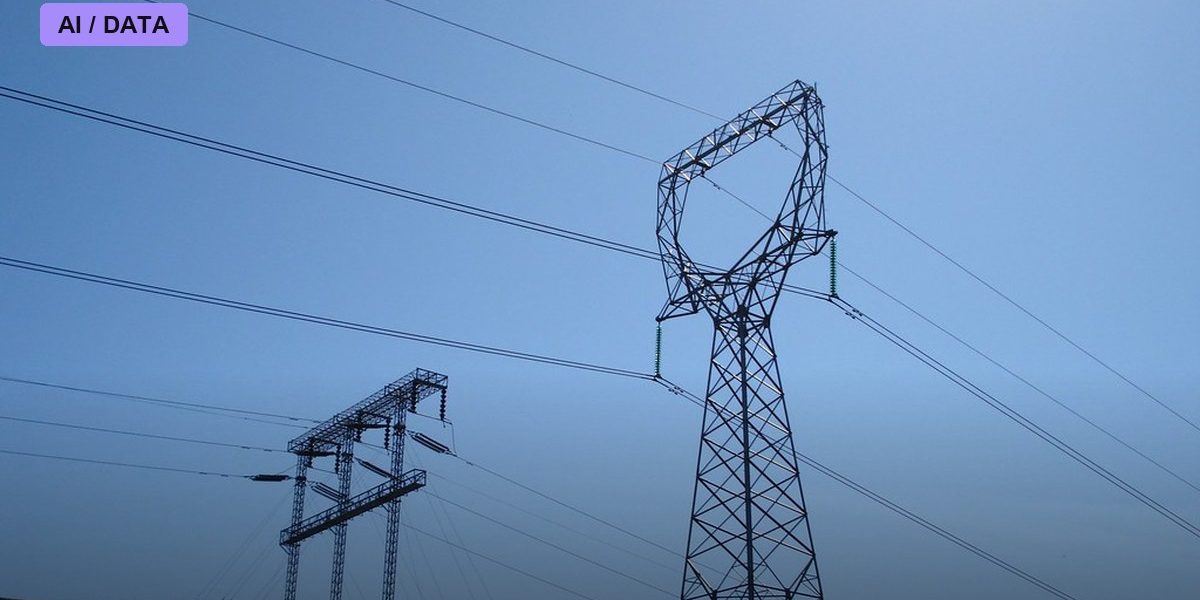
The constraint on artificial intelligence has quietly shifted. For years the race was about chips and algorithms; in 2026 the binding limit is something far more physical — whether the electric grid can deliver enough power to run the machines.
The scale of the demand
The numbers are staggering. Global data-center energy consumption could approach 1,050 terawatt-hours in 2026 — if data centers were a country, that would make them the world’s fifth-largest electricity consumer, slotting between Japan and Russia. In the U.S., total electricity demand is projected to climb from a record 4,097 billion kilowatt-hours in 2024 toward roughly 4,250 billion in 2026, with AI the single dominant driver of the increase.
The grid wasn’t built for this
The problem is not just volume but shape. Hyperscale AI campuses draw concentrated, volatile, high-density loads that regional grids were never designed to absorb. The defining risk for AI expansion, analysts now say, has moved from computational efficiency to the physical availability of grid-scale power — a systemic stress on networks built for a slower, steadier era.
The government steps in
Washington is treating it as infrastructure policy. The U.S. Department of Energy has launched a test platform called Agora to simulate one of the country’s biggest looming collisions: giant AI data centers plugging into an already strained grid. Agora replicates the electrical behavior of these facilities, helping utilities plan for demand spikes that could otherwise destabilize the system.
Regional pressure points
The strain is concentrated. Virginia — already the world’s data-center capital — could see data centers consume between 41% and 59% of its electricity by 2030. Seven more states, including Arizona, Indiana, Iowa, Nebraska, Nevada, Oregon and Wyoming, could each exceed a 20% share. That concentration turns a national story into acute local fights over power, water and land.
Why it matters
This reframes the AI boom. The companies building frontier models are increasingly constrained not by talent or GPUs but by megawatts and transmission lines — assets that take years, not months, to build. Expect power-purchase deals, on-site generation and even nuclear partnerships to become as central to AI strategy as model architecture.
The bottom line
AI’s next chapter will be written as much by utilities and grid operators as by data scientists. Until the power infrastructure catches up, electricity — not silicon — is the real ceiling on how fast artificial intelligence can grow.
Photo: St_A_Sh / BY via flickr