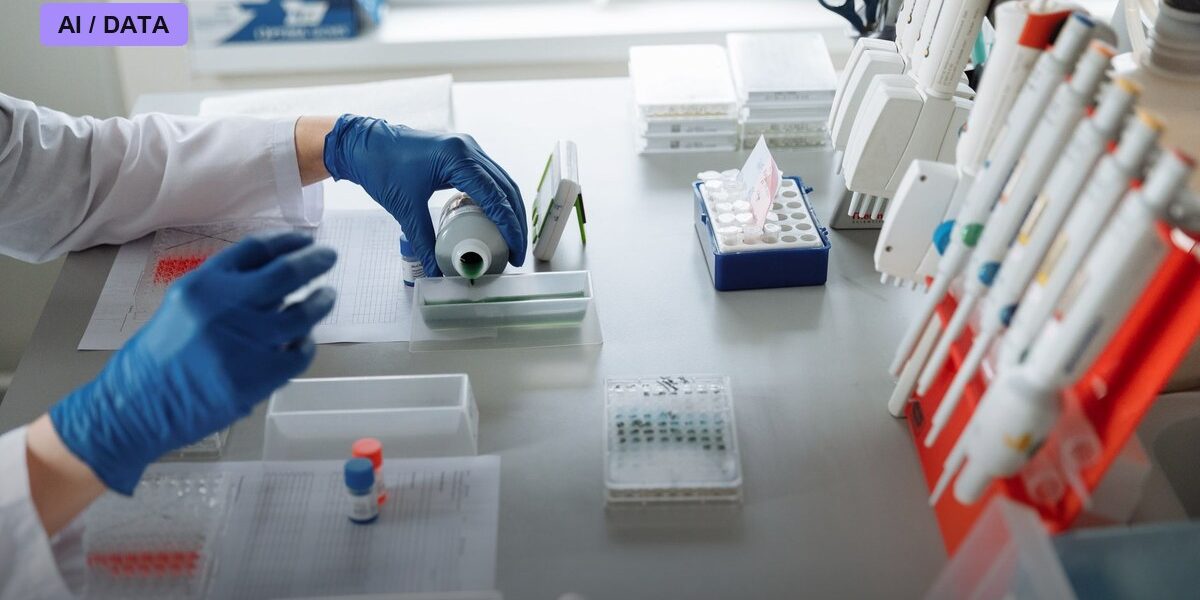
AstraZeneca has struck a new drug discovery and licensing agreement with insitro, the machine-learning biotech led by Daphne Koller, aiming AI squarely at two conditions the industry has struggled to treat: metabolic dysfunction-associated steatohepatitis, commonly known as MASH, and cardiomyopathies, a group of heart-muscle diseases. The deal, announced in mid-October, pairs AstraZeneca’s $40 million upfront payment with up to $1.46 billion in potential development and commercial milestones if insitro’s AI-identified targets eventually become approved medicines.
Betting on insitro’s Virtual Human Platform
At the center of the deal is insitro’s Virtual Human platform, which the company describes as combining large-scale human genetic and cellular data with AI models to identify the causal biological drivers of disease, rather than just correlations. Under the agreement, insitro will take AstraZeneca-nominated drug targets from early discovery through to development-candidate stage — the point at which a molecule is considered mature enough to enter formal preclinical development. AstraZeneca then takes over clinical development and regulatory work, and holds exclusive worldwide rights to any resulting medicines.
Why MASH and Cardiomyopathies
Both disease areas are described by the companies as prevalent and underdiagnosed. MASH, formerly known as NASH, is a progressive liver disease driven by fat accumulation and inflammation that can lead to cirrhosis and liver failure, and has only recently seen its first FDA-approved treatments after decades without one. Cardiomyopathies — structural heart-muscle disorders that can progress to heart failure — are similarly varied in underlying cause, which insitro argues makes them well suited to a platform built to untangle disease subtypes using genetic and molecular data rather than relying on a single assumed mechanism.
AstraZeneca’s Pitch: Better Targets, Not Just Faster Ones
“One of the most critical decisions in R&D is selecting the right target,” said Sharon Barr, AstraZeneca’s executive vice president and head of biopharmaceuticals R&D, framing the collaboration as being as much about target quality as discovery speed. The company’s argument echoes a broader industry shift: after several years in which AI drug-discovery deals were pitched primarily on shrinking timelines, pharma partners increasingly emphasize that AI’s real value may be in avoiding costly bets on the wrong biological target in the first place — a failure mode responsible for a large share of clinical trial attrition industrywide.
insitro’s Perspective: Deconvoluting Disease Biology
Daphne Koller, insitro’s founder and chief executive and a former Stanford computer science professor, has long argued that machine learning’s biggest opportunity in biology is not designing molecules but understanding disease itself. “Our platform simultaneously deconvolutes disease biology and identifies causal drivers of disease pathologies,” she said of the collaboration, a description that positions insitro’s approach as complementary to, rather than competing with, the generative molecule-design tools that dominate headlines about AI drug discovery.
Part of a Fast-Growing — and Still Unproven — Deal Category
The AstraZeneca-insitro agreement adds to a wave of large pharma-AI partnerships in 2026, including Roche’s roughly $3.5 billion investment in MASH-focused fatty liver disease research and a string of AI drug-discovery pacts signed by Lilly, AbbVie and other major drugmakers this year. Industry trackers estimate AI-based target and drug discovery licensing deals topped $47 billion globally in the first half of 2026 alone, a pace that would make the category one of the largest single sources of pharma business-development spending for the year. Yet skeptics note a stubborn fact underlying all of this dealmaking: as of this deal’s announcement, no drug originally discovered using AI has yet won FDA approval, meaning the platforms’ real-world success rate remains unproven at the one stage that matters most to patients. That gap between deal volume and regulatory proof is exactly what makes MASH an interesting test case — the disease area has already produced the industry’s first approved treatments outside of AI-driven discovery, giving insitro’s targets a concrete efficacy and safety bar to clear rather than an open field.
For now, the test of the AstraZeneca-insitro partnership will play out over years, not months, as nominated targets move through preclinical work and, if successful, into human trials. Both companies have framed the deal as a long-term bet on AI-driven target discovery rather than a quick win, and the eventual payout — or lack of one — will hinge on whether insitro’s causal-biology approach to MASH and cardiomyopathies translates into treatments that outperform the conventional drug-discovery pipeline it is meant to challenge.
Photo: Thirdman / PEXELS via Pexels