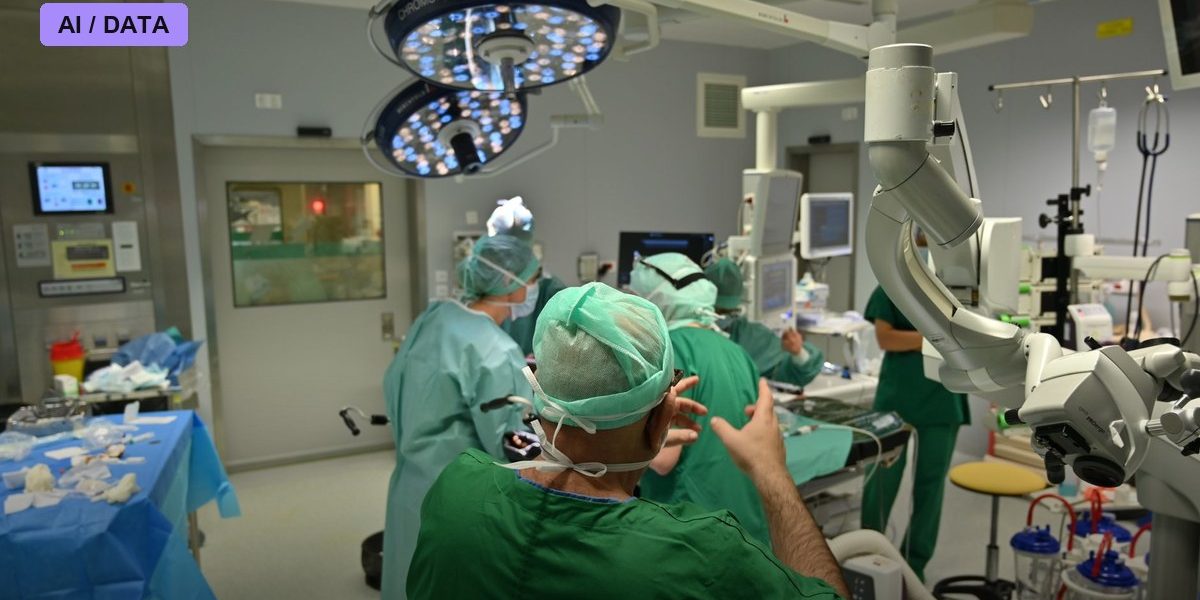
Surgeons, imaging specialists, and robotics executives gathered in London on October 7, 2026 for Cleveland Clinic’s second annual London Innovation Summit, where the health system used the stage to disclose a new AI research pilot with IBM and the UK’s Science and Technology Facilities Council aimed at understanding how common hospital procedures affect patients’ overall health and quality of life over the long run.
A Summit Built Around the Operating Room of the Future
Held at the Intercontinental London Park Lane near Cleveland Clinic London, the summit drew leaders from healthcare, academia, industry, and investment firms to discuss what organizers called the future of surgical care. Sessions included “Intelligent Surgery: AI, Imaging, Robotics and the Connected Operating Room,” where specialists in endoscopy, surgery, and digital operating-room technology discussed how AI and real-time data can support clinical decision-making, procedural precision, and efficiency, alongside a separate session titled “The Future of Surgery: Robotics, Intelligent Systems, and Long-Term Innovation Vision.” The event was sponsored by a who’s-who of medical device and surgical robotics players, including Intuitive, Medtronic, Johnson & Johnson, and GE Healthcare, underscoring how central AI-enabled surgical tooling has become to the industry’s roadmap.
The New AI Research Pilot
The centerpiece announcement was a pilot study, run in partnership with IBM and the UK’s Science and Technology Facilities Council, examining how routine hospital procedures affect patients’ broader health trajectories and quality of life, not just their immediate surgical outcomes. The study draws on clinical records and advanced imaging data housed in the Cleveland Clinic London BioResource, with the stated goal of building AI models capable of multi-disease analysis — in other words, models that don’t just track one condition in isolation, but look across a patient’s broader health picture as it evolves after a procedure.
Scale of the Research Infrastructure Behind It
Cleveland Clinic London, which opened on March 29, 2022 with 184 beds including a 29-bed ICU, eight operating rooms, a full imaging suite, endoscopy and cardiac catheterization labs, and a dedicated rehabilitation suite, currently runs 46 open investigator-sponsored and commercial studies, including multicenter studies tied to the UK’s National Health Service research portfolio. More than 2,000 patients have been recruited into clinical trials there to date, and Cleveland Clinic London caregivers collectively author more than 1,000 peer-reviewed papers annually — the kind of research throughput the health system is positioning as the foundation for training clinically credible AI models rather than ones built on narrow or short-term datasets.
What Leaders Said
“Surgical innovation is advancing at an extraordinary pace,” said D. Geoffrey Vince, PhD, Chief of Cleveland Clinic Innovations, citing AI-enabled decision support and robotics as central examples of that pace. Beri Ridgeway, MD, President of Cleveland Clinic London, framed the broader mission in patient-centered terms: “Our mission is to place patients at the heart of everything we do, across care, research and education.” A separate panel on building an innovative health system featured Dr. Charles Knowles, Dr. Robert Lorenz, Ridgeway, and Dr. Conor Delaney discussing how institutions organize themselves to actually absorb this pace of technological change rather than just announce it.
Why Long-Term Outcome Tracking Is the Harder Problem
Most surgical AI to date has focused on the moment of the procedure itself — guiding a robotic arm, flagging a complication in real time, or measuring immediate post-operative recovery. Tracking how a hip replacement or a cardiac procedure shapes a patient’s health and quality of life months or years later is a fundamentally harder data problem: it requires linking surgical records to long-term follow-up data that is often incomplete, inconsistent, or simply never collected once a patient leaves a health system’s catchment area. That is precisely the gap this IBM collaboration is aimed at, but it also means the pilot is, by design, a long-horizon research effort rather than something that will produce usable clinical tools in the near term. Cleveland Clinic’s own announcement offered no projected completion date or interim milestones, which is typical for early-stage AI research partnerships but leaves open how long patients and clinicians will wait to see concrete results.
What’s Next
The pilot adds to a broader pattern across the surgical robotics industry in 2026, where companies like Intuitive have been outlining multi-stage AI roadmaps built on decades of procedural data, and rivals have pursued their own FDA clearances and simulation partnerships. What distinguishes the Cleveland Clinic-IBM pilot is its explicit focus on quality of life and multi-disease analysis rather than procedural performance alone — a bet that the next competitive frontier in surgical AI won’t just be sharper robotic instruments or faster image reads, but models that can tell a hospital system, years in advance, which patients and which procedures actually translate into better lived outcomes. Whether that bet pays off will depend on data Cleveland Clinic London has not yet published, making this one of the more speculative entries in this year’s wave of hospital AI announcements — but also one of the more ambitious in scope.
Photo: Stéf -b. / PEXELS via Pexels