Eli Lilly has signed a new AI-focused deal worth up to roughly $1.1 billion covering drug delivery technology, a separate and distinct partnership from the company’s earlier $2.75 billion AI drug discovery collaboration with Insilico Medicine, signaling that pharmaceutical companies are now applying artificial intelligence well beyond the molecule-design stage that has dominated AI drug discovery headlines through most of 2026.
Why Drug Delivery Is a Different Problem Than Discovery
Discovering a molecule that effectively targets a disease mechanism is only part of making a successful drug — getting that molecule into the body in a form that reaches the right tissue, at the right concentration, for the right duration, is a distinct and often underappreciated engineering challenge. AI applied to drug delivery typically focuses on optimizing formulation chemistry, predicting how different delivery mechanisms — oral, injectable, or more exotic approaches like lipid nanoparticles — will behave in the human body, reducing the trial-and-error cycles formulation scientists have traditionally relied on.
Why Lilly Is Pursuing Both Fronts Simultaneously
Lilly’s parallel investment in AI discovery, through its Insilico Medicine partnership, and now AI-driven delivery technology reflects a broader strategic bet that artificial intelligence can compress timelines and reduce costs across the entire drug development pipeline, not just at the earliest discovery stage where most industry attention and capital has concentrated so far. Competitors including Pfizer, AstraZeneca, and Takeda have each pursued separate AI discovery partnerships this year, but delivery-focused AI deals remain comparatively rare, potentially giving Lilly a differentiated position if the technology proves effective.
The Context: A Banner Year for AI Pharma Deals
Lilly’s new delivery-focused deal adds to what has already been a record year for AI-pharma partnerships broadly: total AI-based drug discovery and development licensing deals reached $47.1 billion in the first half of 2026 alone, according to deal-tracking firm DealForma, already surpassing the full-year 2025 total of $44.6 billion. That volume reflects an industry-wide conviction that AI will meaningfully reshape drug development economics, even though no AI-discovered drug has yet received full FDA approval.
The Skeptical View on Delivery-Focused AI
Formulation and delivery science has historically been a more mature, less obviously AI-amenable discipline than molecule discovery, since much of the underlying chemistry and physics governing drug absorption and distribution is already well-characterized through decades of pharmacokinetic research. Skeptics question whether AI offers as dramatic an improvement in delivery optimization as it potentially does in target discovery, where the search space of possible molecules is vastly larger and less well-mapped by existing science.
What Success Would Look Like
A meaningful test of Lilly’s delivery-focused AI bet would be whether it can measurably shorten formulation development timelines for specific drug candidates already in Lilly’s pipeline, or improve bioavailability outcomes in early clinical testing relative to historical formulation approaches — concrete, measurable outcomes that would be easier to validate than the longer-horizon discovery-stage claims dominating most AI pharma deal announcements.
What’s Next
Analysts will watch for Lilly to disclose which specific drug programs the new delivery partnership will apply to, and whether early formulation results show measurable time or cost savings relative to Lilly’s traditional, non-AI-assisted delivery development processes, which would offer a more concrete signal of value than the pipeline-wide claims common in AI pharma deal announcements.
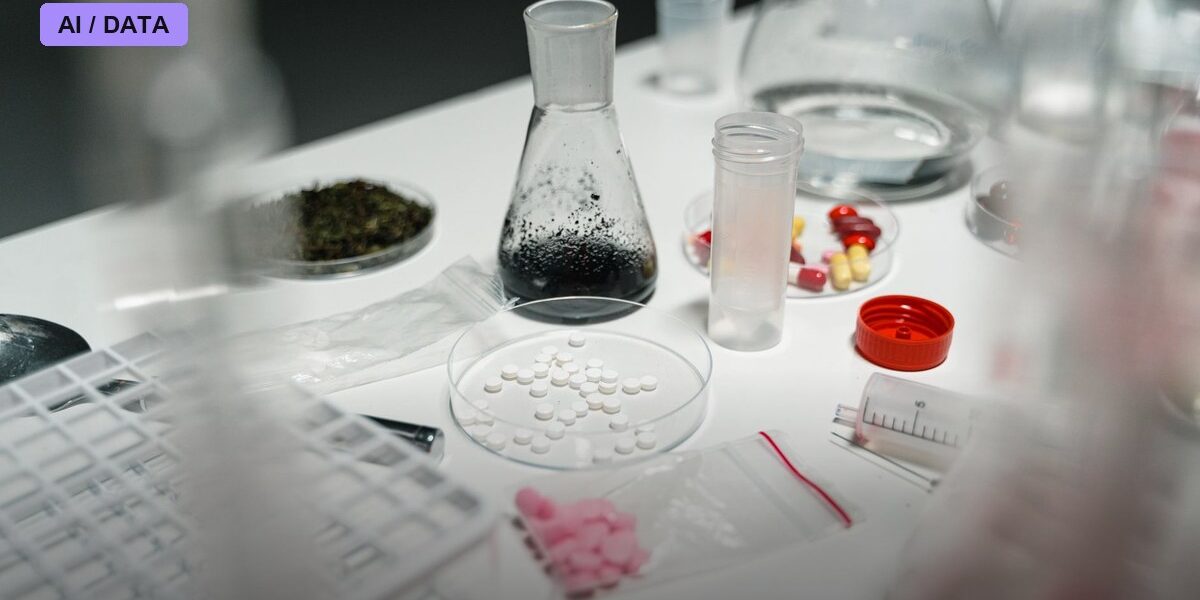
Photo: MART PRODUCTION / PEXELS via Pexels