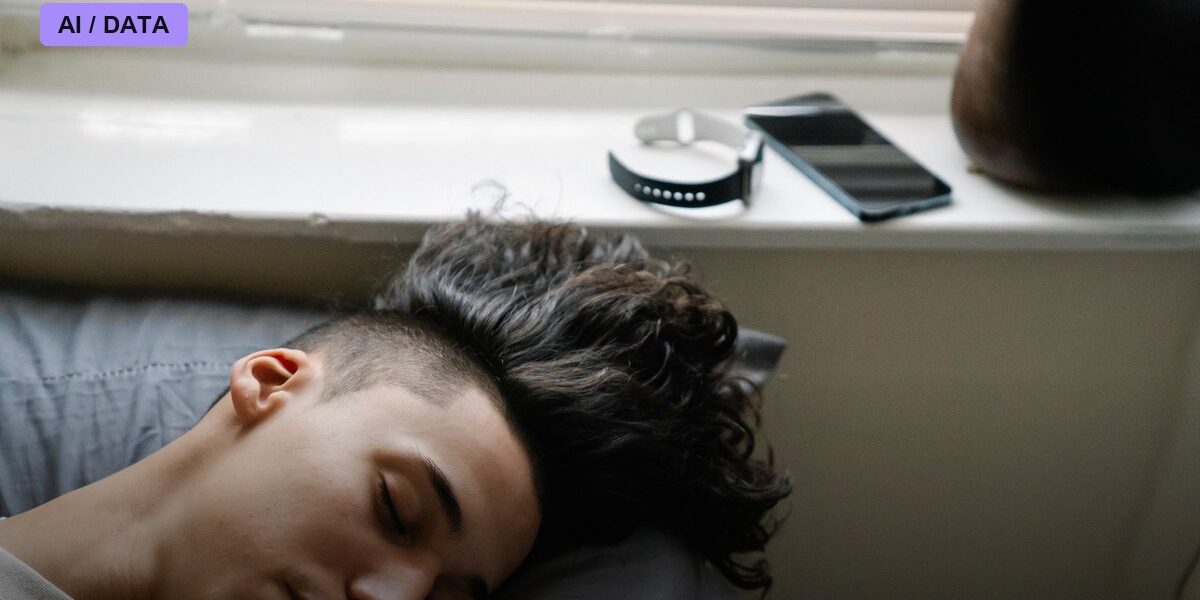
Neurotronics, a Florida-based developer of sleep and neurology diagnostics, has received FDA clearance for AI-powered sleep analysis software designed to estimate sleep duration and architecture from data collected during home sleep testing. The clearance, announced November 5, gives the company a regulatory foundation to incorporate AI-derived sleep staging directly into its diagnostic workflow, rather than relying solely on manual scoring by sleep technicians.
The clearance arrives at a moment when the FDA has been actively reshaping its regulatory approach to AI-enabled health software, issuing guidance in January that reduces oversight for certain digital health products, including some AI-enabled wearable features recast as general wellness tools rather than medical devices. Neurotronics’ software, by contrast, is explicitly cleared as a diagnostic aid, reflecting a more traditional regulatory pathway for a tool intended to support clinical decision-making.
What home sleep testing actually measures
Home sleep apnea tests have become increasingly common as an alternative to overnight stays in hospital sleep labs, using portable sensors that track breathing patterns, oxygen levels, and movement to help diagnose conditions like obstructive sleep apnea. Scoring the resulting data has traditionally required trained sleep technicians to manually identify sleep stages and breathing events, a time-consuming process that creates a bottleneck as demand for sleep testing has grown alongside rising awareness of sleep disorders’ links to cardiovascular and metabolic disease.
Why AI scoring matters for patients
Automating sleep staging with AI has the potential to shorten the time between a patient completing a home sleep test and receiving results, a meaningful benefit given that sleep apnea often goes undiagnosed for years due to both limited testing capacity and patients’ own delay in seeking evaluation. Faster, more consistent scoring could also reduce variability between different technicians manually reviewing the same data, a known source of inconsistency in sleep medicine.
Part of a broader wave of diagnostic AI clearances
Neurotronics’ clearance lands alongside a cluster of other recent FDA actions in AI diagnostics, including clearance for Bot Image’s Prostatid AI prostate detection software and a third breakthrough device designation from South Korean regulators for Vuno’s AI-based electrocardiogram analysis software. Together, these clearances reflect a steady, if incremental, expansion of AI tools moving from research settings into routine clinical diagnostic workflows across multiple specialties.
The evidence question regulators and clinicians are still wrestling with
A PLOS Digital Health review published in August found that of 1,357 FDA-authorized AI medical devices examined, only a small fraction were linked to registered prospective clinical trials, and just three had been tested specifically on patient outcomes such as survival or illness severity, rather than purely on technical accuracy metrics. That gap between regulatory clearance and outcomes evidence has become a recurring point of scrutiny for AI diagnostic tools generally, even as individual clearances like Neurotronics’ continue to move forward under existing pathways that don’t always require outcomes data.
The clinician perspective
Sleep medicine specialists have generally welcomed AI-assisted scoring tools as a way to extend limited specialist capacity, while cautioning that AI-generated sleep staging still requires physician oversight, particularly for complex or ambiguous cases where automated scoring may not capture nuances a trained clinician would catch. The clearance does not eliminate the role of sleep physicians in interpreting results; it is positioned as a tool that speeds up and standardizes the underlying data processing.
What’s next
Neurotronics will now move to integrate the cleared software into its commercial home sleep testing offerings, and the company’s performance data in real-world clinical use will likely draw continued attention given the broader industry debate over whether FDA-cleared AI tools deliver the outcomes improvements their clearances imply. Sleep medicine providers evaluating the software will be watching closely for independent validation studies beyond the data submitted for the original clearance.
Photo: Eren Li / PEXELS via Pexels