Google DeepMind announced WeatherNext 3 on September 3, 2026, a new AI weather model the company says delivers hourly forecasts at 5-kilometer resolution with meaningfully better rain accuracy than its predecessor. Unlike traditional weather models that simulate atmospheric physics directly, WeatherNext 3 trains on raw satellite feeds and ground station data, letting it generate predictions faster and, Google claims, more precisely for short-term, localized conditions.
Where the Forecasts Will Show Up
Google plans to integrate WeatherNext 3’s output directly into Search, Gemini, Google Maps, the Maps Platform Weather API, Earth Engine, and Google Cloud — meaning the model’s predictions could reach billions of users through products they already check daily, without needing to download a dedicated weather app. That distribution advantage is arguably as significant as the technical leap, since it puts AI-generated forecasts in front of ordinary users who have no idea the underlying prediction engine has changed.
The Technical Lineage
WeatherNext 3 builds on a string of DeepMind weather models. GraphCast, published in the journal Science, beat traditional numerical weather prediction methods roughly 90% of the time according to Google’s own researchers. GenCast, published in Nature, reportedly outperformed the European forecasting consortium’s ensemble system on both everyday weather and extreme events up to 15 days in advance. WeatherNext 2, released in February 2026, introduced a new generative network approach for faster probabilistic forecasting before WeatherNext 3 arrived just seven months later.
Why This Matters Beyond Convenience
More accurate short-term, localized forecasting has real stakes beyond deciding whether to carry an umbrella — it affects flood warnings, agricultural planning, aviation safety, and emergency response for extreme weather events that have grown more frequent and severe. A model that can flag a flash flood risk hours earlier, or pinpoint which neighborhoods will see the heaviest rainfall, could materially change outcomes for people in its path.
The Skeptic’s Caveat
Independent meteorologists have cautioned that AI weather models, however strong their aggregate statistics, still need to prove themselves on rare and dangerous weather events — the tail-risk scenarios where getting a forecast wrong carries the highest cost. Google’s reported accuracy gains, including a widely cited figure of up to 50% better rain prediction, come from the company’s own internal benchmarking rather than independent third-party verification, a point worth keeping in mind before treating the numbers as settled.
What Comes Next
The real test for WeatherNext 3 will come during the next major storm season, when its hourly, hyper-local predictions get compared in real time against official national weather services and rival forecasting products from AccuWeather and IBM’s Weather Company. If Google’s claimed accuracy gains hold up under that scrutiny, WeatherNext 3 could become the de facto forecasting engine for a meaningful share of the world’s internet users simply by virtue of being built into products they already use.
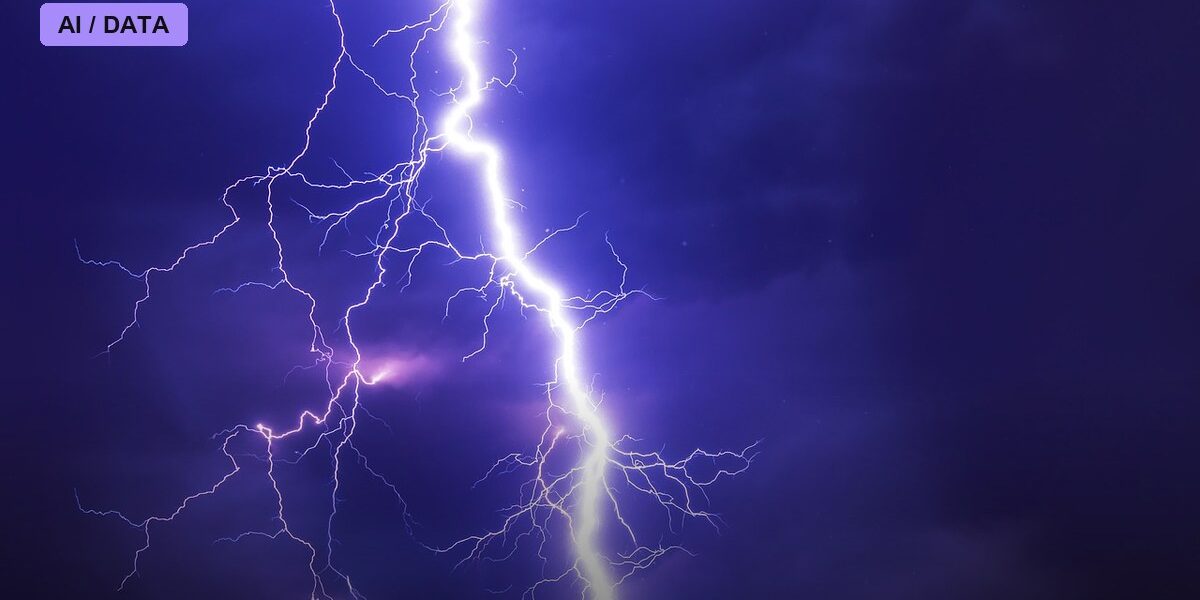
Photo: Felix-Mittermeier / PIXABAY via Pixabay