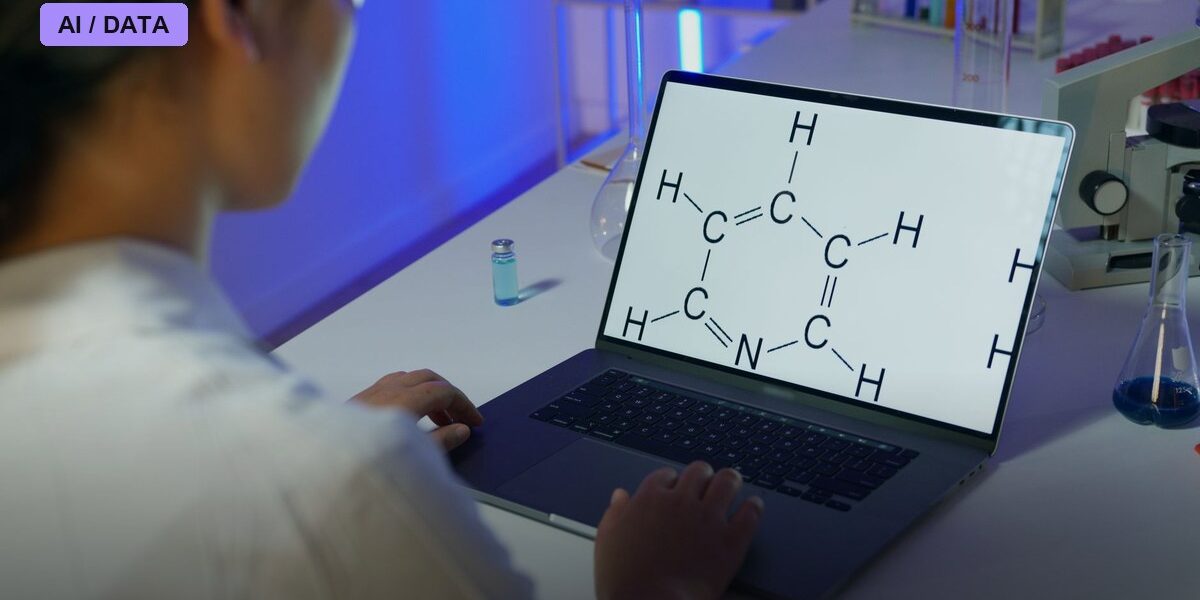
GSK has expanded its collaboration with Chai Discovery, the AI protein-design startup that has rapidly become one of the pharmaceutical industry’s most sought-after AI partners, but only after the drugmaker’s own research scientists independently validated the quality of Chai’s AI-generated molecular designs — a detail that illustrates how even pharma companies eager to embrace AI drug discovery remain cautious about trusting algorithmic output without human scientific verification.
What Chai Discovery Actually Does
Chai Discovery builds AI models that predict and design protein structures and molecular interactions, a computational approach to drug design that aims to replace or dramatically accelerate the traditional wet-lab trial-and-error process scientists have historically used to find molecules capable of binding to specific disease-related protein targets. The company’s technology sits in the same broad category as AlphaFold-style structure prediction tools, but is specifically oriented toward generating new candidate molecules rather than just predicting the structure of existing ones.
Why the Verification Step Matters
GSK’s decision to have its own scientists test and confirm Chai’s AI-generated designs before expanding the partnership reflects a pattern increasingly common across the pharmaceutical industry’s AI adoption: companies are willing to use AI to dramatically widen the funnel of candidate molecules worth testing, but remain unwilling to skip traditional experimental validation steps before committing significant resources to any individual candidate. That caution stands in some tension with the more aggressive marketing claims AI drug discovery companies have made about compressing drug development timelines.
The Competitive Field Chai Operates In
Chai Discovery operates in an increasingly crowded and well-funded field of AI drug design companies, competing for pharmaceutical partnerships against rivals like Insilico Medicine, insitro, and Isomorphic Labs, Google DeepMind’s drug discovery spinout. Total AI-based target and drug discovery licensing deals reached $47.1 billion in the first half of 2026 alone, according to deal-tracking firm DealForma, already surpassing the $44.6 billion recorded across all of 2025 — a sign of how rapidly pharmaceutical companies are committing capital to AI-native drug discovery partnerships.
The Bigger Question: Does It Actually Work?
Despite the enormous deal volume flowing into AI drug discovery, no AI-discovered drug had received full FDA approval as of October 2026, according to industry analysis — a gap that underscores how early-stage this entire field remains relative to the capital already committed to it. Drug development timelines, even when accelerated by AI at the discovery stage, still require years of preclinical and clinical testing before any approval becomes possible, meaning the AI drug discovery boom’s ultimate return on investment won’t be knowable for several more years.
The Bull and Bear Case
Bulls argue that even modest improvements in hit rates or time-to-candidate at the earliest discovery stage compound into enormous value given how expensive and slow traditional drug development has historically been, justifying the current wave of big-pharma AI partnerships even before any approvals materialize. Bears counter that the $47.1 billion in first-half 2026 deal volume reflects speculative enthusiasm more than demonstrated results, and that the true test — whether AI-designed molecules show meaningfully better clinical trial success rates than traditionally discovered ones — remains entirely unanswered.
What’s Next
Watch for whether any of the current wave of AI-discovered drug candidates, including those from Chai’s various pharma partnerships, begin entering human clinical trials in meaningful numbers over the next year, which would offer the first real test of whether AI-driven discovery translates into genuinely higher success rates rather than just a faster, cheaper front end to an unchanged overall success probability.
Photo: Artem Podrez / PEXELS via Pexels