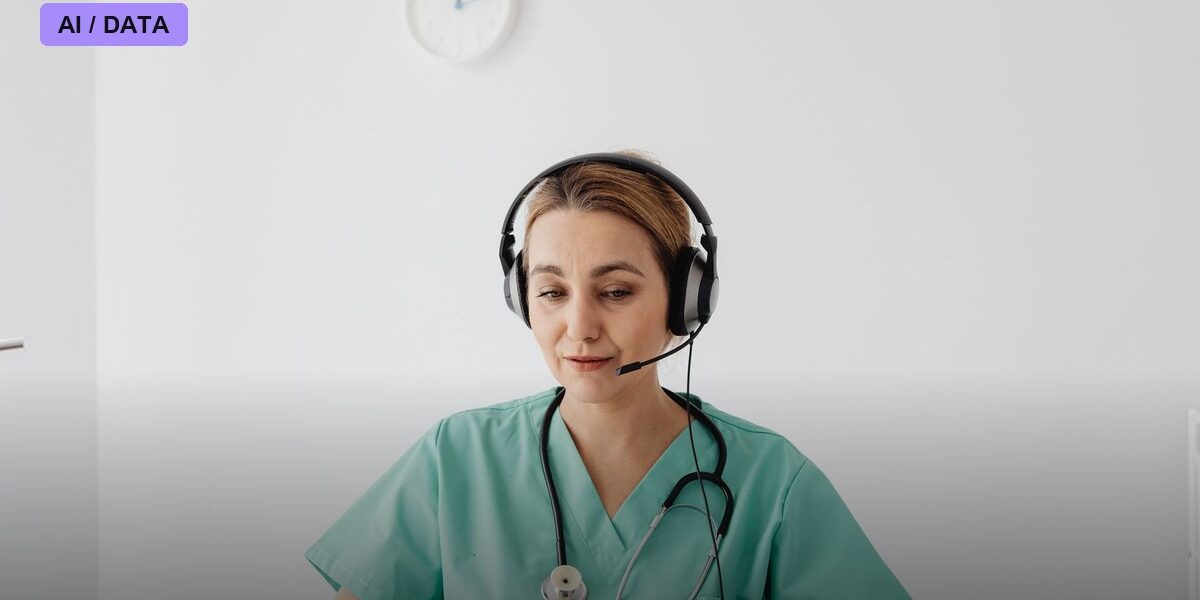
Heidi Health, an Australia and New Zealand-based clinical AI company, has rolled out Heidi II, a new version of its platform that introduces AI agents designed to handle administrative work surrounding patient visits, including documentation, follow-up scheduling, and correspondence drafting. The company says the update is aimed at reducing the hours clinicians spend on non-clinical tasks without removing them from final decision-making.
From Scribe to Agent
Heidi’s original product functioned primarily as an AI medical scribe, listening to patient encounters and generating clinical notes automatically — a category that has grown rapidly across health systems worldwide as ambient documentation tools have shown measurable reductions in physician and nurse charting time. Heidi II extends that capability into more autonomous “agentic” territory, where the AI doesn’t just transcribe but actively performs follow-up tasks, a shift mirroring the broader AI industry’s move from passive assistants to active agents.
Why Clinician Oversight Is the Key Selling Point
Heidi has explicitly marketed Heidi II around the claim that clinicians retain approval and control over decision-making at every step, a framing designed to address a persistent source of resistance to clinical AI: concerns that automation could erode physician judgment or introduce errors that go unnoticed in high-volume settings. The company’s approach reflects lessons from the broader clinical documentation AI market, where tools from competitors like Abridge have emphasized similar oversight guarantees to win over skeptical clinical staff.
The Burnout Problem Driving Adoption
The push toward agentic clinical AI tools comes as hospitals globally grapple with nursing and physician burnout tied heavily to documentation burden. A Nurse.org survey from April 2026 found only 22% of nurses trust AI tools for safe patient care, even as health systems like Reid Health have reported charting time reductions of up to 45 minutes per shift using similar AI documentation technology. That tension — high measured efficiency gains alongside persistent trust deficits — is shaping how companies like Heidi position new features.
Market Context in Health AI Administration
Heidi II’s launch adds to a fast-growing category of health AI focused on administrative rather than diagnostic tasks, a segment some investors view as lower-risk and faster to monetize than diagnostic AI, which typically requires lengthy regulatory clearance processes. Companies in this space are competing both on accuracy and on how seamlessly their tools integrate into existing electronic health record systems used by hospitals and clinics.
Skeptics Flag Accountability Questions
Health AI ethicists have raised questions about accountability as documentation tools move from passive transcription to active task execution, noting that if an AI agent drafts and sends a patient follow-up communication with an error, it may be less clear who bears responsibility compared with a tool that only generates a note for a clinician to review and approve. Heidi has not detailed exactly how its agent features are audited for accuracy before actions are taken.
How Clinicians Are Reacting on the Ground
Early users of Heidi II in Australian and New Zealand clinics have given generally favorable feedback on the documentation improvements carried over from the original product, though some have said they remain more cautious about delegating follow-up communications entirely to an AI agent without reviewing the drafts first. Heidi has said it is collecting structured feedback from early-access clinics to refine which administrative tasks the agent handles autonomously versus which still require explicit sign-off before execution.
Competitive Pressure From Other Scribe Vendors
Heidi competes with a growing roster of ambient documentation vendors, including Abridge and Nabla, each racing to extend their core transcription products into broader agentic functionality covering scheduling, billing, and patient communication. Industry analysts say the company that most convincingly solves the trust and accountability questions around autonomous AI actions, rather than the one with the most features, is likely to win the largest share of health system contracts over the next two years.
What’s Next
Heidi has not disclosed specific adoption numbers for Heidi II since launch, though the company said it plans to expand agentic features gradually, starting with lower-risk administrative tasks before considering more clinically sensitive automation. Health systems evaluating the platform will likely watch early deployments closely for evidence of time savings that match vendor claims without introducing new documentation or communication errors. Some early-access clinics have asked Heidi to publish a changelog documenting exactly which tasks the agent can perform autonomously versus which require sign-off, a transparency step the company has said it is considering as it expands the rollout.
Photo: https://kaboompics.com/ / PEXELS via Pexels