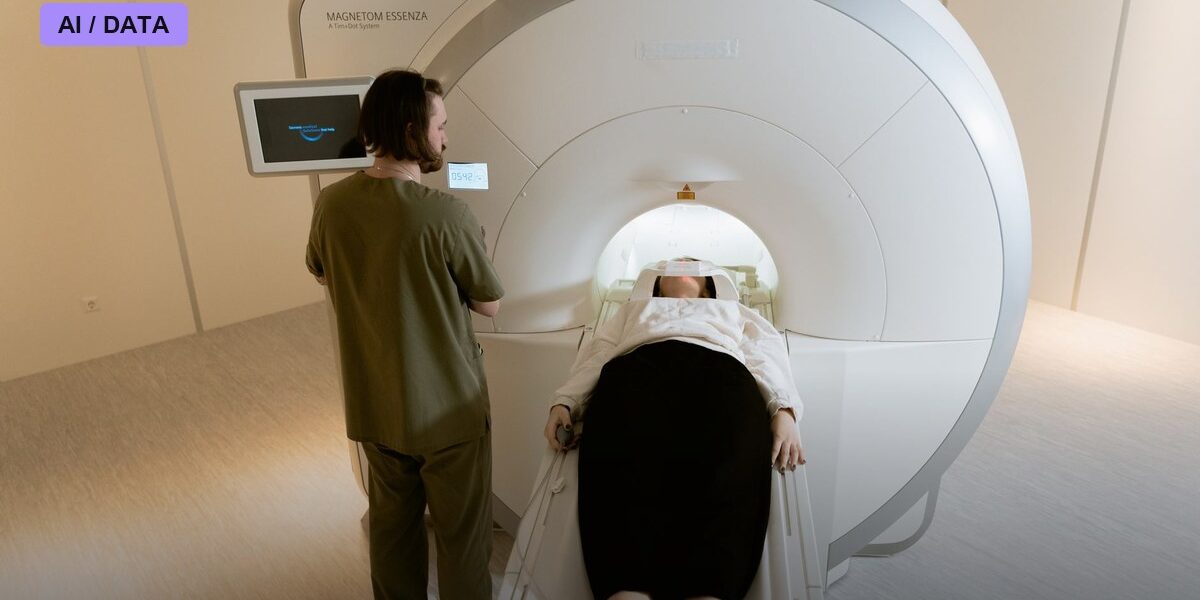
Neko Health, the Stockholm-based preventive-health startup co-founded by Spotify chief executive Daniel Ek, closed a $700 million Series C round in July 2026 led by Lightspeed Venture Partners, pushing its valuation to roughly $7 billion. Two months later, on September 24, 2026, the company opened its first United States location at 300 Lafayette Street in SoHo, New York — a bet that American consumers will pay out of pocket for an hour-long, AI-driven body scan that insurance does not cover.
What the Scan Actually Does
The Neko Health Scan takes about 60 minutes and uses a ring of sensors, cameras and ultrasound-like imaging to assess the skin, heart, blood vessels, circulation, body composition and metabolic markers without radiation. The platform then runs the imagery and vital-sign data through machine-learning models trained to flag anomalies — a suspicious mole, an irregular heart rhythm, early signs of vascular disease — that a routine annual physical might miss. Crucially, Neko positions itself as a preventive screening layer, not a diagnostic replacement: flagged results are meant to trigger a conversation with a physician, not a standalone verdict.
How Ek Built a Health Company Out of a Music Company’s Playbook
Ek co-founded Neko Health in 2018 alongside Hjalmar Nilsonne, applying a version of the same data-and-subscription thinking that built Spotify into a streaming giant. The company opened its first clinics in Stockholm and London, building a waitlist that topped 100,000 people globally by early 2025, according to earlier funding disclosures. The $700 million round — one of the largest-ever raises for a European health-tech startup — was explicitly earmarked for US expansion, regulatory navigation, and scaling the sensor hardware that underpins each clinic.
The Price Tag and Who’s Paying It
Sources differ slightly on Neko’s US pricing, with figures cited between $400 and $499 per scan, but they agree on the core model: this is a cash-pay service with no US insurance reimbursement. That puts Neko in direct competition with a cluster of venture-backed preventive-health upstarts — including Function Health, which has leaned on blood-panel testing backed by a $450 million General Catalyst credit facility — all chasing the same affluent, health-anxious consumer who wants Silicon Valley-style quantification of their own body.
The Skeptics’ Case
Not everyone in medicine is convinced. Critics of the broader “preventive scanning” wave — echoing long-standing debates over whole-body MRI and full-body CT screening — warn that scanning asymptomatic, low-risk people at scale can generate a flood of false positives, driving unnecessary biopsies, follow-up imaging and anxiety without a proven mortality benefit. Radiology and primary-care societies have historically cautioned that the evidence base for population-wide preventive scanning in healthy adults remains thin, even as the technology improves. Neko’s radiation-free approach sidesteps some of those objections, but the core question — does earlier detection in asymptomatic people actually save lives, or just find things that would never have caused harm — remains unresolved for this category.
Why Investors Are Betting Big Anyway
Lightspeed and Neko’s other backers are wagering that consumer appetite for data-rich, Apple Watch-era health monitoring will carry over into physical, in-person diagnostics, especially among a demographic already paying for continuous glucose monitors, wearables and longevity coaching. The $7 billion valuation implies investors expect Neko to scale well beyond a handful of flagship-city clinics into a recurring, annual-visit business model — more akin to a gym membership than a one-time medical test.
What’s Next
Neko has not disclosed a detailed US rollout timeline beyond SoHo, but the company’s European trajectory — Stockholm and London first, then a slow multi-city expansion — suggests Los Angeles, Miami or another major US metro is a likely next stop. The bigger test will be whether Neko can generate published, peer-reviewed outcomes data showing its AI flagging actually changes clinical outcomes, which would quiet skeptics and potentially open a path toward future insurance coverage. Until then, the company’s growth will likely remain a story about consumer demand for data, not a story about evidence-based medicine.
Photo: MART PRODUCTION / PEXELS via Pexels