Britain’s National Health Service is making its clearest bet yet on AI as everyday clinical infrastructure rather than an experimental add-on. NHS England has confirmed that ambient voice technology and AI triage will be the priority spending areas for its previously announced £10 billion technology investment, according to Future Health Intelligence, with an expectation that Integrated Care Boards and NHS providers will begin adopting ambient voice tools from April 2026 under national guidance on safe AI deployment.
What ambient voice technology means for an NHS visit
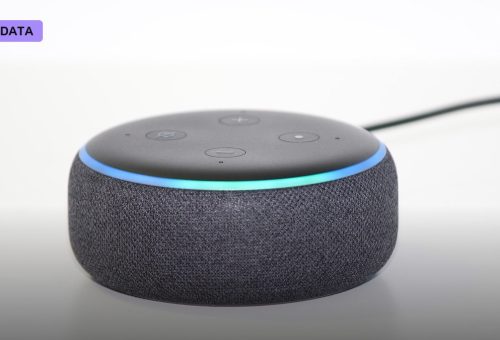
Ambient voice technology, often shortened to AVT, records and transcribes conversations between clinicians and patients, then auto-generates clinical documentation — the same category of tool scaling rapidly across American hospitals under brands such as Abridge. For a system as large and famously understaffed as the NHS, the appeal is blunt: if AVT can shave even a few minutes off each appointment’s administrative overhead, multiplied across the NHS’s roughly 1.3 million staff and hundreds of millions of patient contacts a year, the cumulative time saved could be enormous.
The £10 billion commitment, and what it actually buys
The £10 billion figure traces back to the UK’s three-year Public Spending Review, announced in June 2025, with this month’s announcement marking the first public confirmation of how that money’s priorities will be allocated. Separately, one NHS ambient-scribe vendor, Heidi, has claimed its tool has already cut NHS paperwork by 86 percent in early deployments and freed up more than 4 million clinician hours — a vendor-reported figure that has not been independently audited but has been widely cited in NHS trade coverage.
Regional rollouts are already underway
This isn’t purely aspirational policy. In the West Midlands, a procurement framework has The Dudley Group NHS Foundation Trust, Walsall Healthcare NHS Trust and The Royal Wolverhampton NHS Trust going live with ambient voice tools in May 2026, with Sandwell and West Birmingham NHS Trust to follow. North London NHS Foundation Trust published its own tender in May 2026 to procure an AVT solution as part of a broader digital transformation strategy, suggesting trusts across England are moving in parallel rather than waiting for a single centralized rollout.
Pathology digitization is riding alongside
The same £10 billion package also funds pathology digitization, converting physical slides and lab workflows into digital, AI-analyzable formats. A separate NHS review found that completing pathology transformation could free up around £450 million a year for the health service — money currently spent on manual, paper-based lab processes that digitization and AI-assisted image analysis could streamline.
Why some clinicians remain wary
Despite the national push, this remains a statement of spending priorities rather than a fully detailed delivery plan, and NHS staff representatives have raised familiar concerns: whether AI-generated notes will be reliably accurate across the vast range of accents, dialects and clinical contexts found across England’s diverse patient population, who bears liability if an AI-transcribed note contains an error that affects care, and whether local trusts — many already managing tight IT budgets — have the infrastructure to deploy these tools safely and consistently rather than in a patchwork fashion that leaves some patients better served than others.
What’s next
With adoption expected to begin in earnest in April 2026, the coming months will show whether NHS England can translate a national funding commitment into consistent, trust-by-trust execution — historically one of the NHS’s harder challenges given its scale and regional autonomy. If the ambient voice rollout works as intended, overstretched GPs and hospital clinicians could see real relief from documentation burden; if it stalls on inconsistent local implementation, it risks becoming another example of a well-funded NHS technology initiative that struggled in the execution rather than the ambition. Patient groups say they will be watching less for headline funding figures than for something more mundane and more telling: whether a routine GP or hospital appointment in Dudley or North London actually feels any shorter or less rushed a year from now than it does today. Union representatives for NHS clinical staff have also asked for a clearer national standard on how long transcripts of ambient-recorded consultations are retained and who outside the treating clinician can access them, arguing that detail has so far been left to individual trusts to work out trust by trust rather than set centrally.
Photo: Gustavo Fring / PEXELS via Pexels