Roche announced a partnership with Chai Discovery on November 5 to apply the AI startup’s drug-design models across multiple programs in its pharmaceutical pipeline, becoming the latest major drugmaker to sign with a company that has already struck similar deals with GSK and Eli Lilly this year. The agreement adds to what DealForma has tracked as a record year for AI drug-discovery licensing, with deals reaching $47.1 billion in the first half of 2026 alone, already surpassing the full-year 2025 total of $44.6 billion.
What Chai’s technology actually does
Chai Discovery’s AI models are designed to predict how candidate drug molecules will behave, including their structure and interactions with biological targets, before those molecules are synthesized and tested in a laboratory, a capability that can compress the earliest and often most time-consuming stages of drug discovery from years into a fraction of that time when the predictions prove accurate. Roche’s decision to apply the technology across multiple programs, rather than a single pilot, signals a level of internal confidence that goes beyond the cautious, narrowly scoped trials many pharmaceutical companies have run with AI drug-discovery partners to date.
Part of a broader pharma AI spending surge
Roche’s deal follows a wave of similarly structured partnerships, including Eli Lilly’s expanded $2.75 billion licensing deal with Insilico Medicine, Insilico’s separate $600 million biobucks collaboration with Takeda, and AbbVie’s newly announced multi-year AI drug-discovery pact with Iambic Therapeutics, disclosed November 6. Collectively, these deals illustrate how thoroughly AI-assisted drug design has moved from experimental side projects into core pipeline strategy at the world’s largest pharmaceutical companies within just a few years.
Two views on AI’s impact on drug development timelines
Pharmaceutical executives championing these partnerships argue that AI-driven molecule design and prediction can meaningfully shorten the notoriously long and expensive drug-development process, potentially bringing new treatments to patients years earlier than traditional discovery methods would allow. Skeptical biotech researchers caution that AI’s demonstrated advantages so far lie mostly in the earliest discovery stages, and that the costliest, highest-failure-rate phases of drug development — clinical trials in human patients — remain largely unaffected by AI design tools, meaning the ultimate impact on how quickly new drugs actually reach patients remains unproven at scale.
The competitive dynamics among AI drug-discovery startups
Chai Discovery’s expanding roster of pharmaceutical partners, alongside competitors like Insilico Medicine and XtalPi that have each signed their own major pharma deals this year, suggests the AI drug-discovery sector has moved past an initial proof-of-concept phase into genuine competition for which startup’s models become the default technology embedded in major pharmaceutical companies’ discovery workflows going forward.
What pharma companies are watching for next
Venture investors who fund AI drug-discovery startups like Chai Discovery say the real inflection point the industry is waiting for is the first fully AI-designed molecule to receive FDA approval after completing human clinical trials, an outcome that would validate the technology’s value beyond the discovery stage where most current deals, including Roche’s new partnership, are concentrated. Several AI drug-discovery candidates from Lilly’s Insilico collaboration and other early partnerships have already entered early-phase human trials, meaning results expected over the next one to two years could provide the first real data on whether AI-designed compounds show meaningfully different success rates than traditionally discovered molecules at the clinical-trial stage, where the vast majority of drug candidates still fail regardless of how they were originally identified.
What’s next
Neither Roche nor Chai Discovery has disclosed specific financial terms or which disease areas within Roche’s pipeline will be prioritized for the AI-assisted approach first. Whether any resulting drug candidates eventually reach clinical trials faster than comparable traditionally-discovered molecules will be the real test of whether 2026’s AI drug-discovery deal surge translates into tangible benefits for patients rather than remaining primarily a story about pharmaceutical companies’ R&D spending priorities. Roche has said it expects to share early progress updates on the Chai Discovery partnership at a future investor event, without committing to a specific date. Patent attorneys tracking the AI drug-discovery sector say they expect a wave of intellectual-property disputes as more pharmaceutical companies claim rights to molecules identified through similar AI platforms built on overlapping training data. Analysts tracking the space say the next several disclosures, whether regulatory filings, earnings commentary or peer-reviewed follow-up research, will matter more than any single announcement made so far in determining how this story ultimately plays out.
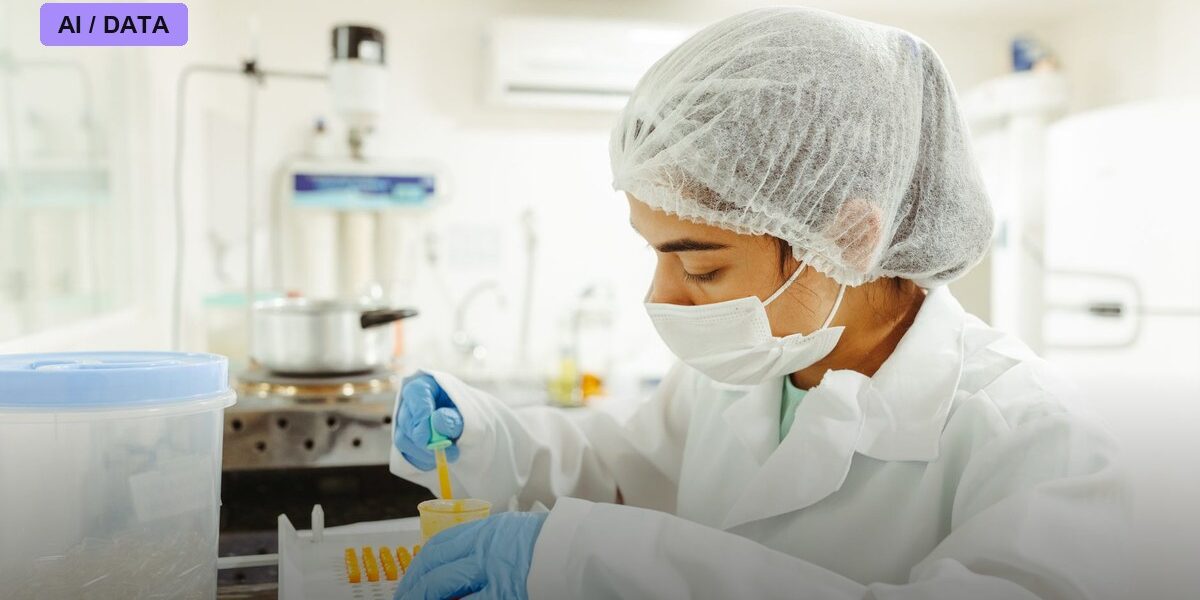
Photo: Jonathan Borba / PEXELS via Pexels