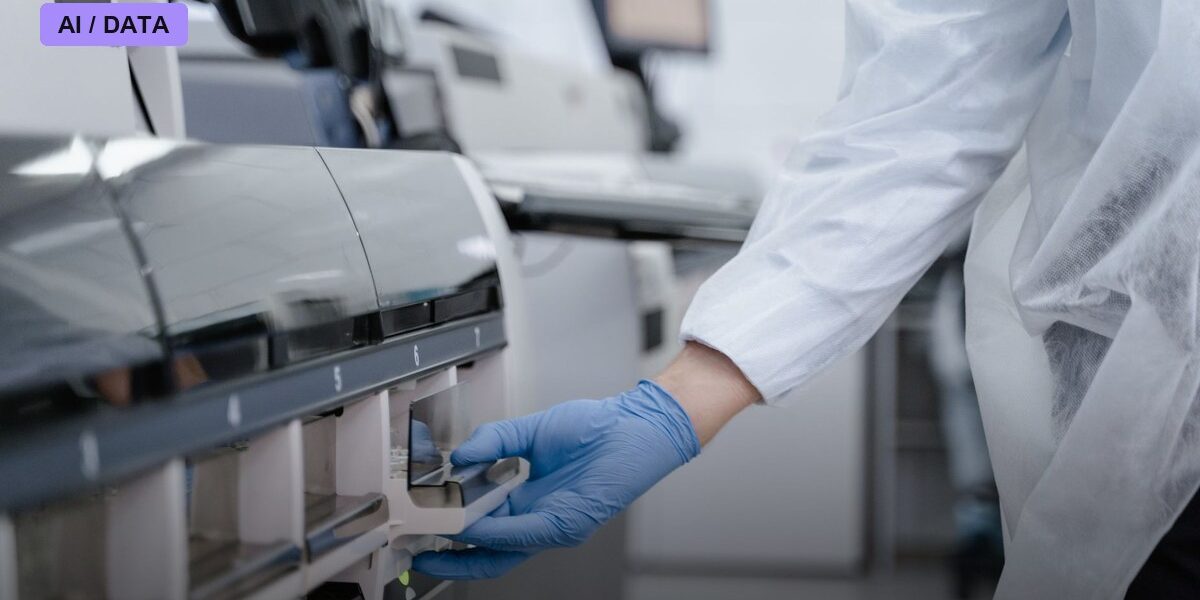
Tempus AI is moving ahead with its roughly $1.5 billion all-stock acquisition of Personalis, a genomic sequencing and cancer-testing company, in a deal first announced July 20, 2026, that is expected to close in late 2026 or early 2027 pending shareholder and regulatory approval. The transaction is one of the largest in Tempus’s history and underscores how aggressively the Chicago-based AI-and-genomics company is trying to expand beyond its roots as a data and diagnostics platform into owning more of the testing infrastructure that feeds its AI models. The deal would add Personalis’s California-based sequencing labs and its roster of pharmaceutical and health-system clients directly to Tempus’s existing customer base, giving the combined company a broader footprint in the increasingly competitive minimal residual disease testing market.
The Terms
Under the agreement, Personalis shareholders will receive $16.25 per share in Tempus stock, implying an enterprise value of about $1.5 billion net of Tempus’s existing stake in the company. The deal is structured as a 100% stock transaction, though Tempus retains the option to pay up to half the consideration in cash, with a floating exchange ratio capped at a maximum of 0.3356 Tempus shares per Personalis share. The per-share price represents roughly a 6% premium to Personalis’s closing price the Friday before the announcement, and a 28% premium to its 30-day volume-weighted average price. Personalis’s board unanimously approved the agreement, and the companies have said they expect to hold shareholder votes once the necessary regulatory filings are complete.
Why Tempus Wants Personalis
Personalis specializes in advanced genomic sequencing used to detect minimal residual disease — the tiny traces of cancer that remain in a patient’s body after treatment and can signal a looming relapse before it shows up on a scan. That technology fills a gap in Tempus’s existing precision-oncology platform, which has built its business on aggregating clinical and molecular data to train AI models that help oncologists choose therapies. By folding Personalis’s sequencing capabilities directly into its own pipeline, Tempus would no longer need to rely as heavily on outside testing partners for some of its highest-value cancer diagnostics.
Tempus’s Data-Driven Pitch
Tempus, founded by Eric Lefkofsky, has built its growth story around the idea that scale begets better AI: the more clinical and genomic data the company collects, the more accurate its models become at matching patients to effective treatments, which in turn attracts more health systems and pharmaceutical partners to use its platform. The company’s second-quarter 2026 results showed continued revenue growth, and executives have framed the Personalis deal as a way to deepen that data moat specifically in minimal residual disease testing, an area oncologists increasingly view as critical for catching cancer recurrence early. Tempus has pointed to its existing partnerships with major cancer centers as evidence that demand for combined genomic-and-AI testing is already outpacing what either company could deliver independently, a case executives have repeated to investors skeptical of the acquisition’s price.
The Market’s Cold Reception
Investors did not share management’s enthusiasm. Shares of both Tempus AI and Personalis fell after the deal was announced, with Tempus’s stock dropping in premarket trading as some analysts questioned the price tag and the dilution that comes with an all-stock structure. Skeptics have also pointed to the broader pattern of AI-adjacent health companies paying rich premiums for data and testing assets, a dynamic that has drawn comparisons to earlier biotech acquisition waves that didn’t always deliver on their promised synergies.
Precision Oncology’s Bigger Picture
The deal lands amid a broader consolidation push in AI-driven diagnostics, following Roche’s separate agreement to acquire PathAI for up to $1.05 billion earlier in 2026 and a wave of smaller deals across genomics and digital pathology. Proponents argue this consolidation is a natural and even necessary step, since the computational advantages of AI diagnostics only compound when a company controls more of the data pipeline, from initial sequencing through to clinical decision support. Critics counter that it also concentrates an increasing share of sensitive patient genomic data in the hands of a shrinking number of companies, raising questions about data privacy and vendor lock-in for health systems.
What’s Next
The deal still needs sign-off from both companies’ shareholders and clearance from antitrust regulators, a process Tempus has said it expects to wrap up by early 2027. Investors will be watching Tempus’s next earnings report for any update on integration costs and whether management can show the acquisition is accretive faster than the market currently expects, while rivals in precision oncology will be watching to see whether this deal triggers further consolidation among the remaining independent genomic testing companies.
Photo: Tima Miroshnichenko / PEXELS via Pexels