The FDA’s running tally of AI-enabled medical devices has reached 1,614 as of its most recent update, according to an analysis published in mid-September that cross-referenced the agency’s own AI-Enabled Medical Device List against its openFDA regulatory databases. Of those, 1,553 — more than 96% — reached the market through the agency’s lower-bar 510(k) clearance pathway, which requires showing a new device is substantially equivalent to one already on the market, while only 40 went through the more rigorous De Novo pathway and 21 through full Premarket Approval, the standard reserved for higher-risk devices.
How a Trickle Became a Flood
The FDA first began publishing a dedicated list of AI-enabled devices as the pace of submissions accelerated through the late 2010s, and the year-over-year growth captured in the September analysis tells its own story: just 65 AI devices won clearance in 2018, a number that climbed steadily to 162 in 2022, then jumped to 226 in 2023 and 235 in 2024, before 2025 saw the largest single-year total yet, at 335 clearances. Through June 29 of this year alone, the agency had already cleared 181 AI devices, slightly ahead of the 173 recorded in the same period of 2025 — suggesting 2026 is on pace to extend, not reverse, the growth trend.
One Specialty Dominates Almost Entirely
Radiology accounts for 1,230 of the 1,614 total devices, or roughly 76%, dwarfing every other medical specialty on the list. Cardiovascular applications are a distant second at 154 devices (9.5%), followed by neurology at 73 (4.5%); together, those three specialties account for more than 90% of every FDA-cleared AI medical device in existence. The concentration reflects a practical reality of medical AI development: radiology and cardiology generate enormous volumes of standardized digital imaging and signal data — X-rays, CT scans, MRIs, ECGs — that are comparatively easy to label and train machine-learning models on, compared with messier, less standardized data from fields like primary care or psychiatry.
The Case That This Is a Genuine Success Story
To AI-in-medicine advocates, the growth curve is the headline: a nearly fivefold increase in annual clearances between 2018 and 2025 demonstrates that both the technology and the regulatory pathway for reviewing it have matured rapidly, giving hospitals and clinics access to a rapidly expanding toolkit of AI software for tasks ranging from flagging suspicious nodules on a chest CT to detecting signs of stroke on a brain scan faster than a radiologist working alone. The FDA itself has responded to the volume by introducing a formal Predetermined Change Control Plan framework, finalized in December 2024, that lets manufacturers pre-specify how an AI model’s performance may be updated over time without requiring a brand-new submission for every tweak — infrastructure regulators would not have built without evidence the category was here to stay.
The Case for Skepticism About What “Cleared” Really Means
Critics of the 510(k)-dominated clearance pattern note that the pathway was designed decades ago for incremental updates to conventional devices like surgical instruments and diagnostic equipment, not for adaptive software whose core function is pattern recognition learned from training data — and that substantial-equivalence review does not require the kind of large, prospective, randomized clinical trial that would more rigorously establish real-world patient benefit. With radiology and cardiology so overrepresented, the list also reflects where AI development has been commercially easiest, not necessarily where it is most clinically needed; specialties serving older, sicker, or lower-resource patient populations — primary care, geriatrics, psychiatry — remain comparatively underserved by FDA-cleared tools, a gap regulatory volume alone does not close.
What’s Next
With 181 devices cleared in just the first half of 2026 and an increasingly standardized change-control framework in place for manufacturers to iterate on existing models, the FDA’s AI-device list is almost certain to keep growing well past 1,614 by year’s end. The more consequential question for patients and hospitals is no longer how many AI devices exist on paper, but how many of the roughly 1,230 radiology tools alone are actually integrated into daily clinical workflows, reimbursed by insurers, and backed by outcome data beyond what a 510(k) submission required — a far smaller and much harder number to track.
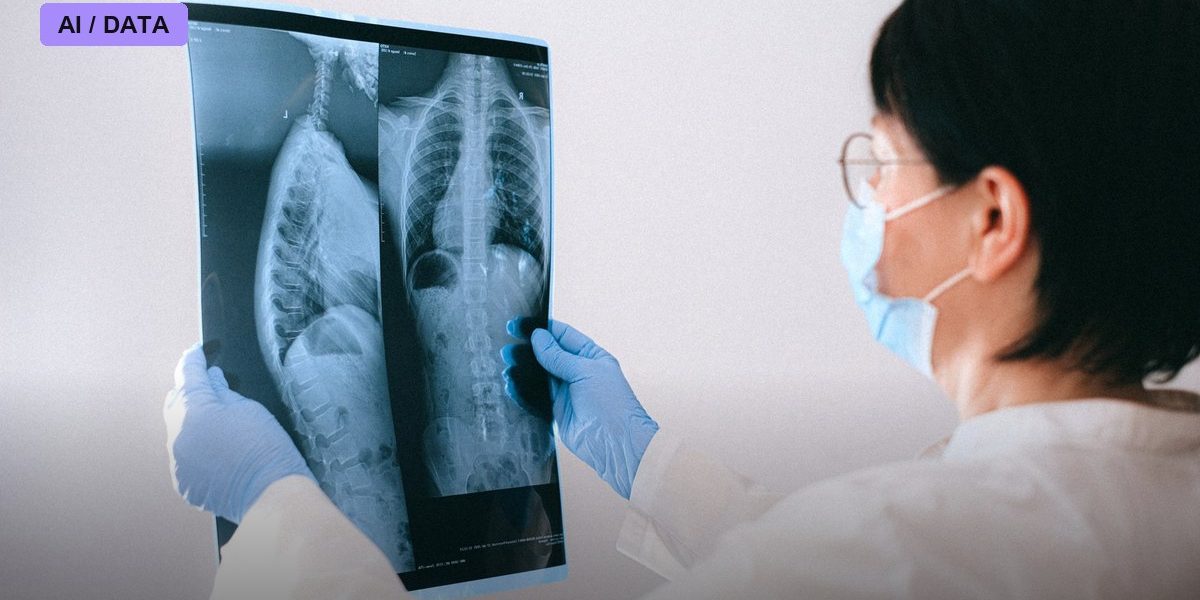
Photo: Anna Shvets / PEXELS via Pexels