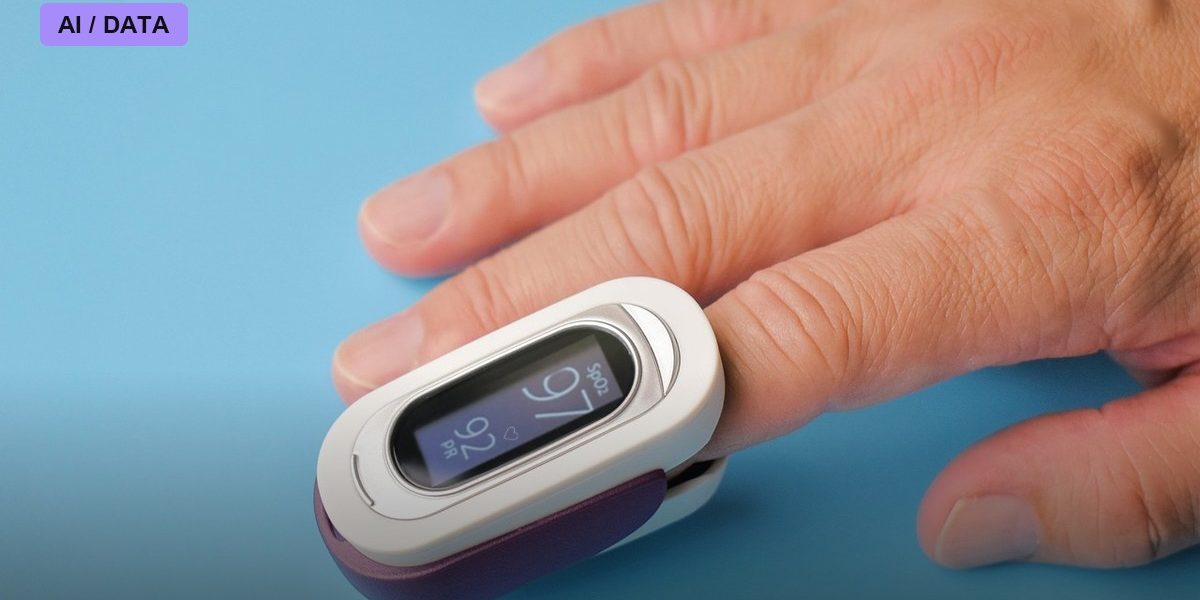
Diagnosing sleep apnea has traditionally meant spending a night wired to electrodes in a clinical sleep lab, a process that can cost anywhere from $1,170 to $11,700 depending on the facility. An Israeli startup called Sleep AI, built on research out of the Technion — Israel Institute of Technology, is betting that a lightweight oximeter clipped to a finger and read by an AI model can get most patients a usable diagnosis without ever leaving home.
How the test works
The system pairs a small pulse oximeter with a mobile app. Patients wear the sensor overnight in their own bed; the device tracks blood oxygen levels and related signals through the night and uploads the data to Sleep AI’s cloud platform. An AI model then analyzes the recording and generates a report physicians say they receive within minutes, mapping sleep architecture, flagging signs of apnea, and assessing cardiovascular risk tied to repeated nighttime oxygen deprivation. In clinical testing at sleep centers — the company’s comparison point was facilities like Ichilov Hospital in Tel Aviv, which runs traditional overnight sleep studies — the system reportedly reached 89% overall accuracy in detecting sleep apnea, rising to 99% accuracy for moderate and severe cases, the range where missed diagnoses carry the most risk.
The research behind it
The approach builds on years of published work from the Technion’s AI in Medicine lab, led by Dr. Joachim Behar. In 2019, Behar’s team published a study in EClinicalMedicine using overnight pulse oximetry combined with basic measurements — age, height, weight, neck size — from nearly 900 adults in São Paulo, Brazil, and found the model caught every clinically important case of moderate or severe obstructive sleep apnea in the sample, while standardized screening questionnaires missed more than 15% of severe cases. A follow-up study in Nature Communications in 2023 introduced a deep-learning model, OxiNet, that estimated apnea severity from oximetry signals alone and missed just 0.2% of moderate-to-severe cases in its test set, against roughly 21% missed by the best existing benchmark. That body of research is the scientific foundation Sleep AI is now trying to turn into a commercial product.
Why this matters at scale
The World Health Organization estimates nearly 40% of the global population has some form of sleep-related disorder, and sleep apnea alone is thought to affect close to a billion people worldwide — the large majority of them undiagnosed, in part because lab-based testing is expensive, requires an overnight stay away from home, and has limited capacity even in wealthy health systems. A test that fits in a pocket, costs a fraction of a lab study, and still catches the cases that matter most clinically could meaningfully shrink that diagnostic gap, particularly in regions with few sleep specialists.
The reasons for caution
There’s an important gap between the underlying Technion research and the commercial product built on top of it. The published academic studies validated specific models on specific research cohorts under controlled conditions; Sleep AI’s own “89% to 99%” figures describe testing the company has run at sleep centers, not results published in a peer-reviewed journal for this exact consumer-facing device. The company has not yet secured regulatory approval anywhere — it describes itself as still pursuing international clearances — which means no health authority has independently verified its performance claims the way the FDA or Europe’s notified bodies do for approved medical devices. Existing home sleep apnea tests, which use more sensors than a single oximeter and already carry regulatory clearance and insurance reimbursement in many markets, remain the established alternative, and it’s an open question whether a simpler single-sensor device can match their accuracy across the full range of patients, body types and apnea severities seen in real-world use rather than a curated test population.
What’s next
Sleep AI says it is pursuing regulatory approvals internationally and hopes the test eventually qualifies for health insurance reimbursement — a step that would meaningfully widen access beyond patients willing to pay out of pocket. Until a clearance comes through and independent peer-reviewed data on the finished product is published, the company’s accuracy numbers remain promising but unverified by outside authorities. If Sleep AI or similar single-sensor approaches do clear that bar, the economics are compelling enough — a few hundred dollars and a night at home instead of thousands of dollars and a clinic bed — that they could become a serious first-line screening option for a condition the WHO says affects thousands of millions and is diagnosed in only a fraction of them today.
Photo: subarasikiai / PIXABAY via Pixabay