The University of Vermont received a $38 million grant to develop AI-powered digital twins of intensive care unit patients, computational models intended to simulate an individual patient’s physiology in real time and help clinicians predict how that specific patient might respond to different treatment interventions. The project, announced in early October 2026, represents one of the largest single investments in patient-specific digital twin technology for critical care, a field that has moved from theoretical research toward practical clinical tools over the past several years.
What a Patient Digital Twin Actually Is
A digital twin in this context is a continuously updated computational model built from a specific patient’s vital signs, lab results, imaging and other clinical data, designed to simulate how that individual patient’s body might respond to a given treatment before it is actually administered. Unlike generic clinical decision support tools that apply population-level statistics to a patient’s case, a digital twin aims to account for an individual’s specific physiology, comorbidities and response patterns, a level of personalization that researchers say could be particularly valuable in the ICU, where patients are often critically unstable and treatment decisions carry immediate, high-stakes consequences.
Why the ICU Is a Natural First Application
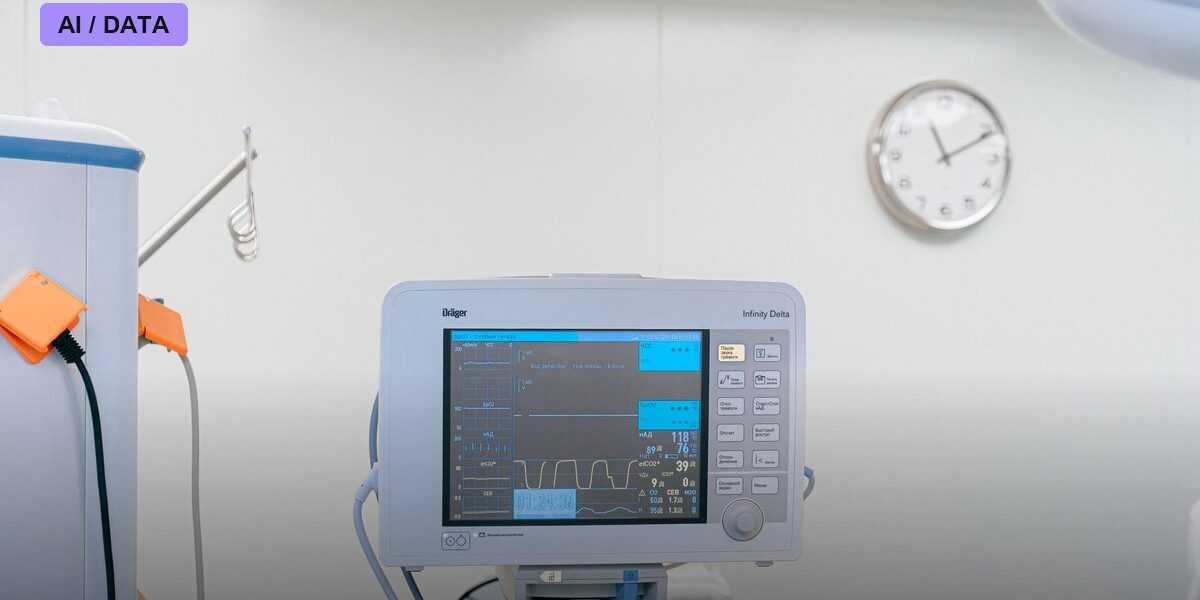
Intensive care units generate enormous volumes of continuously monitored patient data, including minute-by-minute vital signs, ventilator settings and lab values, providing exactly the kind of rich, continuous data stream that digital twin models require to function effectively. ICU clinicians also routinely face decisions, such as fluid management, sedation adjustment and ventilator weaning, where the consequences of getting the timing or dosage wrong can be severe, making even modest improvements in predictive accuracy potentially valuable for patient outcomes.
How This Builds on Earlier Digital Twin Research
Digital twin technology originated in industrial engineering, where manufacturers built virtual models of physical equipment to predict maintenance needs and optimize performance, a concept that researchers have spent the past decade adapting to human physiology with mixed success given the vastly greater complexity and variability of biological systems compared with mechanical ones. Earlier clinical digital twin efforts focused on narrower applications such as cardiac modeling for specific interventions, and the University of Vermont’s ICU-wide approach represents a more ambitious attempt to model a patient’s broader physiological state across multiple organ systems simultaneously.
The Skepticism Digital Twins Still Face
Critical care specialists not involved in the project have cautioned that digital twin models are only as reliable as the data and assumptions built into them, and that validating a model’s predictions against real patient outcomes, especially for rare or unusual physiological presentations the model may not have encountered in its training data, remains a significant unsolved challenge. Some researchers have also raised concerns that overreliance on digital twin predictions could subtly shift clinical decision-making responsibility away from bedside judgment in ways that are difficult to audit after the fact, particularly if a model’s confidence in its predictions is not clearly communicated to the treating team.
How the Grant Money Will Be Used
The $38 million will fund development of the modeling infrastructure, data integration systems needed to feed real-time ICU data into the digital twin models, and clinical validation studies intended to test whether the technology actually improves patient outcomes compared with standard care, rather than simply producing plausible-looking simulations that have not been proven to change treatment decisions for the better. University of Vermont researchers have said the project will proceed in phases, starting with retrospective validation against historical patient data before moving to prospective studies involving real-time clinical use.
What’s Next
The research team has outlined a multiyear timeline for developing and validating the digital twin technology before any attempt at broader clinical deployment, reflecting the cautious pace typically required for new technology to gain acceptance in critical care settings where errors carry immediate life-or-death consequences. If successful, the approach could eventually extend beyond the ICU to other high-acuity settings where personalized, real-time physiological modeling could inform treatment decisions, though researchers have emphasized that rigorous outcome validation will need to come well before any such expansion.
Photo: Anna Shvets / PEXELS via Pexels