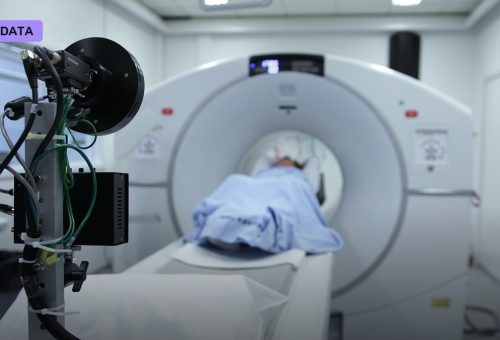
Some of the most striking AI in medicine is not a chatbot — it is the software reading your scans. A wave of imaging models can now detect signs of cancer that human radiologists cannot see, and after years of research they are finally moving into real hospital workflows.
Seeing what humans miss
AI can identify subtle details in a breast X-ray that are invisible to the eye and use them to calculate a probability — the likelihood a person develops cancer over the next five years. The open-source model Mirai does exactly this for breast cancer, flagging high-risk patients years before a radiologist would, while its counterpart Sybil does the same for lung cancer risk. The promise is earlier intervention, when outcomes are far better.
New tools widening the lens
The next generation goes broader. Pillar-1, a model being developed by Voio, aims to detect risk across a wider array of images, consolidate findings into a draft report for the radiologist, and help interpret complex cases — surfacing disease progression that is not currently detectable. The pattern is consistent: AI as a tireless second reader that drafts and triages, leaving the final call to the clinician.
Big players move in
Industry is committing real money. Bristol Myers Squibb announced a collaboration with Microsoft to advance AI-driven early detection of lung cancer, and FDA-cleared radiology algorithms are being deployed through Microsoft’s Precision Imaging Network, which can automatically analyze X-ray and CT images to surface hard-to-detect lung nodules and triage patients for care.
Why adoption lags the science
The technology often outruns the hospital. Even when a model is accurate, integrating it into clinical workflows, validating it on local patient populations, satisfying regulators and convincing clinicians to trust it all take time. A tool that cries wolf — too many false positives — creates work and erodes confidence, so careful rollout matters as much as raw performance.
The bottom line
AI imaging is one of the clearest near-term wins for medical AI: concrete, measurable, and aimed at catching disease earlier. The science is increasingly settled; the bottleneck is trust and integration. As models like Mirai, Sybil and Pillar-1 move from papers into practice, the payoff is simple but profound — cancers caught sooner, when they are easier to treat.
Photo: public domain via flickr