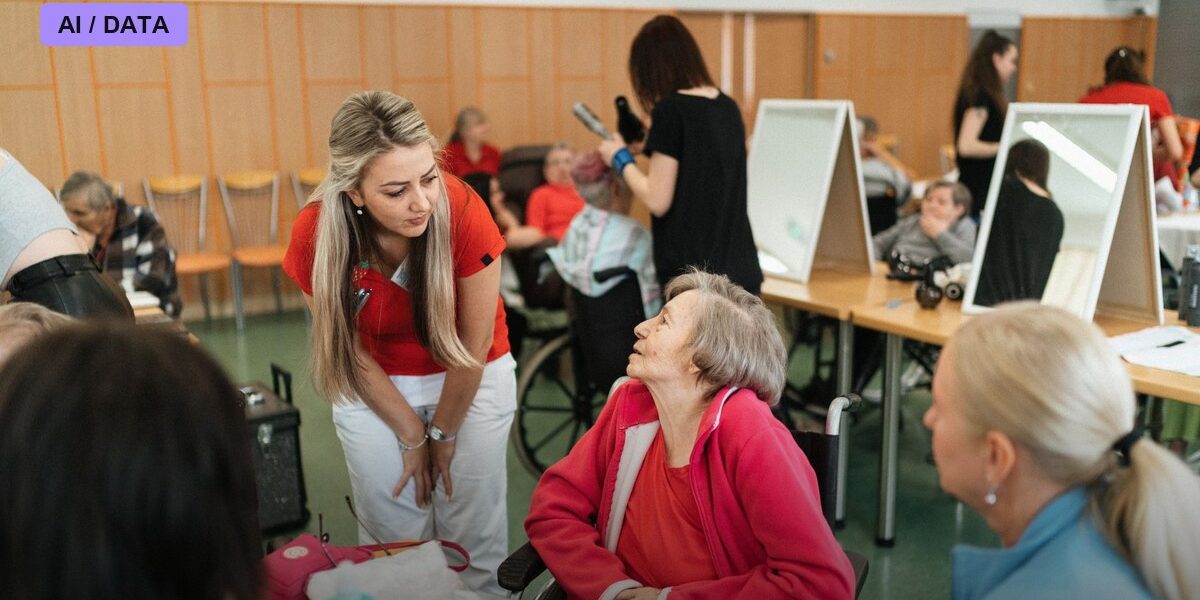
Andromeda Robotics, maker of the ChatGPT-enabled companion robot Abi, raised $17 million in March 2026 to expand deployment into senior living facilities across the United States, as the eldercare industry increasingly turns to AI-powered robots to address a worsening caregiver shortage. Abi is already in use at aged-care homes in Australia, where one provider’s trial began in 2024 and is expected to run for up to two years.
What Abi Actually Does
Abi is designed as a social companion rather than a physical-care robot — it engages residents in conversation, leads group activities, and provides a consistent conversational presence for people who may otherwise go hours or days without meaningful social interaction. That focus on companionship rather than physical assistance (bathing, lifting, medication administration) reflects where current robotics technology is most reliable, and where the clearest near-term need exists in facilities stretched thin on staff.
The Caregiver Shortage Driving Demand
Industry projections point to a shortage of care workers numbering in the hundreds of thousands within coming decades in several major economies, driven by aging populations and historically low pay and poor working conditions in the caregiving profession. Companion robots like Abi are being pitched as a partial solution to that gap — not as a replacement for human caregivers, but as a way to extend limited staff capacity by handling the social-engagement tasks that would otherwise go undone.
Research Findings Are Cautiously Positive
A July 2026 study from Case Western Reserve University found that older adults viewed an AI-powered companion robot as valuable, particularly for fall-prevention monitoring, though researchers noted that convincing people to adopt the technology before it becomes clearly necessary remains difficult. Crucially, caregivers in the study viewed the technology as enhancing rather than replacing human care and companionship — a distinction that will likely shape how facilities market and deploy these robots going forward.
A Cautionary Example From Japan
Japan, which has invested heavily and for far longer in eldercare automation due to its severe demographic pressures, offers a more mixed picture. Researchers studying Japan’s experience have found that costly automation efforts often produced unintended consequences, and the country has not widely embraced the idea of robots as genuine companions in the way more optimistic Western pitches sometimes suggest — a reminder that cultural attitudes toward robot companionship vary significantly and that technology alone doesn’t guarantee adoption.
What’s Next for the Eldercare Robotics Market
Market researchers estimate the eldercare assistive robot sector at several billion dollars globally in 2026, though these figures come from industry analysts with a commercial interest in the category’s growth and should be treated as directional rather than precise. For Andromeda Robotics, the real test will be whether US senior living operators — facing their own acute staffing pressures — are willing to pay for Abi at scale, and whether residents’ engagement with the robot holds up over months rather than the initial novelty period documented in early pilots.
Photo: Jsme MILA / PEXELS via Pexels