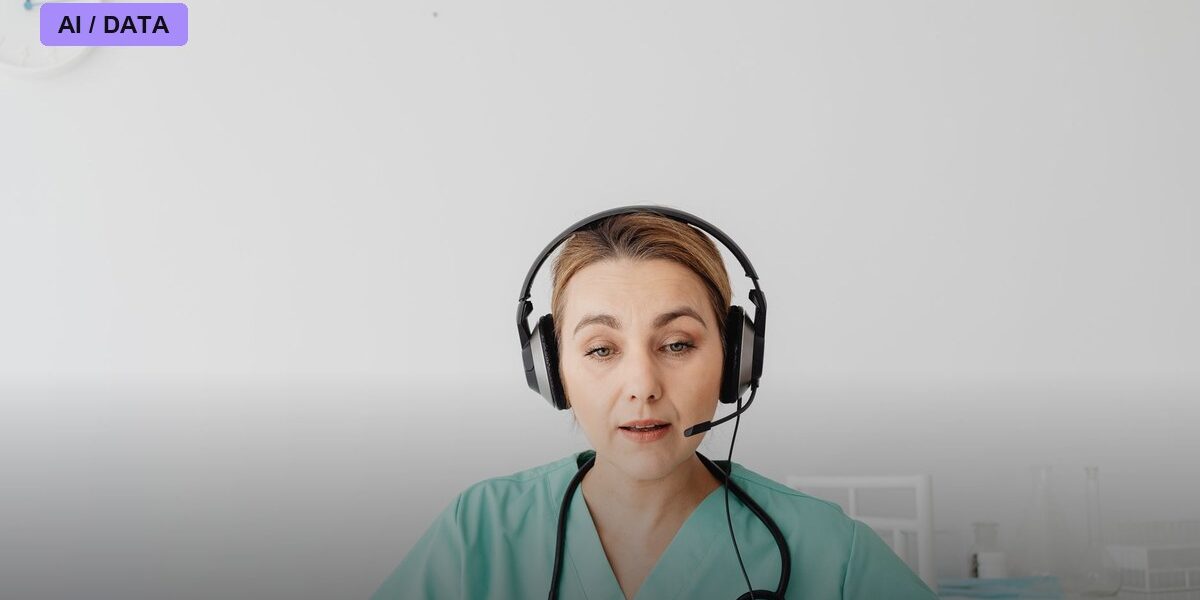
WellSpan Health, a Pennsylvania-based health system, announced on July 30, 2026 a major expansion of its partnership with Hippocratic AI, converting what began as a handful of narrow use cases into a platform-wide, multi-year commitment covering inbound, outbound, ambulatory, and inpatient care. The move marks one of the most expansive single-system deployments of generative AI voice agents in U.S. healthcare to date, with WellSpan betting that a single AI platform can be woven into nearly every point of patient contact rather than confined to isolated pilot programs.
From a Single Agent to a Health System-Wide Layer
The partnership began with Ana, an AI voice agent that answers inbound patient calls and schedules primary care appointments, a tool WellSpan has already scaled to handle more than 160,000 patient calls per month. Under the expanded agreement, Ana’s role grows well beyond call-taking and scheduling to include conducting patient history intake and coordinating across a patient’s broader care spectrum, while WellSpan separately begins trialing voice AI tools designed to support clinicians with triage tasks. That shift, from a single customer-service function to a connective layer spanning clinical and administrative workflows, reflects WellSpan’s stated goal of treating Hippocratic AI less as a vendor providing one tool and more as an embedded extension of its own technology team.
A New Orchestration Layer Behind the Scenes
Central to the expanded deal is a specialized orchestration layer Hippocratic AI is deploying that synthesizes a patient’s health history, individual care plan goals, and care team workflows to guide clinical navigation in real time. Rather than treating each AI interaction as a standalone transaction, the orchestration system is designed to carry context forward between a scheduling call, a triage conversation, and a follow-up outreach message, theoretically giving patients a more continuous experience even when they are speaking with an AI agent rather than a human staff member each time. Health IT analysts have noted that this kind of cross-workflow orchestration, rather than any single voice agent’s conversational quality, is likely to be the harder technical problem for large-scale healthcare AI deployments to solve.
An Embedded Team on WellSpan’s Campus
Unusually for a vendor relationship of this scale, Hippocratic AI is placing a dedicated team of engineers, clinicians, and implementation specialists directly at WellSpan’s York, Pennsylvania campus to co-develop and refine AI agents in real time alongside WellSpan staff, rather than managing the rollout remotely. That embedded structure gives WellSpan clinicians a direct channel to flag problems or request changes to how the AI agents behave, a workflow that stands in contrast to the more arms-length software-as-a-service arrangements that have characterized many earlier healthcare AI rollouts.
The Broader Shift Toward Enterprise AI Deals
WellSpan’s expanded commitment is part of a wider pattern among U.S. health systems in 2026, as institutions that spent the prior two years running narrow AI pilots increasingly consolidate around fewer vendors but grant them far broader scope. Healthcare analysts tracking this trend have described it as the end of the industry’s pilot-program era, with systems now favoring platform-wide bets on vendors that have already proven reliability in a single use case over continuing to run dozens of parallel, smaller experiments. Hippocratic AI, for its part, has used expansions like WellSpan’s as evidence that its agents can graduate from scheduling and customer service into more clinically sensitive workflows.
What Success or Failure Would Mean
Because the expanded deal touches inpatient and ambulatory care rather than only administrative call handling, WellSpan’s rollout will likely draw close attention from other health systems weighing similar platform-wide commitments, particularly around how patients and clinicians respond to AI involvement in more clinically sensitive touchpoints like intake and triage support. If WellSpan can show measurable improvements in access or staff workload without compromising care quality, the deal could become a reference case other systems point to when negotiating their own enterprise AI contracts; if clinicians or patients push back against AI handling more sensitive interactions, it could just as easily become a cautionary tale about moving too quickly from scheduling convenience to clinical workflow integration.
Photo: https://kaboompics.com/ / PEXELS via Pexels