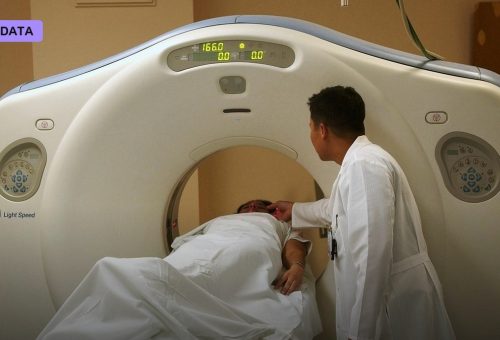
Stanford University researchers unveiled SleepFM in early 2026, a multimodal AI foundation model that can predict more than 130 different health conditions, including dementia, stroke, heart failure and certain cancers, using data gathered from a single night of sleep. The model, described in Nature Medicine, was trained on nearly 600,000 hours of polysomnography data collected from roughly 65,000 participants, representing one of the largest sleep datasets ever used to train a single AI system.
From Sleep Tracker to ‘Physiological Mirror’
Polysomnography is the gold-standard overnight sleep study, using sensors to record brain activity, heart rhythm, breathing patterns, eye movement and leg movement simultaneously. Traditionally, this rich dataset has been used narrowly, mainly to diagnose sleep disorders like apnea or narcolepsy. Stanford’s team instead treated the full night of physiological data as what they describe as a “physiological mirror,” training SleepFM to recognize the subtle patterns across dozens of body systems that precede serious disease, sometimes years before a diagnosis would otherwise occur.
What the Model Can Do
According to the published research, SleepFM predicts 130 conditions with a concordance index of at least 0.75, a statistical measure of predictive accuracy, covering outcomes as varied as all-cause mortality, dementia, myocardial infarction, heart failure, chronic kidney disease, stroke and atrial fibrillation. That breadth is unusual; most medical AI models are built to predict a single condition or a narrow family of related conditions, while SleepFM’s architecture allows it to flag risk across cardiovascular, neurodegenerative and oncological categories simultaneously from one shared dataset.
The Catch: It’s a Black Box, and Not Yet in Your Bedroom
Stanford researchers have been candid about the model’s limitations. SleepFM currently functions as something of a black box, identifying statistical patterns associated with future disease without explaining the underlying biological mechanism connecting a particular sleep signature to a particular illness. The team has also acknowledged that the technology is not yet available for clinical use, and that adapting the model to work with consumer wearables, rather than clinical-grade polysomnography equipment, remains an open research challenge the team is actively pursuing.
How It Fits With the Broader Sleep-Tech Boom
SleepFM’s debut lands amid an unusually active year for AI-driven sleep science. Consumer devices like the Bía neurofeedback sleep mask and AI-enhanced smartwatch algorithms that screen for obstructive sleep apnea with over 92% sensitivity are pushing sleep monitoring into everyday wearables, while SleepFM represents the research-grade end of the same trend: treating sleep as a uniquely information-dense biological signal.
Cautious Reactions From the Medical Community
Some physicians have welcomed SleepFM as a potentially powerful screening tool that could eventually flag high-risk patients for further testing well before symptoms emerge, particularly for diseases like dementia and certain cancers where early intervention meaningfully changes outcomes. Others urge caution, noting that translating a statistical association at the population level into a reliable, actionable prediction for an individual patient is a much harder problem, and that premature clinical use of an unexplainable black-box model could generate false alarms or, worse, false reassurance.
What’s Next
The Stanford team says its next priority is expanding SleepFM with data collected from consumer wearables rather than only clinical polysomnography machines, which would be necessary before the technology could ever reach ordinary sleep trackers. Researchers also plan further work to make the model more interpretable, so that when it flags elevated risk for a particular disease, clinicians can better understand why, a step widely seen as essential before any regulatory body would consider the technology for real-world diagnostic use.
The Data Privacy Question
Because SleepFM was trained on polysomnography data collected in clinical research settings, questions remain about how a future consumer-facing version might handle data privacy if the model is eventually adapted for wearable devices that continuously monitor users at home. Bioethicists who study medical AI have noted that a model capable of predicting dementia, cancer risk and mortality from sleep data raises novel questions about who should have access to those predictions, an insurer, an employer, or only the individual and their physician, questions the Stanford team says will need to be resolved well before any commercial deployment of the underlying technology. That caution has not dampened enthusiasm among sleep researchers, who see the underlying architecture as a template that could eventually be applied to other rich physiological datasets beyond sleep, including continuous glucose monitoring or long-term cardiac rhythm recordings, each of which similarly captures far more biological signal than current clinical practice typically extracts.