Clair Health, a women’s health startup founded by 21-year-old Stanford dropout Jenny Duan and co-founder Abhinav Agarwal, has raised $11.6 million in seed funding led by Khosla Ventures to build a wrist-worn device that infers hormone levels using machine learning instead of a blood draw. The round, reported by TechCrunch and Fortune in June, also drew participation from a16z Speedrun, Brydge Club, Treehub, Cartan Capital, AGI House, Insiders VC, and 23andMe co-founder Anne Wojcicki. The company plans to launch its wearable and companion app in November 2026, and says more than 25,000 people have already joined its waitlist.
How a wristband claims to measure hormones
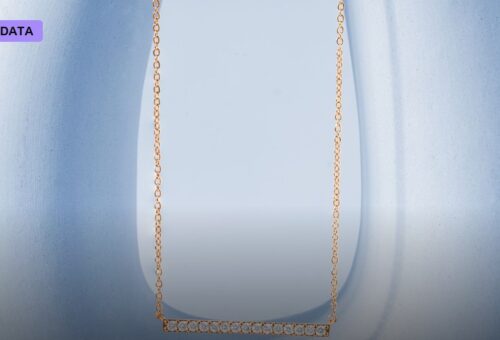
Clair’s device does not measure estrogen, progesterone, luteinizing hormone (LH), or follicle-stimulating hormone (FSH) directly the way a blood or saliva test does. Instead, it packs 10 biosensors into a jewelry-styled wrist wearable that continuously tracks skin temperature, heart rate, sleep architecture, and breathing patterns. Machine-learning models trained on more than 130 proprietary biomarkers then infer hormonal activity from those physiological signals, aiming to give users a continuous, noninvasive picture of a hormonal cycle that today is typically only visible through periodic, invasive lab draws.
The problem Clair says it is solving
Hormonal health has long been an underinstrumented category in consumer wearables. Devices like Oura and Whoop track sleep, heart-rate variability, and recovery, and can flag cycle-phase shifts indirectly through temperature changes, but none directly estimate the four core reproductive hormones on a continuous basis. Duan has said the idea grew out of her own frustration trying to understand irregular symptoms without repeated clinic visits and lab draws — a gap that disproportionately affects conditions like PCOS, perimenopause, and fertility tracking, where hormone fluctuations happen on timescales that periodic testing simply cannot capture.
Why the machine-learning approach is unproven
The core scientific bet is that skin temperature, heart rate, sleep, and breathing carry enough signal to reconstruct hormone concentrations that clinical labs measure directly from blood chemistry. This is a much harder inference problem than, say, estimating sleep stages from motion and heart rate, and it has not yet been validated in peer-reviewed clinical studies at the scale Clair is claiming. Endocrinologists who study wearable-based hormone estimation have cautioned that physiological proxies like temperature and heart rate are influenced by dozens of confounding factors — illness, stress, alcohol, ambient temperature, exercise — that could just as easily explain a measured shift as an actual hormone change, meaning the accuracy of any single estimate depends heavily on how the underlying models were trained and validated.
The bull case from investors
Backers argue the category is worth the scientific risk because women’s health has been chronically underfunded relative to its market size, and because even directionally useful hormone trend data — rather than lab-grade precision — could meaningfully improve how people manage PCOS, fertility planning, or perimenopause symptoms between doctor visits. Wojcicki, whose own company 23andMe built a business on consumer-facing biological data, has framed continuous hormone tracking as a natural extension of the wearable health category after sleep, glucose, and heart health have each had their own consumer-device moment.
What launch will have to prove
Digital health funding overall reached $7.4 billion in the first half of 2026, up roughly $1 billion year over year, with investors increasingly favoring devices that pair continuous data collection with AI-driven personalization rather than static wellness trackers — a trend Clair fits squarely into. But the company’s real test comes after the money: when the wearable ships in November, independent researchers and early users will be able to compare Clair’s inferred hormone readings against actual lab bloodwork, the first real check on whether a wristband can substitute for a blood test. If the correlation holds up, Clair could open a genuinely new category of continuous hormonal monitoring; if it doesn’t, it risks joining a long line of wearables that promised more biological insight than skin-surface sensors can actually deliver.