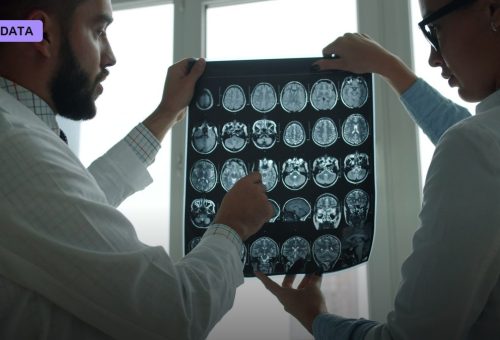
AI-Stroke, a medtech startup, raised $4.6 million in seed funding in November 2025 to expand a smartphone-based AI system that screens for stroke before a patient ever reaches a CT scanner, and the company says its technology now detects twice as many true stroke cases as standard screening in a study involving 2,000 paramedic staff. The tool is designed to give ambulance crews and emergency departments a faster, more objective way to triage suspected stroke patients in the critical minutes when treatment decisions matter most.
Why Every Minute Counts in Stroke Care
Stroke treatment is one of the most time-sensitive areas of emergency medicine, guided by the well-known clinical mantra that “time is brain,” since delayed treatment for ischemic stroke allows irreversible brain tissue damage to accumulate by the minute. Traditional prehospital stroke screening relies on paramedics visually and verbally assessing patients using established protocols like FAST, which checks for facial drooping, arm weakness and speech difficulty, and CPSS, the Cincinnati Prehospital Stroke Scale. These assessments can be subjective and vary in accuracy depending on an individual paramedic’s training and experience.
How the AI Tool Works
AI-Stroke’s system uses a smartphone to record a 30-second video of a patient, analyzing facial symmetry, arm movement and speech patterns to flag stroke signs within seconds. The company built its algorithm on what it describes as the world’s largest clinically annotated stroke-video dataset, comprising roughly 20,000 videos and 6 million images. Because the tool is designed to align with existing FAST and CPSS protocols already familiar to paramedics, the company has emphasized that adoption should require minimal retraining for emergency crews.
The Funding and the Team Behind It
AI-Stroke, founded in 2022, used its $4.6 million seed round, announced via PR Newswire, to bring on four stroke experts to its medical advisory board and continue refining its detection algorithms. The relatively modest funding size compared with some digital health rounds reflects the narrow, specialized nature of the prehospital stroke triage market, though investors appear convinced there is a meaningful clinical and commercial opportunity in closing the diagnostic gap between symptom onset and hospital arrival.
Parallel Research Efforts
AI-Stroke’s smartphone approach is one of several prehospital stroke AI efforts advancing in 2026. Separate academic research has explored using machine learning models powered by emergency medical services data to enhance stroke triage decisions, while the AI-STROKE project has pursued a different technical approach, using dry EEG sensors combined with AI to quickly assess stroke severity before a patient even reaches the hospital. The diversity of approaches, video-based, EEG-based, and EMS-data-based, suggests the field has not yet converged on a single dominant prehospital stroke detection technology.
Reasons for Caution
Emergency medicine specialists note that any prehospital AI screening tool must be validated across a wide range of real-world conditions, including poor lighting, patients with pre-existing facial asymmetry unrelated to stroke, and language or cultural variation in how symptoms present, all factors that could affect a video-based algorithm’s reliability outside controlled study conditions. There is also the practical challenge of integrating a new smartphone-based workflow into the chaotic environment of an actual ambulance call, where seconds and attention are both scarce.
What’s Next
AI-Stroke says it plans to use its seed funding to expand clinical validation and pursue broader deployment with ambulance services following its FAST- and CPSS-aligned protocol design. As emergency medical services increasingly look to AI for faster and more consistent triage decisions, prehospital stroke detection is likely to remain one of the more closely watched niches in emergency medicine technology through the rest of 2026.
Comparing Prehospital Approaches
AI-Stroke’s video-based method differs meaningfully from competing approaches like the EEG-based AI-STROKE project, which requires attaching sensors to a patient’s scalp rather than simply recording a smartphone video, a tradeoff between diagnostic depth and ease of deployment in the chaotic environment of an ambulance call. Emergency medicine researchers say it remains an open question which approach, or combination of approaches, will ultimately prove most practical for widespread EMS adoption, since paramedics need tools that are fast, reliable and require minimal additional equipment or training beyond their existing protocols. Investors in prehospital diagnostic technology say the stroke triage market remains relatively underfunded compared with hospital-based imaging AI, even though earlier intervention in the field could ultimately prove more consequential for patient outcomes than any downstream hospital-based improvement.