Electronic Shelf Tags and Smart Carts: AI Reaches the Grocery Aisle
From AI-driven dynamic pricing on electronic shelf labels to camera-equipped smart carts, supermarkets are deploying AI across the aisle — reshaping how millions shop for groceries.
AI tools now generate 41% of all code and 84% of developers use them — yet nearly half don't fully trust the output, exposing the messy reality of AI in everyday software work.
AI is reinventing how we watch — serving personalized camera angles, commentary and stats during live events, as the media-and-entertainment AI market hits $35.8 billion in 2026.
AI weather models now beat traditional supercomputer forecasts on accuracy and run up to 500 times faster — reshaping everything from storm warnings to the renewable-energy grid.
Self-driving freight trucks, delivery drones and sidewalk robots are moving from pilots to daily reality in 2026 — quietly reshaping how goods get from warehouse to doorstep.
Deepfake fraud is exploding — with losses topping $410 million in early 2025 — so banks are deploying AI that scores transactions and detects synthetic faces and voices in real time.
AI tutoring has gone mainstream in 2026 — personalizing learning for millions, saving teachers thousands of hours, and being formalized by districts as standard student support.
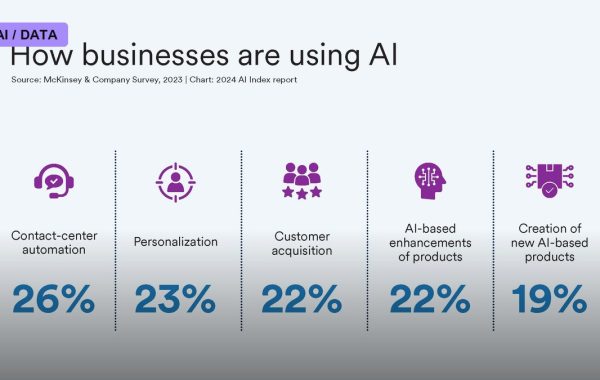
Nine in ten contact centers now use AI — but only a quarter have fully integrated it, and a major bank's botched bot rollout shows the messy reality of AI customer service.
AI is now embedded in real medicine: 71% of US acute-care hospitals use predictive AI in their records, and the first AI-designed drug has posted positive Phase IIa results.
AI-driven field robots that scan crops, target weeds and plant seeds are slashing herbicide use by up to 95% — one of the most tangible examples of AI reshaping real-world work.