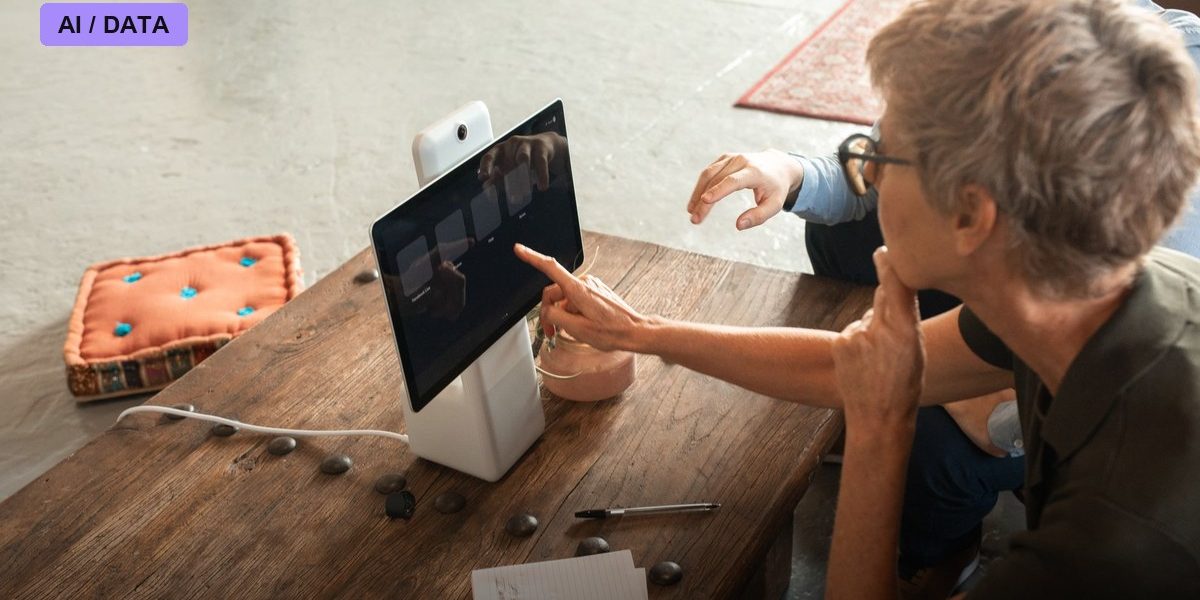
More than 800 older New Yorkers have spent the past several years talking to a robot named ElliQ, a lamp-sized device that sits on a kitchen counter or nightstand and initiates conversation on its own. The state’s official verdict, delivered by the New York State Office for the Aging (NYSOFA), is striking: participants reported a 95% reduction in feelings of loneliness. The claim has traveled widely in coverage of AI’s expansion into eldercare — but a closer look at where the number comes from shows why it deserves scrutiny as well as interest.
What the pilot actually did
NYSOFA announced its partnership with Intuition Robotics, ElliQ’s maker, in May 2022, placing the voice-operated device — which the agency calls “the first-ever proactive and empathetic AI companion” — in the homes of more than 800 older adults across the state. ElliQ doesn’t wait to be asked; it checks in, suggests activities, and prompts users toward social or physical engagement throughout the day. According to NYSOFA’s own figures, users interacted with their ElliQ more than 30 times a day, six days a week, and more than 75% of those interactions touched on social, physical or mental well-being.
Why the state calls it a success
“The data speaks for itself,” said Greg Olsen, NYSOFA’s director, describing case manager and client stories as “nothing short of unbelievable.” Becky Preve, executive director of the Association on Aging in New York, said the pilot showed ElliQ “enriches and improves the lives of the older adults we serve.” The agency frames the program against a well-documented backdrop: the U.S. Surgeon General issued a formal advisory on an epidemic of loneliness and isolation, and NYSOFA says the COVID-19 pandemic sharply worsened isolation among seniors who were already vulnerable to it. Within that context, a device that proactively initiates dozens of daily check-ins looks like a plausible lifeline.
The gap in the evidence
Here is the catch: the 95% figure comes entirely from NYSOFA and its vendor partner’s own program data, not from an independently designed or peer-reviewed study. There is no published methodology describing how “loneliness reduction” was measured, what baseline was used, or how dropouts and non-responders were handled — the kinds of details that let outside researchers judge whether a number like 95% reflects a genuine clinical effect or a smaller gain amplified by self-selection and self-report bias. That gap matters more, not less, because the people most likely to continue participating and responding to surveys about a device they were given for free are probably the people who liked it most.
A technology adoption problem, too
The loneliness numbers also sit alongside a separate, well-documented hesitation among seniors toward smart home technology. Reporting from late 2021 found many older adults wary of devices that could monitor their movements and actions, even when the stated purpose is benign companionship rather than surveillance. That wariness is part of why NYSOFA and Intuition Robotics emphasize ElliQ’s design as a companion that initiates warm, low-pressure conversation rather than a monitoring tool — a framing choice as much as a technical one, aimed at getting a skeptical population to actually use the device long enough for any benefit, real or perceived, to register.
The bigger pattern
ElliQ isn’t operating in a vacuum. Amazon began adding aging-in-place features to Alexa as far back as 2020, and a wave of AI companion and monitoring products has followed, all competing for the same premise: that proactive, conversational AI can substitute, at least partially, for human contact that is otherwise unavailable to isolated seniors. The NYSOFA pilot is one of the more visible public-sector bets on that premise, and its headline number is likely to be cited by other state agencies weighing similar investments, whether or not the underlying methodology would hold up to outside review.
What’s next
NYSOFA and Intuition Robotics have committed to continuing the partnership into a second year, which creates an opening for more rigorous, independently designed evaluation — tracking outcomes like health care utilization, caregiver burden or clinically validated loneliness scales rather than vendor-reported engagement counts. Until that kind of study exists, the honest summary of New York’s experiment is this: hundreds of seniors are using an AI companion heavily and reporting that they like it, state officials are enthusiastic, and the 95% headline number is a real data point from a real program — just not yet one that’s been tested the way a medical claim would be.
Photo: RDNE Stock project / PEXELS via Pexels