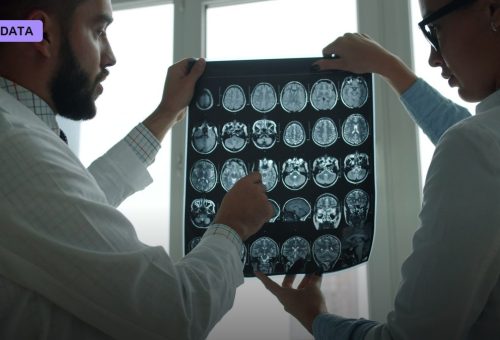
Brain metastases are among the hardest things to count reliably on an MRI. A single scan can show one lesion or thirty, some barely a few millimeters wide, scattered across a brain that a radiologist has only minutes to review between other cases. On December 17, 2025, the FDA granted 510(k) clearance to Neosoma Brain Mets (K252922), an AI platform built specifically to find, measure, and track every one of those lesions on a standard MRI — with no cap on how many it can identify in a single scan.
Why counting tumors is harder than it sounds
When cancer spreads to the brain, it often doesn’t arrive as a single mass. Patients with metastatic breast, lung, or melanoma cancer can develop dozens of small deposits simultaneously, and radiation oncologists need an accurate count and precise volumetric measurements to plan treatment, particularly for stereotactic radiosurgery, where each lesion needs its own targeting contour. Manually contouring even a handful of metastases is time-consuming; contouring twenty or more, some of them subtle low-contrast spots easy to overlook on a fatigued read, pushes against the limits of what a human reviewer can reliably do in a normal clinical workflow.
What Neosoma’s software actually does
Neosoma Brain Mets automates three tasks that previously required a radiologist or radiation oncologist working largely by hand: lesion detection, volumetric measurement, and generation of contours usable for radiation therapy planning, all from a standard MRI without requiring specialized sequences. The company built the tool to have no upper limit on the number of lesions it can flag and track over time, which matters for monitoring patients through multiple rounds of treatment where new metastases can appear or existing ones can shrink or grow between scans. The clearance restricts use to adult patients aged 22 and older and explicitly excludes other types of brain lesions — the software is not meant to be a general-purpose brain tumor detector.
A fast-moving company with a modular FDA strategy
Neosoma’s approach to FDA submissions has drawn attention in regulatory circles for its speed: the company has structured its software architecture and submission strategy to support what industry advisors describe as rapid repeat clearances, treating each new capability as an incremental, modular addition rather than a ground-up resubmission. That strategy let Brain Mets move through the 510(k) pathway relatively quickly compared to imaging AI tools that require more extensive new clinical validation for each feature. It also reflects a broader pattern in FDA’s imaging AI clearances: radiology now accounts for roughly 76% of the more than 1,400 AI-enabled devices with FDA marketing authorization, and companies that can demonstrate equivalence to prior cleared functions are moving through the system faster than those introducing entirely novel claims.
What clinicians gain, and what they still have to verify
Radiation oncologists have generally welcomed automated contouring tools because they reduce the tedious, error-prone parts of treatment planning, freeing physicians to focus on clinical judgment rather than manual tracing. But automated lesion detection tools carry a familiar risk: over-reliance. If a system with no cap on lesion count occasionally over-segments healthy tissue as a lesion, or under-detects a genuinely subtle metastasis, clinicians still need to independently verify the output before it drives a radiation plan. Neosoma’s clearance, like most AI imaging clearances, positions the software as an assistive tool for radiologist and radiation oncologist review rather than an autonomous diagnostic decision-maker, keeping a human in the loop on final treatment decisions.
The bigger picture for oncology imaging AI
Brain Mets lands in a crowded and fast-growing niche of neuro-oncology imaging tools, alongside products like Cortechs.ai’s NeuroQuant platform, which has also expanded into metastasis and meningioma segmentation. The proliferation of these tools reflects a straightforward economic reality: cancer centers are seeing more patients with brain metastases as systemic cancer treatments extend survival, meaning tumors that used to kill patients before they spread to the brain now have more time to do so, and the radiology and radiation oncology workforce hasn’t grown proportionally to match that caseload.
What’s next
Neosoma has not yet disclosed hospital rollout numbers, but its modular clearance strategy suggests more incremental capability expansions are likely in the coming months — potentially extending tracking across longer treatment timelines or integrating more directly with radiosurgery planning software. For patients, the near-term impact is subtle but real: faster, more consistent lesion counts could mean radiation plans that better reflect the true extent of disease, particularly for patients with a high burden of small metastases that are easiest for a human eye to miss.