AstraZeneca has agreed to a deal worth up to $1.5 billion with machine-learning drug discovery company insitro, targeting liver and heart conditions in one of the largest AI-pharma partnerships disclosed this month. The agreement, reported October 16, pays insitro a modest $40 million upfront, with the overwhelming majority of the value tied to milestones the startup has yet to hit.
Why the Deal Is Structured as Mostly Milestones
The $40 million upfront payment against a $1.5 billion ceiling reflects a now-common structure in AI-pharma partnerships: big pharmaceutical companies get access to a startup’s machine-learning models and target-discovery pipeline at low initial cost, while insitro only realizes the bulk of the payout if its AI-identified drug candidates actually clear preclinical and clinical milestones. That structure shifts most of the scientific and financial risk onto insitro, a pattern critics of AI-pharma hype have pointed to as evidence that big pharma remains skeptical AI can meaningfully shorten drug development timelines despite years of partnership announcements.
What Insitro Brings to the Table
Insitro, founded by computational biologist Daphne Koller, has built its pipeline around using machine learning to identify disease-relevant biological targets from large genomic and cellular imaging datasets, an approach distinct from the generative-chemistry AI models that companies like Isomorphic Labs and Recursion have emphasized. The liver and heart disease focus of this deal builds on insitro’s existing work in metabolic disease, an area where AstraZeneca has invested heavily as it tries to diversify beyond its oncology and respiratory franchises.
The Broader AI Drug Discovery Funding Picture
The deal lands amid a steady drumbeat of AI drug-discovery partnerships and funding rounds throughout 2026, as pharmaceutical giants increasingly prefer milestone-based partnerships with specialized AI biotechs over building equivalent machine-learning capability in-house. That preference reflects both the scarcity of top machine-learning talent willing to work inside traditional pharma bureaucracies and the specialized infrastructure, including custom lab-automation systems, that AI-native biotechs like insitro have built specifically to generate the training data their models need.
Skeptics Point to a Thin Track Record
Despite years of similar deals across the industry, no AI-discovered drug from this generation of machine-learning-first biotechs has yet completed a pivotal Phase 3 trial and reached approval, a gap that has made some pharmaceutical executives and investors increasingly cautious about valuing AI drug-discovery promises before clinical proof points materialize. AstraZeneca’s heavily milestone-weighted structure can be read as a direct reflection of that caution, hedging against the possibility that insitro’s computational predictions don’t translate into clinically meaningful compounds.
What Happens Next
Insitro has not disclosed a specific timeline for nominating development candidates under the new agreement, though partnerships of this structure typically target an initial development candidate within two to three years of signing. AstraZeneca’s cardiovascular and metabolic disease unit will likely provide updates on program progress at future investor days, giving outside observers their first concrete look at whether insitro’s AI platform can convert its genomic-data advantage into drugs that advance past the earliest development stages.
How This Compares to Rival Approaches
Unlike Isomorphic Labs, the DeepMind spinout using protein-structure prediction to design small molecules directly, insitro’s approach starts further upstream, using AI to identify which biological targets are worth drugging in the first place before any molecule design begins. That distinction matters for how investors value the two approaches differently, since target identification carries its own failure risk independent of whether a resulting molecule can later be synthesized and optimized successfully.
What a Successful Outcome Would Look Like for AstraZeneca
If insitro’s target-identification platform delivers even one development candidate that advances into human trials within the deal’s expected timeframe, AstraZeneca would gain not just a potential pipeline asset but validation of a sourcing strategy it has increasingly leaned on across its broader R&D organization: paying small upfront fees to access computational biology platforms it has chosen not to build in-house, while reserving the largest payouts for the moment genuine clinical risk has been retired. That calculus has shaped a wave of similar big-pharma deals over the past three years, each structured to let a cash-constrained AI biotech access committed capital while the pharma partner avoids overpaying for unproven computational promises. AstraZeneca’s cardiovascular, renal and metabolic disease unit, which will likely house any resulting programs, has publicly emphasized combining genomics-driven target discovery with its existing clinical development infrastructure, giving the insitro partnership a plausible path to clinical testing even if few of insitro’s specific target nominations ultimately pan out. Industry analysts tracking big-pharma AI partnerships note that the real signal of commercial seriousness in deals like this one is typically not the headline valuation but the pace at which milestone payments actually get triggered over the following eighteen to twenty-four months, a metric that won’t be visible until well into 2027 or 2028 given typical preclinical development timelines in cardiovascular and liver disease.
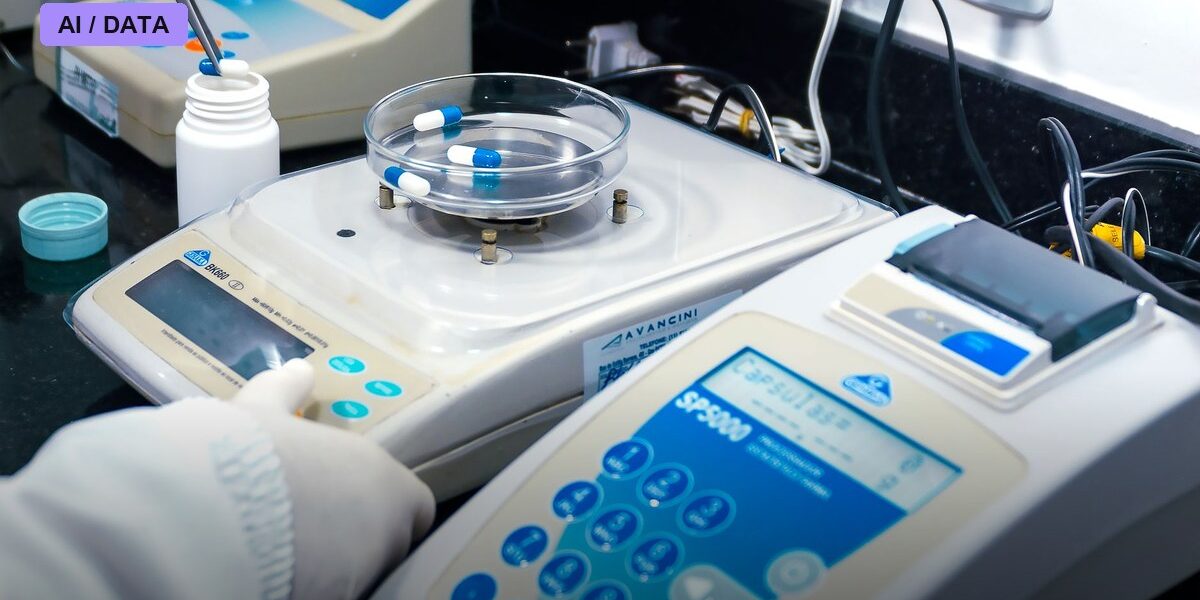
Photo: Pilan Filmes / PEXELS via Pexels